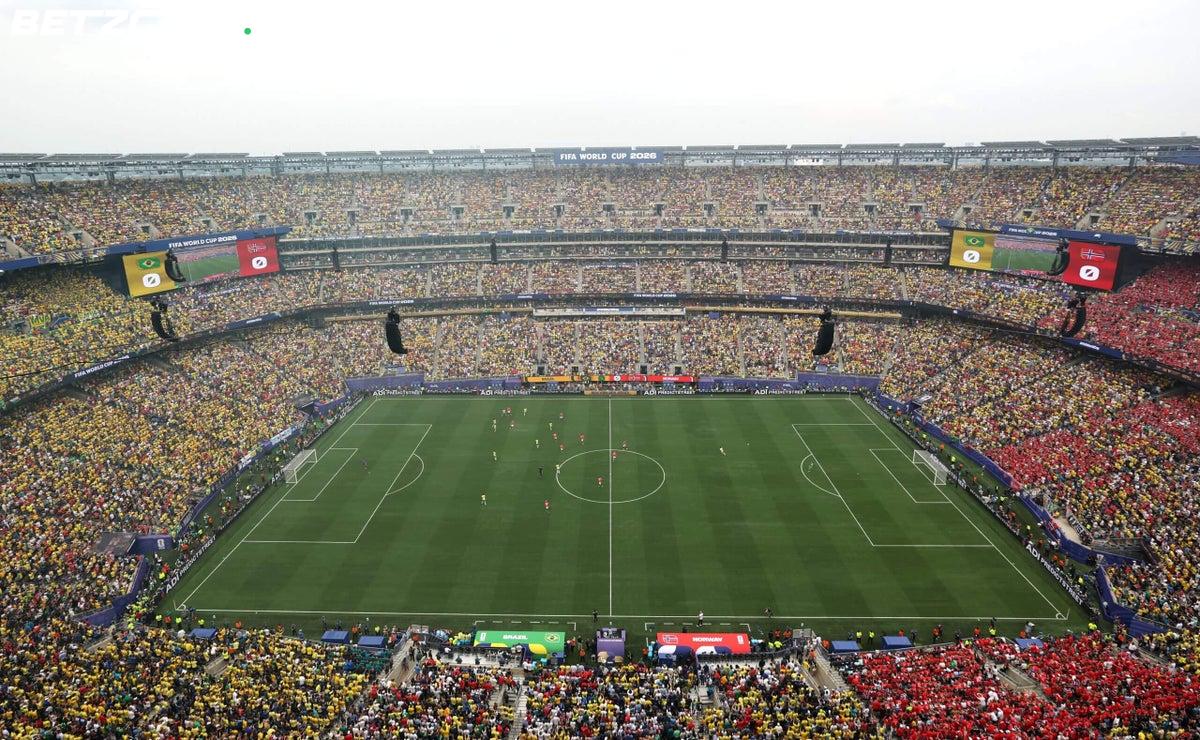
"The pitch — I don't even know if you can call it that." That was France midfielder Adrien Rabiot's verdict on MetLife Stadium's surface back in June. On Sunday, 82,500 people will watch Spain and Argentina play a World Cup final on it. FIFA would very much like you to know it's fine now.
Alan Ferguson, FIFA's senior pitch management manager, insists the Bermuda grass at MetLife has consistently ranked fourth out of all 16 host venues throughout the tournament. He's not apologising for the early chaos. He's framing it as a calculated risk that came good.
Why it went wrong early on
The short version: the weather didn't cooperate. Ferguson chose warm-season Bermuda grass specifically because MetLife hosts the final — the last match of a tournament that runs over a month — and cool-season grass would have deteriorated badly once the New Jersey heat arrived. Problem was, the heat took its time getting there.
For the first 10 to 12 days, the grass essentially went dormant. It didn't fail from a playability standpoint, Ferguson argues, but it looked rough — and players noticed. Vinicius Junior blamed the surface after Brazil drew 1-1 with Morocco in their opener. Didier Deschamps suggested there might be cement under the turf. The optics were terrible for a tournament FIFA had spent millions preparing.
They threw everything at it: grow covers, grow lights, full fleece coverings across the stadium. Then the sun finally showed up and the grass responded. Ferguson's gamble, eventually, paid off.
What's different this time
It's worth understanding just how much infrastructure was purpose-built for this World Cup at MetLife. Previous football events there — including the Club World Cup last summer, where staff literally watered the pitch with hoses — were operating with a fraction of the setup that now exists.
For this tournament, a fully automatic irrigation system was installed. So was a sub-air vacuum ventilation system, full drainage, an oxygen system, and a layered rootzone construction below the Bermuda grass itself. None of that existed before.
- Philadelphia's pitch ranked first across the tournament
- Los Angeles and the Dallas-area venue followed closely
- MetLife consistently sat fourth — ahead of 12 others
A deliberate two-week break in the schedule — with MetLife's last game being Brazil vs. Norway on July 5 — gave Ferguson's team time to work on the surface ahead of Sunday. The final cut happens Sunday morning. Kick-off is 3pm local time.
"We're not perfect," Ferguson admits. "But I think we're 95 per cent of where we wanted to be." Given where it stood in mid-June, that's a meaningful recovery. Whether Spain and Argentina get a pitch worthy of the occasion — that question gets answered in about 90 minutes of football.