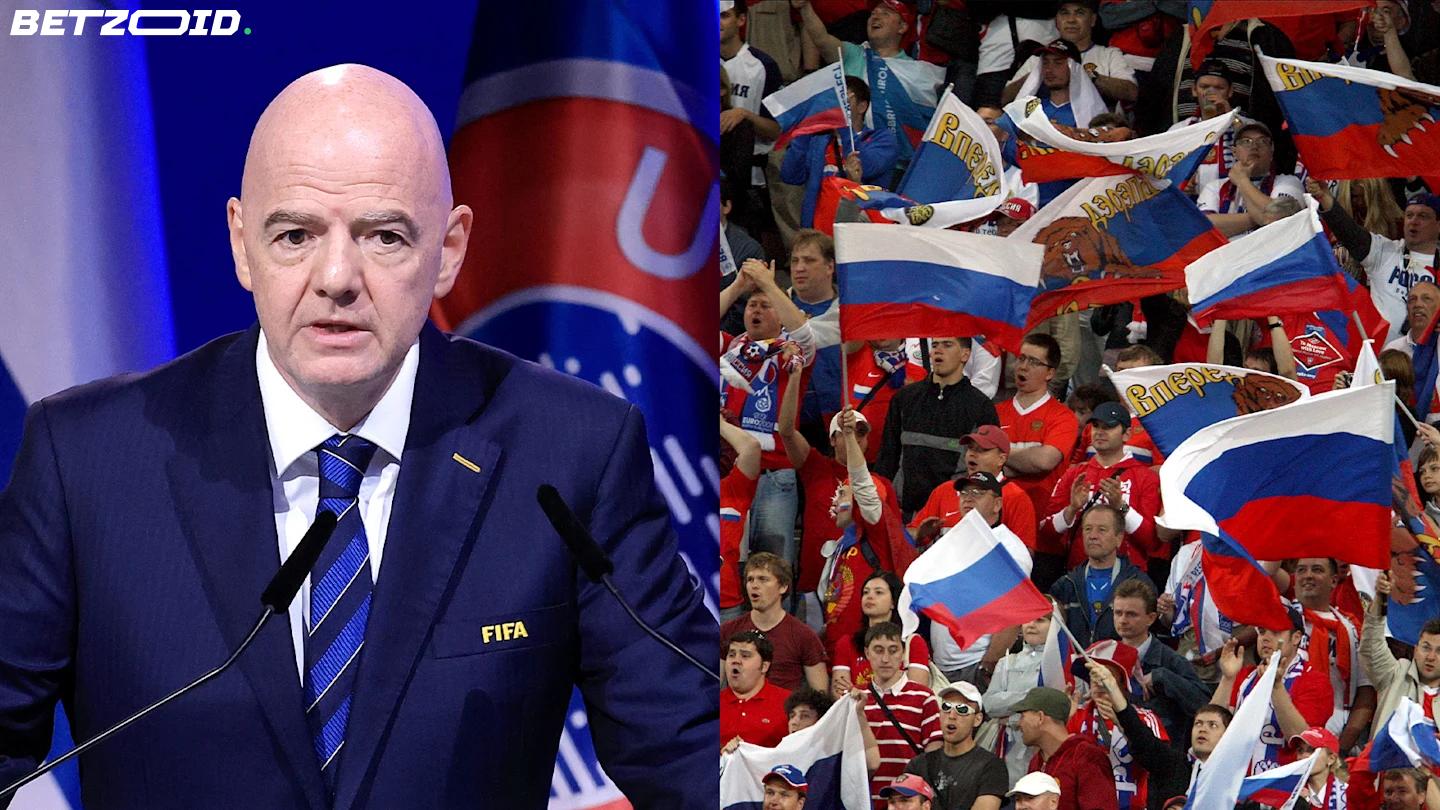
"This ban has not achieved anything. It has just created more frustration and hatred." That's FIFA president Gianni Infantino, and he's not whispering it — he said it on Sky News in February. Now the question lands formally on the table at Thursday's FIFA Congress in Vancouver, where over 1,600 delegates will debate Russia's suspension for the first time since the ban was imposed three years ago.
Russia's football teams have been frozen out of all FIFA and UEFA competition since February 2022, following the invasion of Ukraine. That means no competitive matches — not for the men's senior side, not the women's team, not any youth level. The last time the senior men played a competitive fixture was their final 2022 World Cup qualifier, nearly five years ago. They've filled the calendar with unofficial friendlies against Mali, Nicaragua, Peru, Chile and Iran. That's the company you keep when the rest of the world won't touch you.
What Thursday's Congress Could Actually Change
The meeting in Vancouver isn't expected to produce an immediate reinstatement — but it's the clearest signal yet that FIFA's leadership wants one. Also on the agenda are the suspended cases of Pakistan and Congo, though neither carries the political weight of the Russia question.
Infantino has already floated a concrete path back in. FIFA's new global U15 tournament, announced for 2027, is set to be "open to all 211 FIFA member associations" — a line that barely conceals its intent. If Russia competes there, the door is effectively open. From there, the realistic target for a senior men's return would be qualifying for the 2028 UEFA European Championship, hosted across the UK and Ireland.
UEFA did briefly consider allowing Russian U17 teams back in 2023 — the argument being that you shouldn't punish teenagers for government decisions — but backed down under pressure from European nations. That same pressure hasn't gone away.
The Wider Sports Landscape Is Already Shifting
Football wouldn't be the first to blink. The International Paralympic Committee allowed Russian athletes to compete under their own flag at the Milan Cortina 2026 Paralympics — the first time since 2018. World Aquatics has lifted its ban on the Russian flag and anthem entirely.
But both moves generated serious backlash. Denmark, Finland, Iceland, Norway and Sweden have joined boycott efforts against World Aquatics over exactly this issue. The pattern is clear: international sports bodies are creeping toward reintegration while conflict continues, and a bloc of nations — particularly in northern Europe — is pushing back hard.
For UEFA's odds-makers and tournament planners, a reinstated Russia changes the shape of European qualifying. They were a mid-tier European side before the ban — not a group-stage threat to the top nations, but capable of taking points off anyone beneath them. Five years of zero competitive football is a difficult thing to model. Any qualifying draw featuring Russia in the next cycle carries genuine uncertainty attached to it.
Infantino's argument that the ban "hasn't achieved anything" is politically convenient, but it's also not entirely wrong from a sporting standpoint. The Russian Football Union still exists, still funds its teams, still hosts matches. Suspension hasn't dismantled the infrastructure. What it has done is remove Russia from the competitive ecosystem for half a decade — and no one, including FIFA, seems to know what they'll look like when they return.
"Having girls and boys from Russia being able to play football games in other parts of Europe would help," Infantino said. Whether that argument carries the day in Vancouver — or gets drowned out by the nations who think sport is one of the few remaining pressure points — becomes clear by the end of the week.