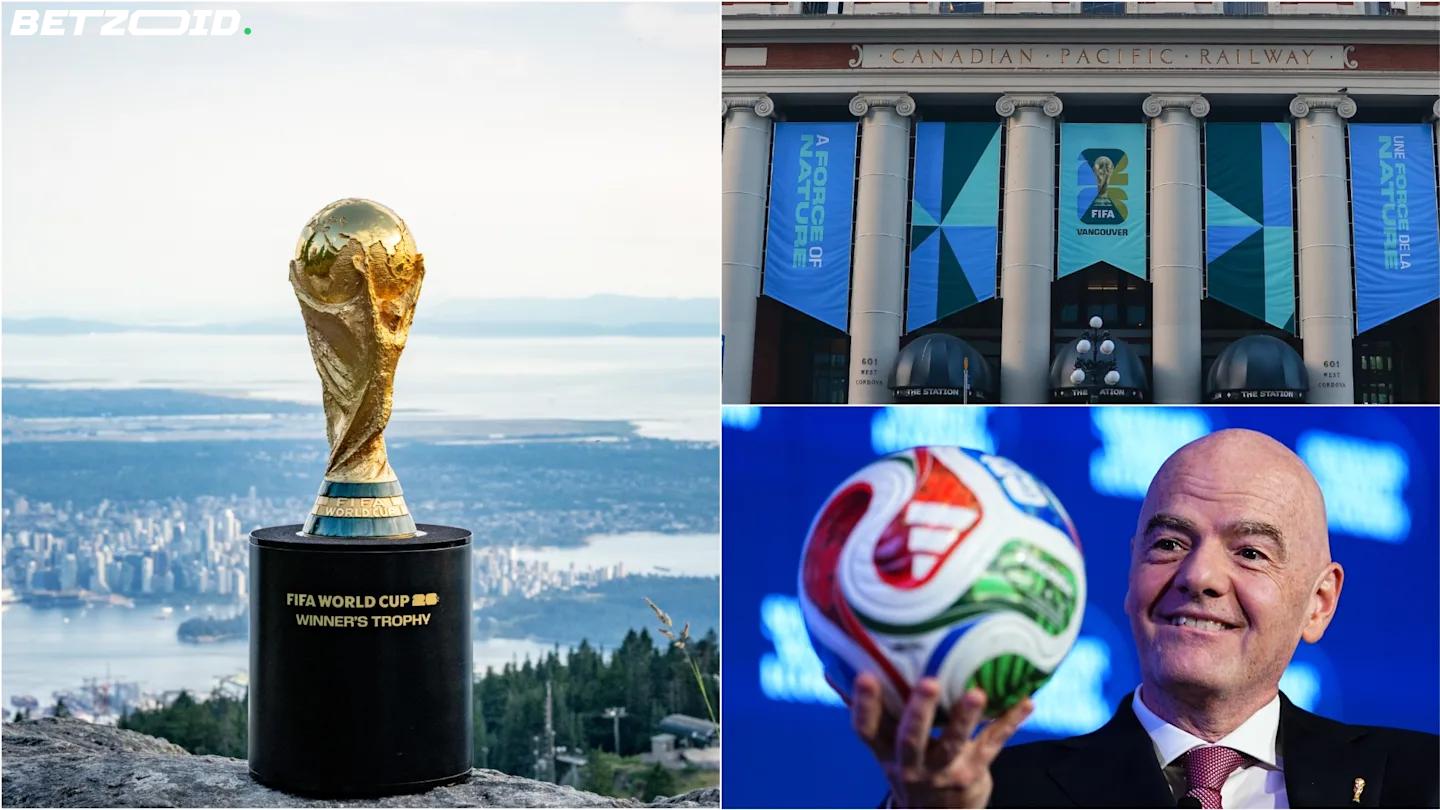
Fifty days from the World Cup kickoff, FIFA's 211 member associations are gathering in Vancouver — and the agenda is anything but ceremonial. Russia's future, racism on the pitch, prize money, and a politically charged new award are all on the table. Some of these conversations are long overdue.
Two years of anti-racism pledges — and incidents keep happening
In 2024, FIFA launched its "Global Stand Against Racism" campaign built around five pillars: tougher sanctions, a three-step match procedure, education, a players' voice panel, and pushing for racism to be recognized as a criminal offense internationally. The three-step process has already been activated regularly — mostly within Concacaf, where Mexico matches have repeatedly triggered it over homophobic chanting.
Two years in, the review at Congress is expected to push for heavier consequences, particularly given the continued targeting of players like Vinícius Junior. Thibaut Courtois put it plainly in February: "We have to end this now. It has happened many times in football; not just on the pitch but in the stands." That quote came from a teammate, a goalkeeper, not an advocacy group. When players are saying it in those terms, the pressure on FIFA to go further than symbolic gestures is real.
Whether Congress actually delivers sharper teeth — match forfeits, stronger federation penalties — or produces another statement will be the test.
Russia's ban: seven words on the agenda, enormous consequences
The official agenda references it as "Suspension or expulsion of a Member Association" in exactly seven words. But everyone in that room knows what it means. Russia has been banned from FIFA and IOC competition since its 2022 invasion of Ukraine, yet FIFA president Gianni Infantino said in February the ban "has not achieved anything, it has just created more frustration and hatred." That statement landed like a grenade.
The situation is more complicated than a simple ban. Russia's federation remains a full UEFA and FIFA member — it's only the national teams that are sidelined. Russian men's sides have continued playing unsanctioned friendlies against Mali, Peru, Bolivia, Iran, and others. FIFA also announced an Under-15 tournament "open to all member associations," which reads as a quiet signal that youth-level reintegration is already being considered.
The International Paralympic Committee has already allowed Russia to compete under its own flag at Milan Cortina 2026. World Aquatics has followed. FIFA won't be the first to blink — but Infantino seems ready to move. The direction of travel is becoming hard to ignore, and any softening of Russia's status could reshape the qualifying landscape for future tournaments.
Prize money and Norway's challenge to the Peace Prize
On the financial side, members will vote on a further increase to the 2026 World Cup prize pool, which FIFA had already set at $727 million — 50% higher than Qatar 2022. With projected tournament revenues hitting $11 billion, Infantino has indicated more cash could flow to participating nations and all 211 associations for development. For smaller federations, that's not a trivial detail. Additional development funding changes what programs get built and who gets coached at grassroots level.
Then there's Norway's Lise Klaveness, who is pushing to abolish FIFA's newly minted Peace Prize before it gets a second year. The award, introduced in 2025 with zero public nomination process, went to Donald Trump at the World Cup draw in Washington. Klaveness — also on UEFA's executive committee — has called for FIFA to keep "an arm's length distance" from political leadership. She isn't planning to speak publicly this week, but that doesn't stop other federations from picking up the argument.
FIFA created the Peace Prize in the months after Trump lobbied unsuccessfully for the Nobel Peace Prize. The optics are difficult to separate from the timeline.