"Every World Cup match is sold out," said Gianni Infantino. Then the cameras panned to the Estadio Akron.
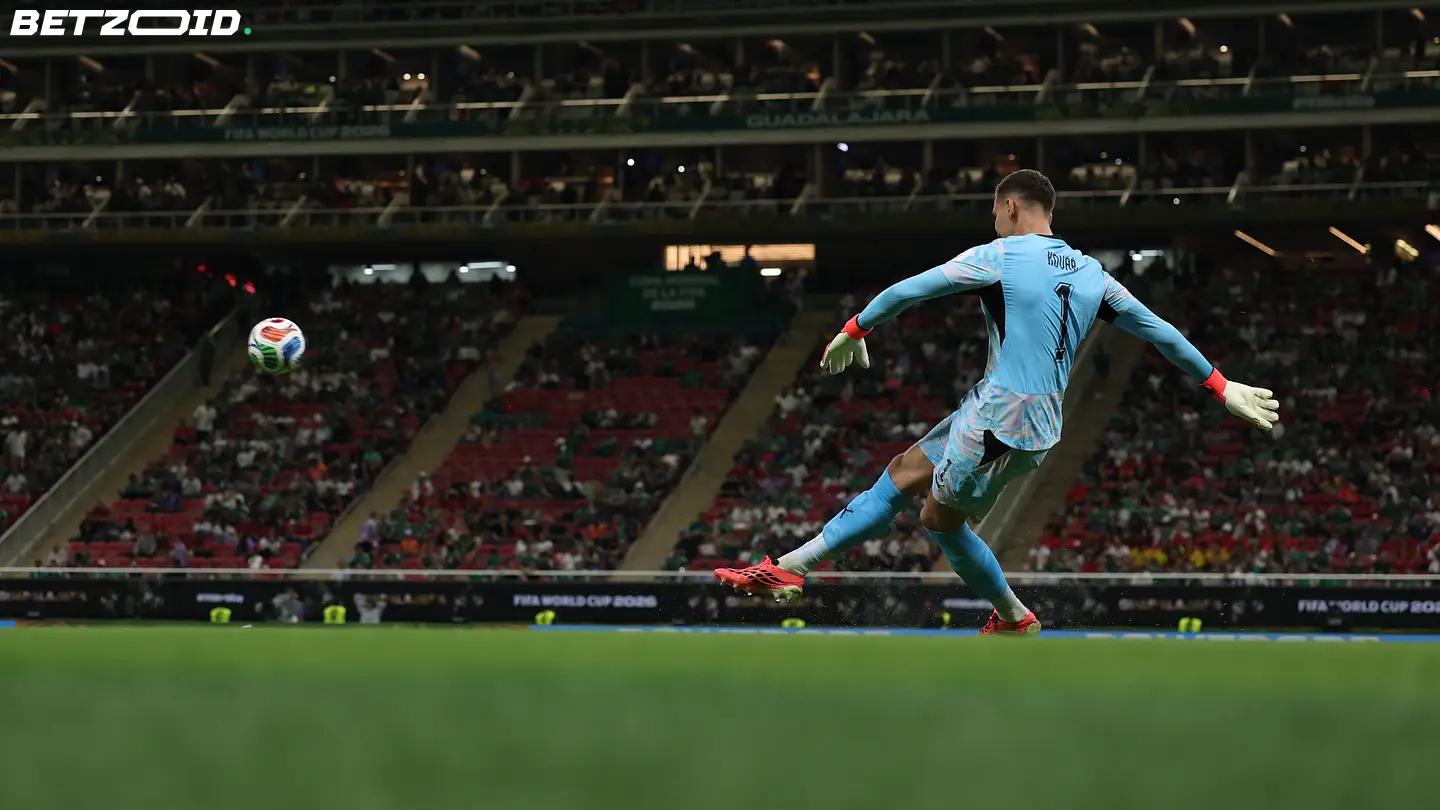
South Korea beat Czechia 2-1 on day one of the 2026 World Cup in Guadalajara — and the most talked-about image from the match wasn't a goal. It was row after row of empty red seats, particularly in the east stand and around the pitchside VIP section. The official attendance was logged at 44,985 in a 45,664-capacity stadium. The math is close. The visuals told a different story.
The price of an empty seat
Tickets in the worst-affected areas ranged from $400 to $5,000, according to The Telegraph. That's not a quirk of premium hospitality — those are general areas of the stadium that simply didn't sell at those prices, or sold to people who decided the game wasn't worth showing up for.
This is FIFA's dynamic pricing model in action: demand sets the price, and when demand doesn't materialise, you get a half-empty arena at a World Cup group stage match. For context, attending one game in each of the eight rounds would cost a single fan around $5,225. That's not a tournament experience. That's a mortgage payment.
The contrast with the opening fixture was stark. Mexico vs. South Africa at the 87,000-seat Estadio Azteca was packed. But that's Mexico, at the Azteca, on home soil. South Korea vs. Czechia in a neutral city is a different proposition — and FIFA's pricing gave casual fans no reason to take a chance on it.
Infantino's defence doesn't hold up
At his pre-tournament press conference, Infantino framed the dynamic model as a weapon against ticket touts and secondary markets. "If you sell it at a lower price point, it would have gone to secondary markets at much, much, much higher prices," he said. "Every dollar that comes in goes back to the development of football."
It's a coherent argument on paper. In practice, the alternative to a scalper profiting isn't always FIFA profiting — sometimes it's just an empty seat. The attorneys general of New York and New Jersey have accused FIFA of "artificially inflating prices," and whatever FIFA's intentions, the optics of vacant stands at a World Cup group game aren't something a press conference quote can paper over.
The next stress test comes Saturday, when Switzerland face Qatar and Australia meet Türkiye. Neither fixture has the pulling power of a host nation game. If the seats look the same as they did in Guadalajara, this conversation isn't going away.