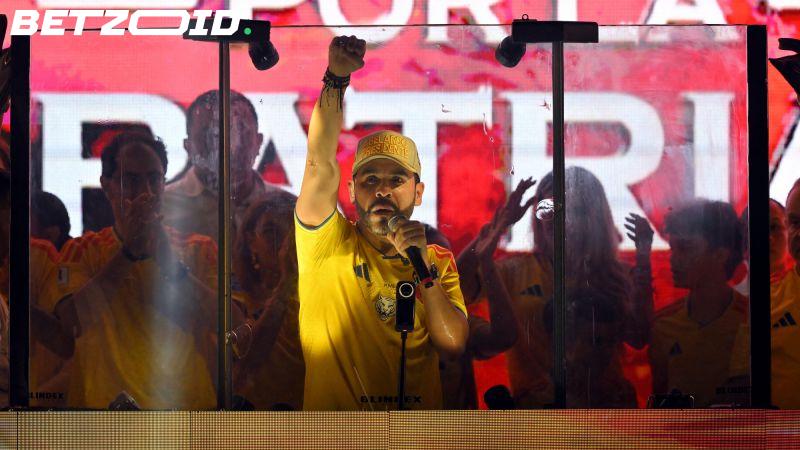
A Colombian judge has banned a presidential candidate from wearing a football shirt. That sentence could only come from Latin America, and it tells you everything about how deeply the sport runs through the politics of this continent.
Bogotá judge Aura Forero issued a formal ruling on Thursday barring right-wing candidate Abelardo de la Espriella — currently the frontrunner for the June 21 runoff — from wearing the Colombia national team's yellow jersey in political contexts. The charge, essentially: he'd been using it as a campaign tool, and that gave his movement an unfair symbolic advantage over rivals.
The ruling isn't wrong. De la Espriella had been wearing the camiseta at rallies, flooding social media with it, and — most cleverly — urging supporters to wear it to polling stations on election day. Colombian electoral rules ban active campaigning on voting day. A football shirt technically isn't campaigning. It's a loophole, and he found it.
Politics and football shirts: a Latin American tradition
Judge Forero's ruling states that his use of the jersey "logically compromises the right to be equally used by the other presidential candidate," since the jersey was being "skewed in favour" of de la Espriella's candidacy. Leftist rival Ivan Cepeda had already been complaining that a national sporting symbol was being colonised by one political brand.
This isn't new territory anywhere south of Panama. Jair Bolsonaro turned Brazil's green and yellow into a uniform for his political movement so effectively that the shirt became genuinely polarising. Even Lula countered with Ronaldo Fenômeno photo-ops rather than policy speeches. In Venezuela, the Vinotinto jersey has been wielded by both Maduro and every opposition leader who dared challenge him. The football shirt is the easiest shortcut to looking like a man of the people — which is exactly why political elites keep reaching for one.
What makes Colombia's case sharper than most is the timing. The country's presidential runoff on June 21 falls directly between their World Cup matches against Uzbekistan and Congo — Colombia's first World Cup since 2018. The nation is already fever-pitched about the football. De la Espriella, a conservative nationalist with a MAGA-inflected brand of politics, understood the energy and tried to absorb it into his campaign. Ten million Colombians voted for him in the first round. Getting police to fine every one of them for wearing a yellow shirt on election day is not a realistic enforcement prospect.
De la Espriella says he'll defy the ban
He's already said the ruling is an attack on personal freedoms, and his supporters have organised a "flag-day" this Saturday — inviting the right-wing base to turn up in the jersey en masse. President Gustavo Petro, meanwhile, was photographed in the very same shirt at a national team send-off the day after the judge's ruling. Whether that constitutes a violation is apparently still being worked out.
What's clear is that Colombia's World Cup campaign and its election have become impossible to separate. The yellow jersey now carries more political baggage than sporting identity — at least until Luis Suárez and the squad give the country something else to project onto it.