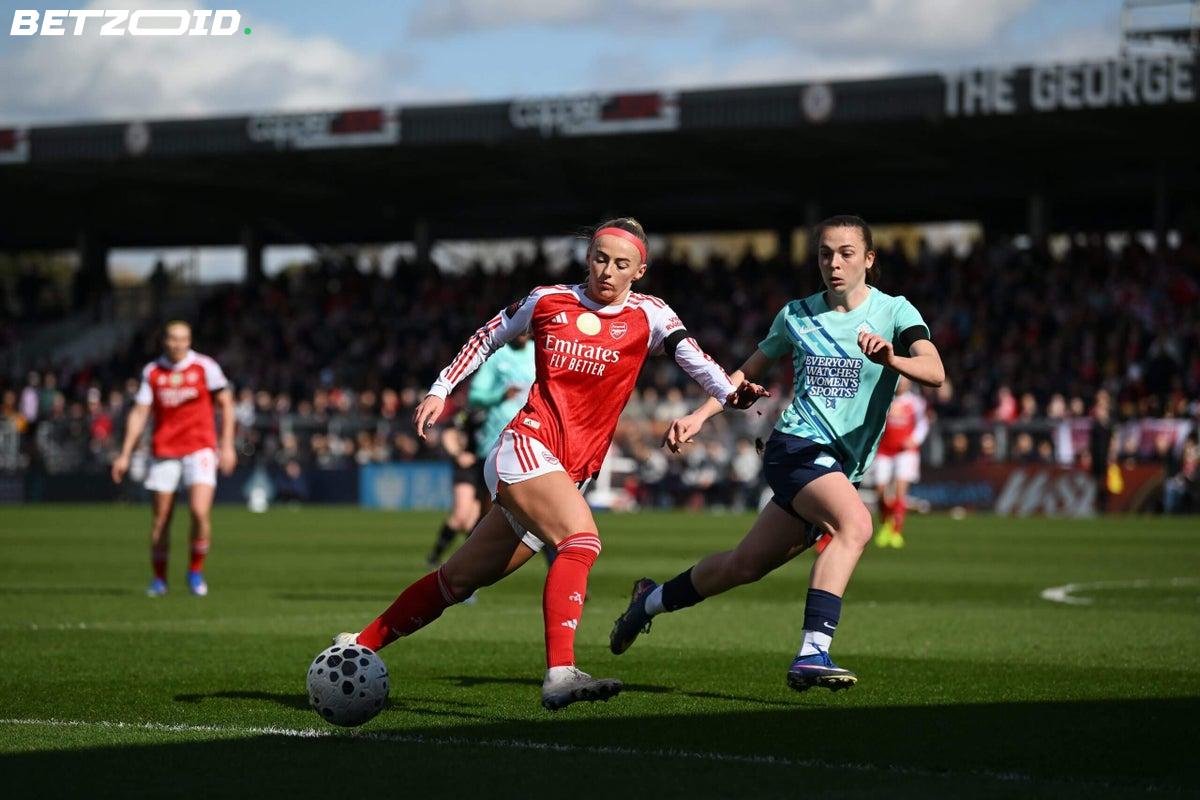
Picture this: Arsenal Women fans meeting at the pub before a match, just like the men's game. Sounds normal, right? But in women's football, this is actually revolutionary stuff that's only really taken off since England's Euro 2022 win.
Arsenal Women have cracked the code. They're averaging nearly 37,000 fans at the Emirates and playing all their WSL games at the big stadium. They've got traditions, they've got rivalries, and they've got a fanbase that keeps coming back.
But here's where it gets interesting. Their opponents London City Lionesses are trying something completely different – and it might just work.
Starting From Scratch in South London
London City are the new kids on the block. They used to play in Dartford in front of just 400 fans. Now they're in the WSL, backed by businesswoman Michele Kang's multi-club portfolio, and they're dreaming big – we're talking Champions League ambitions.
"Unless you're six years old, you're not a lifelong London City fan," says managing director Sarah Batters. "We had to build a fanbase from scratch." That's both a challenge and an opportunity.
The numbers tell the story. Last season they averaged 1,800 fans. This season? They're up to 3,000. Their match against Arsenal sold out with a record 5,440 fans. That's growth you can bet on.
Here's the kicker: Arsenal's own data shows that 61% of their women's game spectators have never been to the Emirates for a men's match. Only 25% have watched the men's team at all. So maybe you don't need a Premier League big brother to succeed.
A Different Kind of Match Day
London City are doing things their way. At Hayes Lane, there's a free fan zone with face painting, photo booths, and even a penalty shootout game. Kids are decorating masks with the names of stars like Alessia Russo and Kelly Smith.
They've even got a dog stand. Yes, you read that right – fans bring their dogs in London City jerseys. Try doing that at Old Trafford.
The club's smart about who they're targeting. Families make up their biggest demographic. A third of fans come from within five miles of Bromley, another third from Kent, and the rest from Greater London. They're partnering with 80 grassroots girls' clubs to build those connections early.
CEO Martin Semmens explains the women's game works differently: "The women's game is counter-flip to that. They believe in that role model, sort of influencer-follower relationship." Fans follow players as much as clubs. When Arsenal visit with stars like Chloe Kelly, those players bring their own supporters with them.
For bettors watching the WSL, this matters. Team form is important, but so is which big-name Lionesses are playing. Those star players can swing both attendance and potentially performance on the pitch.
London City's business model is ambitious. Owner Michele Kang told the CEO right away: "This is not a charity." She believes getting in early and investing big will grow the whole market faster. Their goal? Pack out the stadium, create the best atmosphere in the WSL, and use that to unlock sponsorship deals.
The club's online following is growing 10-20% each month, driven by individual players. Posts about Spanish midfielder Jana Fernandez, Batters says, "blow everything else out of the water."
Semmens has a target to produce England internationals every year. "If England win the World Cup, it helps us," he explains. Arsenal showed that pathway works – big-name Lionesses help fill stadiums.
Not everyone loves the new approach. The half-time entertainment and family focus feels different from traditional football. But London City aren't trying to steal fans from Tottenham or Crystal Palace. They're competing for young families with disposable income who have lots of entertainment options.
The match between Arsenal and London City brought together two completely different approaches. Arsenal built on decades of success and a connection to their men's team. London City are writing the rules as they go, targeting a new audience altogether.
Ironically, Arsenal built their huge fanbase without even being the dominant team on the pitch recently. Chelsea Women often play to half-empty stadiums at Stamford Bridge despite their success. Manchester United have marketable Lionesses like Ella Toone and Mary Earps but haven't reached Arsenal's attendance levels.
The common thread? England internationals matter. When the Lionesses do well, WSL clubs benefit. That's why London City are investing in player development and why their growth trajectory looks promising for the future of women's football in England.