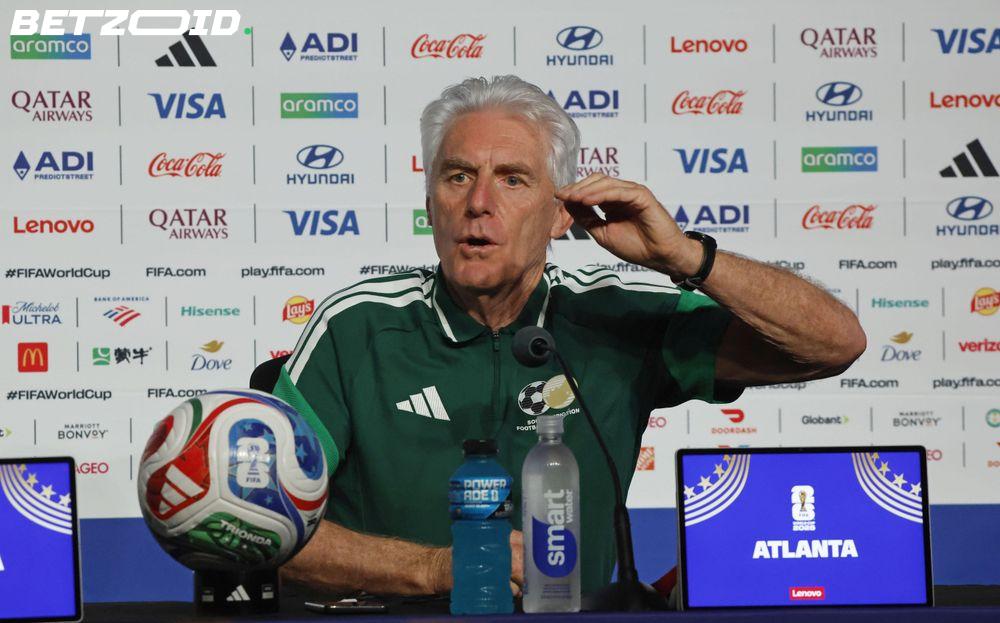
"The Bafana Bafana players don't want all the money." That's not spin — it's what Safa Finance Committee chairperson Mxolisi Sibam told SABC Sport, and it explains a lot about how South Africa's $12 million (R218 million) FIFA World Cup prize purse actually got divided up.
The numbers are straightforward enough. Each player in the squad pockets roughly R2.5 million from a shared R65 million pool. Head coach Hugo Broos, who is departing after this tournament, takes a 10% cut — R21.8 million. Assistant coach Helman Mkhalele receives 5%, around R8 million. The rest of the technical staff split a 2% pool between them. Safa retains 50% for development and reserves.
The reinvestment logic
That 50% retention is the real story here. Senior players, captain Ronwen Williams among them, actively backed redirecting the bulk of the windfall into grassroots structures rather than individual payouts. Whether that reflects genuine long-term thinking or savvy optics, the principle is sound — Bafana's run to the last 32 was built almost entirely on PSL-based players, and keeping that pipeline funded has obvious strategic value.
Sibam made the connection explicit: "The more national team players we draw from our domestic league, the greater the mutual benefit for both the association and the clubs."
He's right, and the numbers back it up. Mamelodi Sundowns and Orlando Pirates each contributed eight players to the squad and are now positioned to receive over R25 million apiece through FIFA's club benefits scheme. That's a significant return on domestic investment — and a compelling argument for PSL clubs to keep prioritising players who are actually good enough to represent the country.
What it means for the clubs
For Sundowns and Pirates specifically, R25 million injected into youth structures doesn't just help Bafana — it reshapes their own academy economics. Both clubs already run the most sophisticated development setups in South Africa. This cash accelerates that gap over the rest of the league.
Safa also received a $2.5 million (R41 million) preparation grant ahead of the tournament, separate from the prize money. Combined, the total financial return from this World Cup cycle runs well past R250 million — by far the largest single influx the association has seen from a tournament run.
Broos leaves with a substantial parting gift. Whether his successor inherits a federation better equipped to compete is the question that actually matters now.