

If you want casinos without registration in the literal sense — real money staked with no account at all — that option does not exist on a Gambling Commission licence. Every UK-licensed operator has to confirm your name, date of birth and address before it takes your first deposit, so the honest version of this search is a much shorter sign-up: demo games that need no account, and pay-and-play sites where an instant bank payment builds the account for you in the background.
That distinction changes what you should actually compare. The Betzoid team looks at whether an operator supports pay by bank through Open Banking, how quickly the cashier releases money back to the same account, whether bonuses are open to pay-and-play customers, and what triggers a document request later. We check licence status directly on the public register rather than trusting a footer logo. The shortlist below groups sites by how light their onboarding really is, and the sections after it explain where "no registration" stops being accurate.
Recommended Casinos Without Registration (October 2026)









What 'Without Registration' Means in the UK
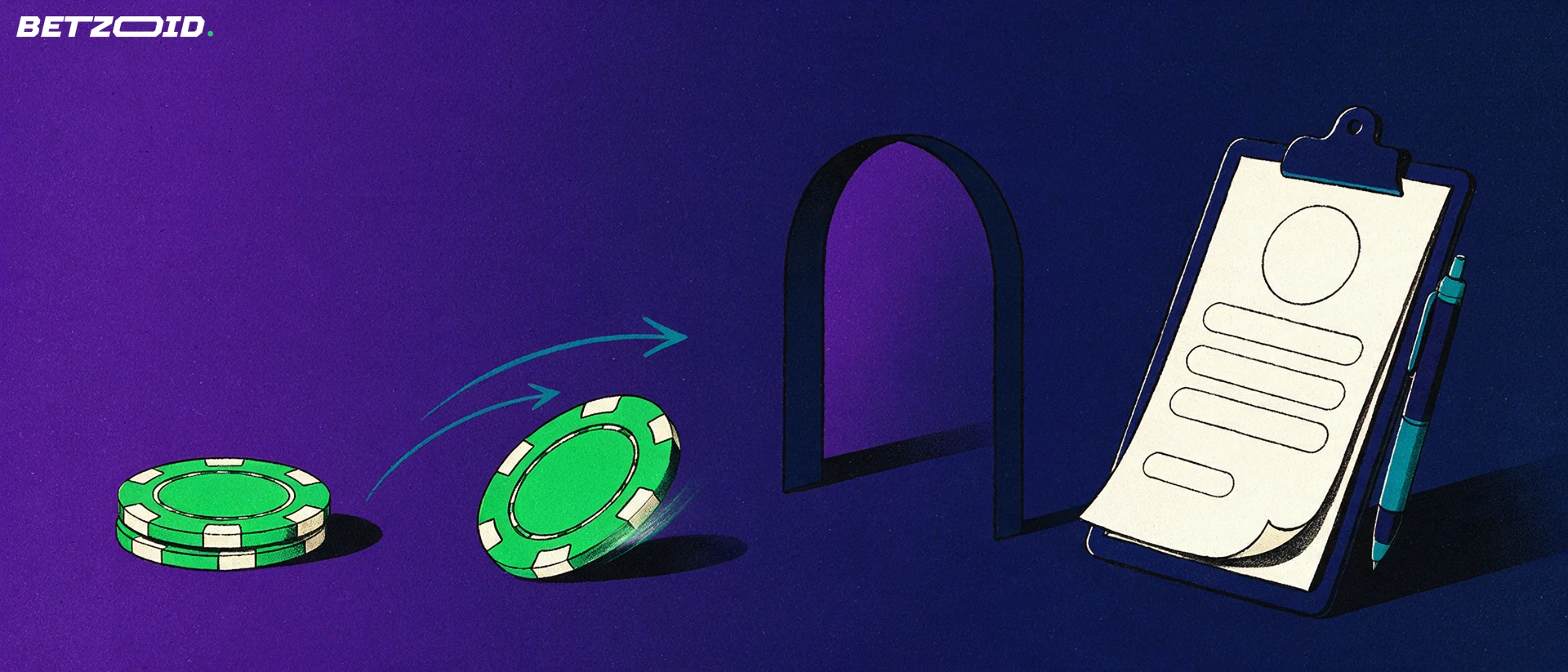
Three different products hide behind the same phrase. First, demo slots that load in a browser with no account. Second, pay-and-play: you choose your bank, authorise a payment, and the operator creates your account from verified bank data instead of a form. Third, plain marketing shorthand for a sign-up that takes a minute rather than ten. Only the first involves no account whatsoever.
So, are casinos without registration legal in the UK? The pay-and-play model is, provided the operator holds a UKGC licence and still verifies age and identity before your money goes in. What is not permitted is skipping those checks entirely. Sites advertising that to British players are almost always licensed offshore, which means no GAMSTOP link, no UK dispute resolution and no rules governing how your balance is held.
Demo Slots You Can Play Without Registration
Demo slots usually sit on game studio pages and comparison sites rather than on licensed operator lobbies, because UK licensees must age-verify a visitor before showing free-play games. Nothing needs downloading — everything runs in the browser on mobile and desktop. Demo mode mirrors the real maths in most titles, so it is genuinely useful for judging volatility and feature frequency. It will not replicate progressive jackpots, and a demo balance never converts into anything withdrawable.
Pay and Play With Instant Bank Payments
Pay-and-play casinos work through Open Banking. You pick your bank, approve the payment in your banking app with the usual biometric or 2FA step, and funds land in the cashier in seconds. The operator receives your verified name, date of birth and account details from the bank, which replaces most of the form-filling. No card details are stored and no password is chosen at that stage. You are still a registered customer in regulatory terms — the account simply gets built for you, and withdrawals return to the same account.
What Matters Most Before You Deposit
The deciding factors for fast-onboarding sites with instant bank payments are rarely the ones on the banner. Work through these before you authorise anything:
- Licence status. Search the operator's trading name on the Gambling Commission register yourself. A licence number printed in a footer is easy to copy; an active entry with matching company details is not.
- Bank coverage. Open Banking support varies by provider, and not every high street or app-only bank appears in every payment list. Check the cashier's bank picker before you commit to a site.
- Stated minimums and limits. Read the cashier page for the minimum deposit, the daily withdrawal ceiling and any per-transaction cap. Pay by bank often carries different limits from cards.
- Bonus eligibility. Some promotions exclude fast-onboarding customers or specific payment routes, so compare the wagering terms on first deposit bonus offers before assuming a welcome package applies to you.
- Payout route. Confirm that winnings go back to the same bank account automatically. Sites that push you towards a secondary method at withdrawal add friction exactly when you don't want it.
- Player tools. Deposit limits, reality checks, time-outs and the GAMSTOP link should be reachable within a couple of taps, even when you never filled in a registration form.
Licence and payout route are the two that cost you real money if you get them wrong. Bank coverage is the one that quietly kills the appeal of the whole model: if your bank isn't listed, a supposedly frictionless deposit turns into a card entry screen and a manual form.
Weighing Up Sign-Up Routes for Real Money Play
Choosing between the routes is a trade-off between speed at the start and flexibility later. Pay-and-play is fastest and keeps your data footprint small, but it ties you to one bank account and sometimes to a narrower promotions menu. A standard sign-up takes longer and asks for a password and contact details, yet it usually unlocks the full bonus range and more payment options. The table sets out what each route actually involves.
| Route | Account created | Identity checks | Payment used | Best suited to |
|---|---|---|---|---|
| Demo play | None on studio or comparison pages | None, and no real stakes | No payment at all | Testing volatility and features before risking money |
| Pay and play via Open Banking | Yes, generated from bank data | Age and identity confirmed through the bank | Instant bank transfer from your own account | Players who want to deposit and spin within a minute |
| Short registration form | Yes, with email and password | Electronic checks before first deposit | Cards, e-wallets or pay by bank | Anyone chasing the widest bonus and payment choice |
| Offshore "no checks" site | Usually minimal, sometimes wallet-only | Deferred or unclear, often at cash-out | Crypto or obscure processors | No one relying on UK consumer protection |
What the grid cannot show is how the routes behave when something goes wrong. With a UK-licensed pay-and-play account, a disputed balance goes to an approved ADR body; with an offshore wallet, your recourse is an email address. That is also why no-deposit offers granted at sign-up tend to sit on conventional accounts — the operator needs a verified identity before it hands out free value.
How Withdrawals Work at No Registration Casinos
Cash-outs run back down the route your money came in. Say you hit £180 on a Friday evening and want it in your current account, not in a pending queue until Tuesday. With an instant bank deposit, the operator already holds the account details it needs, so there is no method to add and no card to photograph. You request the withdrawal, the payments team approves it, and the transfer moves over Faster Payments.
Two stages control the timing. The operator's internal approval window is the variable one: some cashiers release payments around the clock, others batch them during office hours, and a few keep a pending period during which you can reverse the request. Once approved, the bank leg is typically minutes rather than days, which is the main practical advantage over card refunds that can sit for several working days. If speed is your priority, compare the stated approval windows the way we do when ranking the quickest paying casino sites, and treat "instant" as a claim to check against the terms page.
One caveat: a first withdrawal is the moment most operators run their deeper checks, so a smooth deposit experience does not guarantee an equally smooth first payout.
When Verification Documents Still Apply
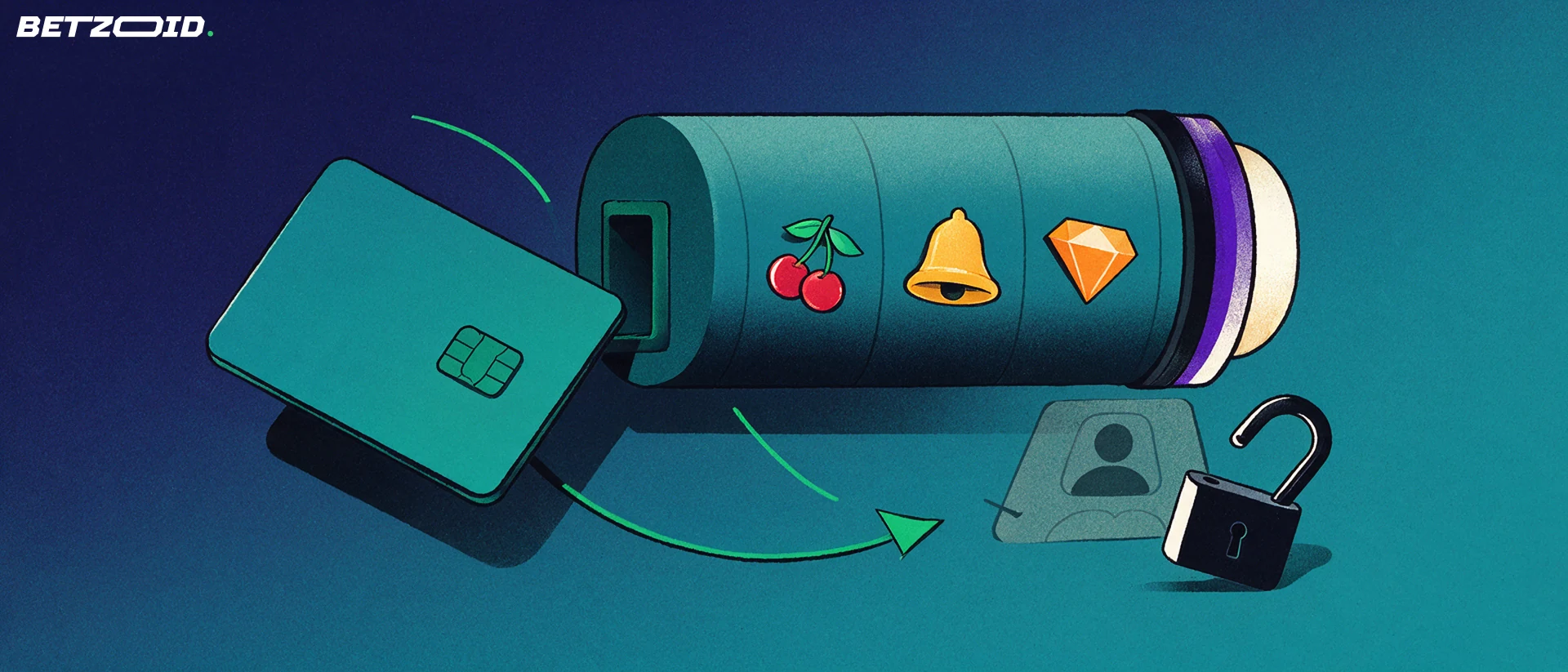
Bank-sourced data covers the basics, but document requests survive. Expect one if the name on the bank account does not match the account profile, if deposits or wins cross anti-money-laundering thresholds, if the operator has doubts about your age, or if it needs source-of-funds evidence for unusually large activity. Passport or driving licence plus a recent utility bill or bank statement is the standard set. Casinos without registration and without verification simply do not exist in the licensed market — the checks move later in the journey, they don't disappear.
Red Flags in 'No Verification' Claims
Marketing language around UK casino sites with minimal sign-up gets loose fast. These are the signals that should stop you before the deposit screen:
- Explicit "no KYC, ever" promises. Any operator serving British players legally must verify identity. A site promising the opposite is telling you it operates outside the UK framework.
- No GAMSTOP reference anywhere. UKGC licensees must integrate the self-exclusion scheme. Its absence is one of the clearest tells that the licence is foreign.
- Crypto as the only deposit route. Genuine slot sites in this market lean on Open Banking and Faster Payments, not on tokens that make refunds and dispute resolution difficult.
- Terms that reserve broad rights to void winnings. Clauses allowing an operator to cancel payouts "at its discretion" after checks are a warning regardless of how quick the sign-up was.
- Missing company and licence details. No registered address, no licence number to search, no named ADR provider — three omissions that usually travel together.
None of this means fresh brands are risky by default; plenty of recently launched casino sites hold full UK licences and offer pay by bank from day one, and some of the no-deposit deals at newer brands are worth a look once you have confirmed the licence. The test is documentation, not launch date: a verifiable licence entry and a clear payout policy outweigh any promise about skipping checks.
From Shortlist to First Instant Bank Deposit
Working through the process in order takes about ten minutes and removes the two common failure points — an unsupported bank and a bonus you were never eligible for.
- Try the game in demo first on a studio or comparison page, so you know the volatility before any money is involved.
- Pick two or three candidates from the shortlist above and search each trading name on the Gambling Commission register to confirm the licence is active.
- Open the cashier or payments page and check that pay by bank is listed, then find your own bank in the provider's picker. If it isn't there, move on.
- Read the minimum deposit and the daily withdrawal cap on that same page rather than relying on the homepage banner.
- Check whether the welcome offer excludes bank-transfer deposits or fast-onboarding accounts, and note the wagering requirement before you opt in.
- Set a deposit limit in the responsible gambling settings as soon as the account exists — with pay-and-play this is available immediately, not after some later verification step.
- Make a small first deposit, authorise it in your banking app, and play a short session.
- Request a modest withdrawal early. That first payout tells you more about the operator's approval speed and document policy than any promotional text.
The early small withdrawal is the step most players skip and the one that pays off. It surfaces a document request while your balance is small, rather than when you are trying to cash out a four-figure win.
The best casinos without registration for real money play in Britain are simply licensed sites that replaced the form with an Open Banking payment — the checks still happen, they just happen behind the scenes. Judge them on three things: a verifiable UKGC licence, support for your own bank in the deposit picker, and a clearly stated approval window for payouts back to that account. Use the demo route to choose games, then test a licensed pay-and-play cashier with a small deposit and an early withdrawal. Whichever route you take, set your deposit limit in the first minute of the session, while it is still an easy decision.