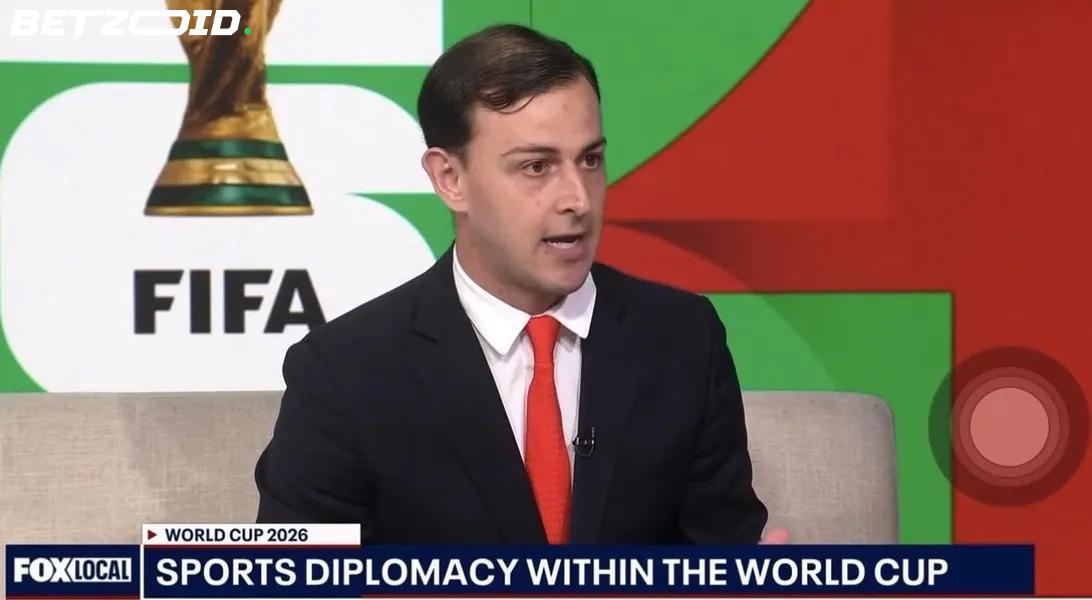
"The World Cup is the beginning, not the end." That's Harvard Fellow and strategic advisor Samuel Hymes, and after 6.8 million fans, a 27-minute halftime show, and Spain lifting the trophy at MetLife, it's hard to argue with him.
The 2026 FIFA World Cup — spread across 104 matches and 16 venues in the US, Mexico, and Canada — pulled off something that looked genuinely uncertain before kickoff. Ticket price controversies had soured the pre-tournament mood. Major sports publications, Hymes noted, were writing more about Qatar 2022 than about a World Cup hosted in their own backyard. The nerves were real.
They didn't need to be. A record 6,810,966 spectators showed up. Scottish fans drank Boston dry. Algerian, Argentine, and English supporters flooded Kansas City. Erling Haaland beat a drum and fell in love with Texas. And at the final in New Jersey, Madonna, Shakira, BTS, Ronaldo, and Ronaldinho shared a stage during a halftime show that ran nearly twice as long as the standard 15 minutes. Traditional football purists worried. Nobody's complaining now.
What comes next — and it's a long list
The World Cup wasn't a one-off. The US has either confirmed or is pursuing the following over the next decade:
- 2027 Military World Games — Charlotte, NC
- 2028 Summer Olympics and Paralympics — Los Angeles
- 2031 Men's Rugby World Cup
- 2033 Women's Rugby World Cup
- 2034 Winter Olympics and Paralympics — Salt Lake City
- A potential sixth FIFA World Cup hosting role, to be confirmed by FIFA's Extraordinary Congress in Zurich on November 23
The "American Decade of Sports Act" is the legislative framework being built around this run of events — a recognition that hosting a World Cup or an Olympics isn't just a tourism play. Hymes argues the returns come off the pitch: diplomatic relationships, foreign investment, cultural reach. Soft power, in plain language.
"If handled well, this decade of sports could help the country strengthen global relationships, improve public diplomacy, attract investment and tourism, support American business, expand cultural influence, and build people-to-people ties that outlast any single event," Hymes said.
The USMNT, Cape Verde, and what this tournament actually showed
Spain won it — a new-look defensive unit that barely conceded — but the stories worth remembering ran wider than that. The USMNT won three matches at a single World Cup for the first time in their history, reaching the Round of 16 before Belgium ended their run 4-1. The group stage buzz around US games, including packed Fan Fests at Washington DC's National Mall, showed what a genuinely engaged American football audience looks like when it has something to root for.
Cape Verde might be the tournament's most underrated subplot. The African nation, appearing at their first-ever World Cup thanks to the expanded 48-team format, drew all three group stage matches — including a goalless draw against eventual champions Spain — and pushed Messi's Argentina to extra time in the Round of 32. A lot of American fans had to Google where Cape Verde was. That's the point.
For anyone watching MLS valuations, transfer market interest in American-based players, or the long-term betting markets on US soccer's global standing, the trajectory here matters. Hymes made it explicit: "It's going to show players from overseas that we have a serious fan base here." Whether that translates to bigger names choosing MLS over retirement-adjacent leagues elsewhere is the real test.
FIFA will reportedly bank somewhere in the region of $15 billion from the tournament. Hymes thinks a meaningful cut should flow back to the host. Whether that argument gains traction in Zurich is another matter entirely.