"No room for error, and we definitely do not want to have any kind of fail." That's Bert Bos, a specialty turf farmer in Abbotsford whose sod will be under the boots of World Cup players in Vancouver from June 13. He's not being dramatic. The stakes genuinely are that high.
When billions of people watch the 2026 World Cup across 16 stadiums in three countries, they won't give the grass a second thought. That's the entire point. And making that invisibility happen is a surprisingly complex international operation involving PhD scientists, contract farmers near the Arctic tree line, and something called a "fake foot."
Not all grass is the same — and it really matters
Leah Brilman has a doctorate in grass science and has been involved with World Cup pitches since South Africa 2010. Her verdict: "It gets a lot more complex than people think."
The grass varies by stadium climate. Hot cities are using bermudagrass-based blends built for heat. Temperate venues like Vancouver and Mexico City get ryegrass blends that thrive in cooler conditions. The specific varieties being used today are the product of decades of academic and commercial research — and they're already an upgrade on whatever was used four years ago. Relentless breeding produces tougher strains that fight off disease, resist weeds, and need less water and fertiliser per generation.
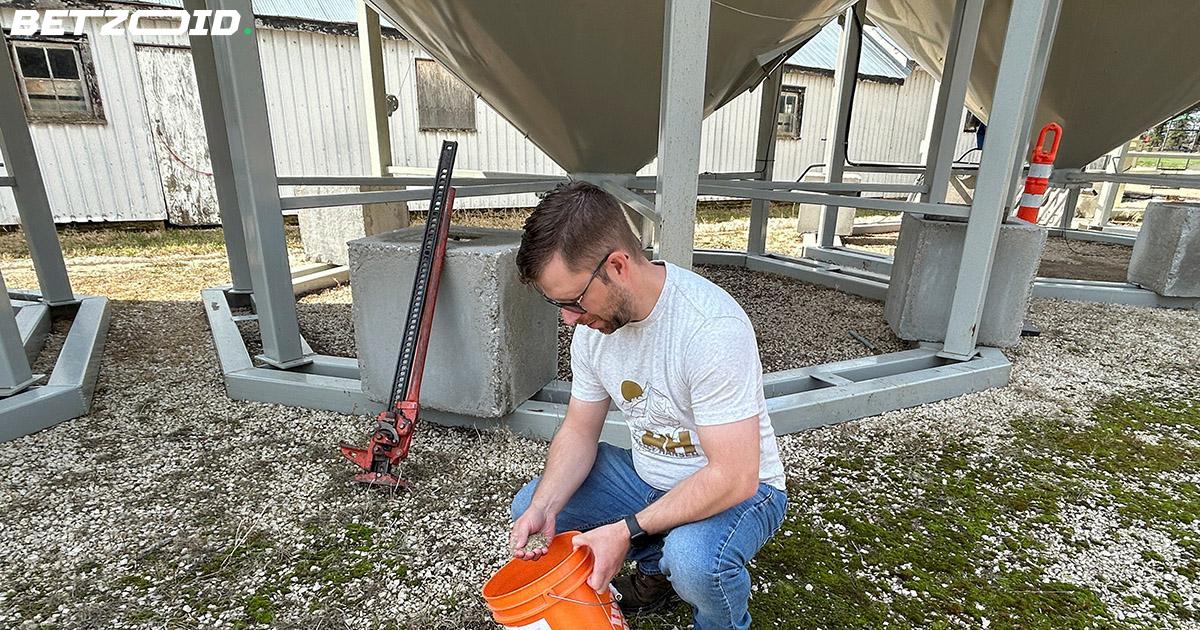
The seed itself comes from places most football fans couldn't find on a map. Lorne Boundy farms near Arborg, Manitoba — "just south of the tree line" — and his community's ryegrass will end up on World Cup pitches. There are only a few hundred grass seed farmers in his entire province.
Fake feet and five-millimetre tolerances
Bos's Vancouver pitch is grown atop plastic, develops sideways-turning roots, and the blades push up through a brushy netlike fabric. Across any three-metre stretch, the height variation allowance is just five millimetres. Testing involves a mechanical "fake foot" that replicates the rotation of a footballer's stud mid-turn.
The area in front of goal is a particular obsession. Soccer tears it up faster than rugby or American football — different players, different movement patterns, different abuse. "You put seed back in that area all the time," Brilman says. This World Cup adds another layer of difficulty: several stadiums have permanent artificial turf installed, meaning natural grass pitches have to be laid on top.
- Vancouver and Mexico City: ryegrass blends for cooler climates
- Hotter host cities: bermudagrass-based blends
- Testing standard: max 5mm height variation per 3 metres
- Pitches tested with mechanical "fake foot" simulating footballer movement
- Grass varieties continuously improved each generation for durability and sustainability
The nightmare scenario everyone is quietly trying to avoid? The 2023 Super Bowl, where players on both teams spent the post-match talking about the pitch rather than the game. A slip-and-slide embarrassment at the World Cup final would follow the sport for years.
For Tom Rinn, who manages DLF's processing and distribution, the reward is simpler: sitting with friends, watching a match, and pointing at the screen. "That's our grass, that one right there, that came through here."