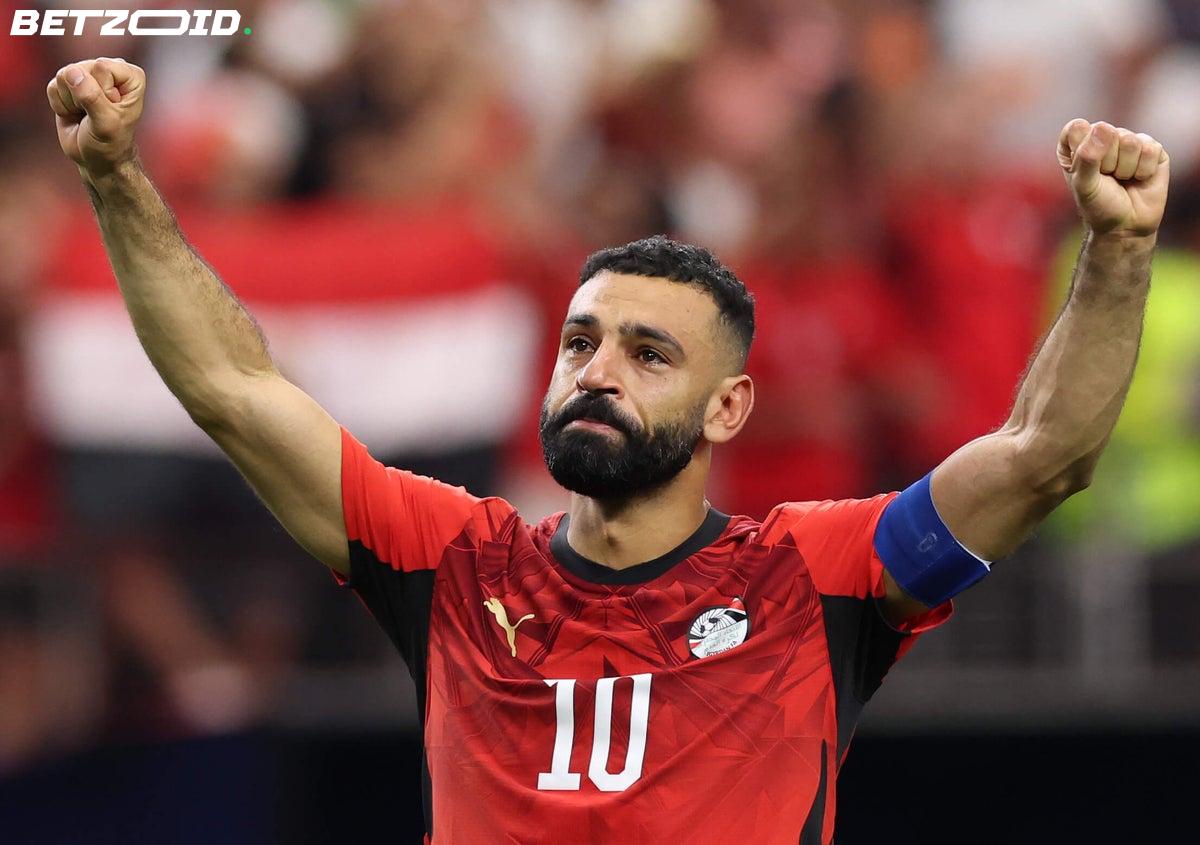
Mohamed Salah stood yards from Lionel Messi at the final whistle, both of them shaking their heads. Egypt had just pushed Argentina — the team built around the greatest player alive — to the absolute edge of a World Cup exit, and lost. That's not a consolation. But it tells you something about where Salah is right now.
He turned 34 last month. The same age Messi was when Barcelona let him go. Liverpool already have. And what Salah did over the past month in the United States — dragging Egypt to their first-ever World Cup knockout win, converting a Panenka in a shootout, running himself into the ground against Argentina despite fitness concerns — is going to cost his next club a lot of money. After watching him against Argentina, you remember why.
The VAR robbery and what it means for his valuation
Two moments in the Argentina match crystallise Salah's quality and his misfortune. First, VAR wiped out what would have been an assist from a pass that had no right to be that good. Then, late on, he appeared to be tripped inside Argentina's box. Had it been given, nobody was taking that penalty but him — and given he'd already Panenka'd one in this tournament, the outcome wasn't exactly in doubt.
He didn't get it. Argentina scored at the other end. Egypt went home.
His 12 goals last season at Liverpool were a sharp drop from his peak years, and the club used that — alongside wage costs and his age — to justify cutting ties. Ronaldo was 33 when Real Madrid decided the same. Messi was 34 at Barcelona. Salah is simply following a path that even the legends eventually walk. The question is where he walks to next.
Saudi Arabia, MLS, or something else entirely
A return to European elite football looks unlikely. The best midfields in Europe are congested, the top managers want high-pressure runners, and players who need space and freedom to function — however brilliant — tend to get squeezed out. Salah needs the ball to feet, room to operate, an attacking partner. He gets that with Egypt. He stopped getting it at Liverpool.
Saudi Arabia made a serious offer for him back in 2023, and that interest hasn't disappeared just because he's 34. The money there is still generational for the right name, and Salah is exactly that. MLS was on the table too — his representative was exploring American options before his Liverpool contract extension in 2025 — but whether the league's finances can match what the Saudi Pro League offers for a player of his profile is genuinely unclear.
What's certain is this: Salah still has international football ahead of him. Egypt could realistically challenge for the Africa Cup of Nations, with editions pencilled in for next summer and 2028. He'll be 37 when the 2030 World Cup kicks off, and there's no guarantee Egypt qualify. But walking away from AFCON chances when this Egyptian squad is arguably the best in the country's history? That would be a strange call.
He told reporters after the shootout win over Australia that his Panenka might have been the last touch of his World Cup career — and he did it anyway because he thought it would lift his teammates. Make of that what you will about his mindset. And his next employer, whoever they are, should probably be paying very close attention to it.