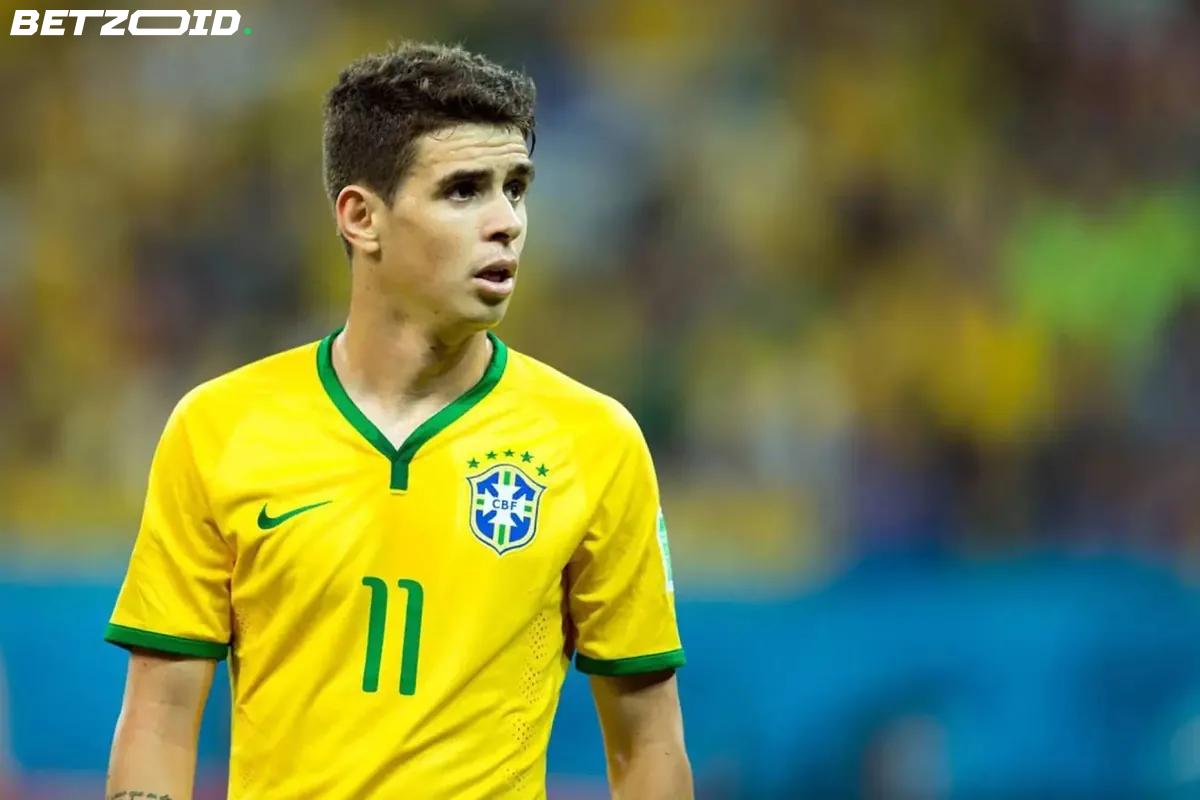
"My blood pressure was dropping, the heart was stopping. Then they gave me a cardiac massage." That's how Oscar describes the moment last November that ended his career — not a tackle, not a transfer, not a quiet decision in an office. His heart stopped at a São Paulo training session, and the game was over.
The Brazilian midfielder, 34, confirmed his retirement on Saturday. It was the only call that made sense.
A career that spanned three continents
556 professional appearances. 136 goals. 203 assists. Oscar moved through São Paulo, Internacional, Chelsea, and Shanghai SIPG — a trajectory that took him from Brazilian football through the Premier League and into China's big-money era, where he became one of the defining names of that particular gold rush.
48 caps for Brazil. 12 international goals. A London 2012 Olympic medal. This wasn't a fringe player drifting out quietly — Oscar was one of the more complete midfielders of his generation, capable of linking play, scoring, and creating in equal measure.
He had a contract with São Paulo until 2027. The plan was to finish where he started. It didn't work out that way.
What he felt when it happened
Oscar has spoken about the syncope with the kind of clarity that only comes once the initial shock has faded. "Everyone says that when you're going to die, you leave the body. I had some of those feelings. You are unconscious and you are in a dream that is very good." Then: cardiac massage. Then: his son's voice pulling him back.
"I could see my son talking, like saying: 'Come back, dad.'"
He hasn't played a single minute since. Now he won't.
São Paulo lose a player they were building around, with a long-term contract already in place. That's a gap in their squad that carries weight — both in terms of quality and the emotional significance of Oscar's return to the club. The story was supposed to end differently. Instead, it ends here, with a retirement statement and a training ground that almost became something far worse.