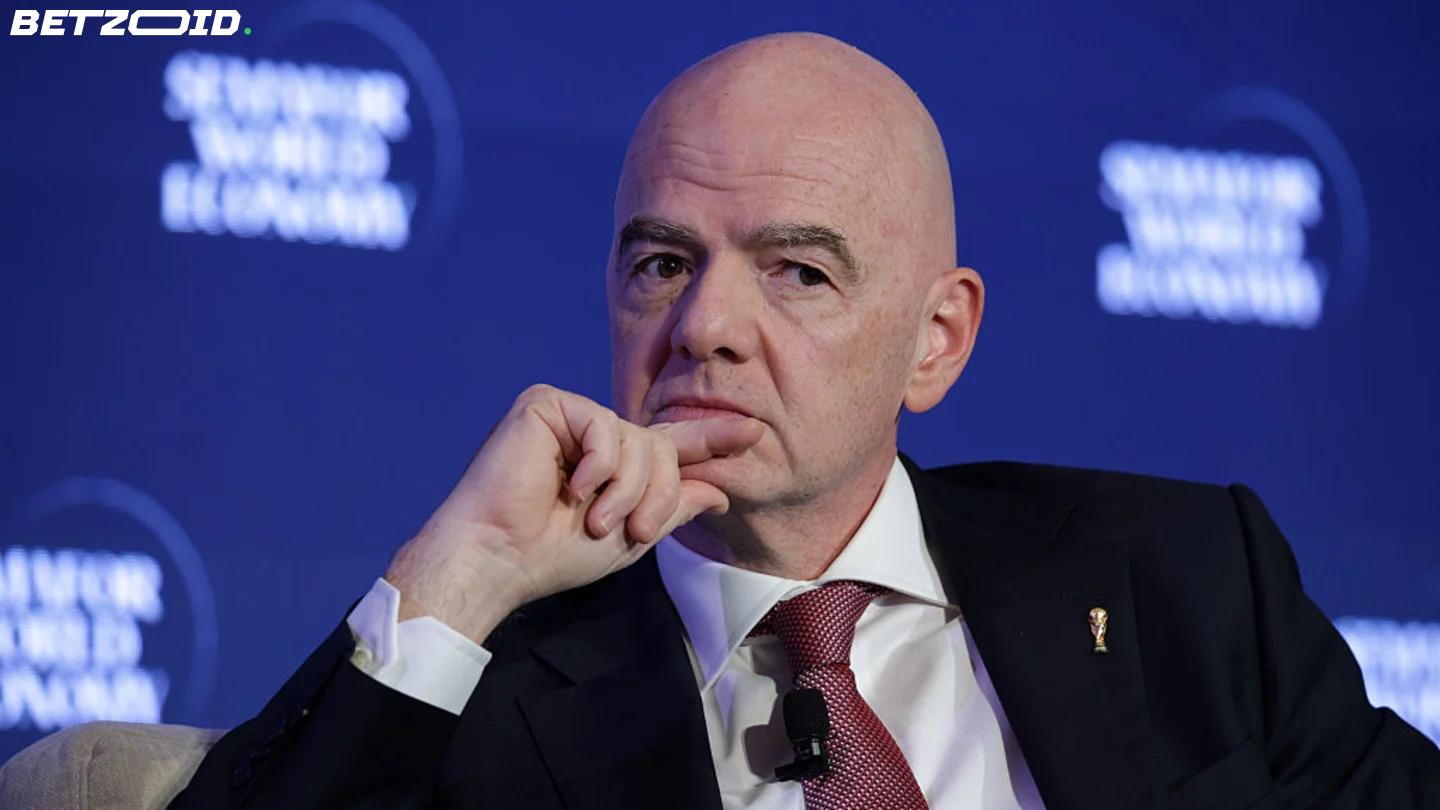
FIFA requested a "level four" motorcade escort for Gianni Infantino in Vancouver this week — a security arrangement one rung below what the Pope receives, and a full level above what Canada's own Prime Minister Mark Carney is granted. Vancouver police turned it down. The damage to FIFA's image, however, is already done.
The request, first reported by The Times, would have provided Infantino with a high-speed convoy capable of blocking traffic and running red lights — the kind of treatment typically reserved for the U.S. President. Infantino's office has since distanced him from the ask, with a FIFA spokesperson insisting Tuesday that "the FIFA President was not aware of, or involved in, any requests with authorities in relation to his transportation and security matters."
Maybe. But someone at FIFA thought this was reasonable. That's the problem.
The gap between FIFA's self-image and reality
Infantino is in Vancouver for the 76th FIFA Congress, meeting with representatives from all 211 member associations to discuss 2026 World Cup logistics, Russia's potential return to sanctioned competition, and the sport's future direction. These are genuinely consequential conversations. None of them require a papal motorcade.
Soccer's footprint in Canada, while growing, remains well behind hockey — and well behind the sport's standing even in the United States, where it still competes for attention against the NFL, MLB, and NBA. Infantino is not a household name in Vancouver. He is not a household name in most of North America. Requesting security infrastructure that dwarfs what the country's own head of government receives doesn't signal importance. It signals a total disconnect from the places FIFA is asking to host its showpiece tournament.
And that disconnect isn't just symbolic.
Fans are already paying for FIFA's priorities
World Cup final tickets at New York New Jersey Stadium are trading above $10,000 per seat. Average-view tickets to high-profile group stage matches are running into thousands. The tournament has priced out the vast majority of the people who actually watch football.
Transportation is compounding the problem. Train fares from Penn Station to MetLife Stadium in East Rutherford are expected to spike from a standard $12.90 to around $150 per trip — because FIFA has contributed nothing to transit infrastructure. New Jersey Governor Mikie Sherrill was direct about it: "We inherited an agreement where FIFA is providing $0 for transportation to the World Cup. And while NJ TRANSIT is stuck with a $48 million bill to safely get fans to and from games, FIFA is making $11 billion."
Eleven billion dollars in projected revenue. Zero dollars for the train that gets fans to the stadium. But somehow the budget stretches to exploring near-head-of-state motorcades for the president.
Anyone pricing up outright or group stage markets for the 2026 World Cup should keep the broader picture in mind: this is a tournament being run by an organisation that appears far more focused on its own prestige than the fan experience it's selling. Accessibility issues, inflated costs, and governance optics this bad tend to generate noise that follows a tournament all summer.
"FIFA should pay for the rides," Sherrill said. "But if they don't — I'm not going to let New Jersey get taken for one."
At least someone in this story is reading the room.