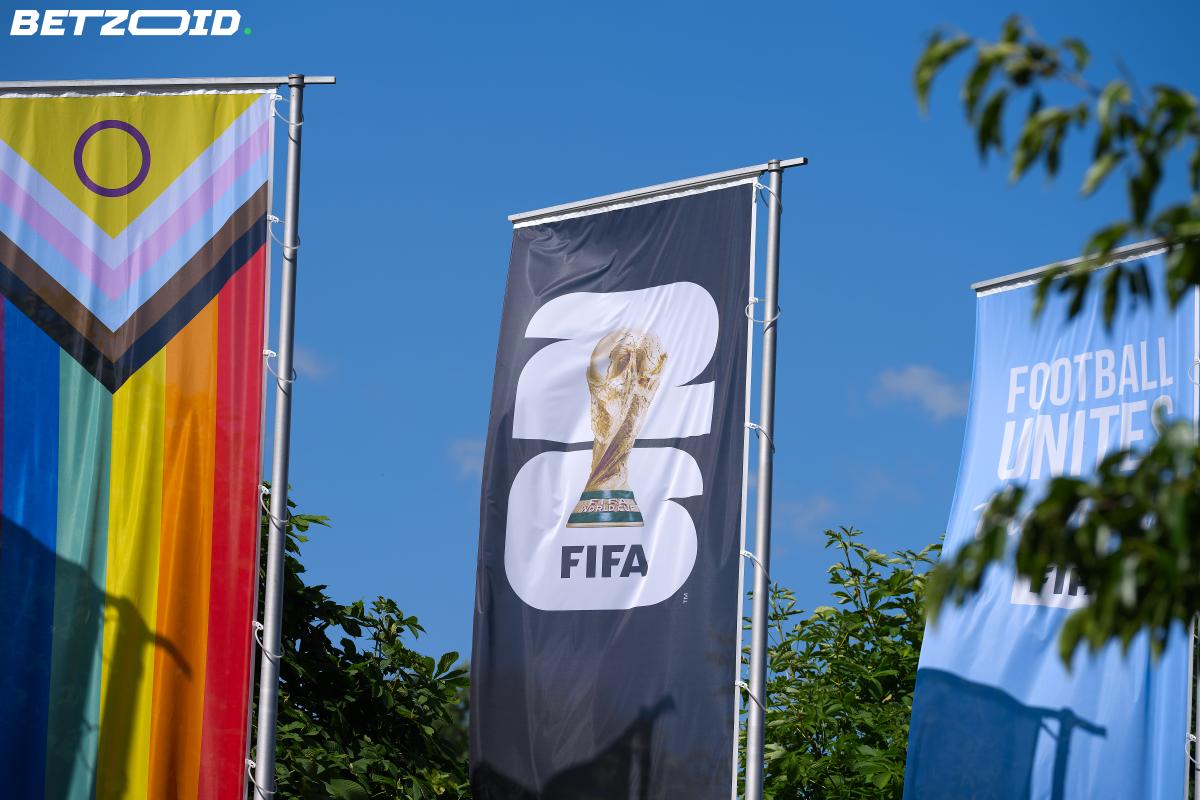
"FIFA cannot simply hand responsibility back to national associations from countries that criminalize homosexuality and pretend its anti-discrimination rules are being enforced." That's human rights campaigner Peter Tatchell, and he's not wrong. What happened in Seattle on Friday wasn't a culture clash. It was FIFA getting caught.
Seattle's local organizing committee had spent months building a Pride Match program around the city's annual June 26 Pride parade. Then the bracket dropped. Iran and Egypt — two countries with some of the world's most severe anti-gay legislation — were the opponents. The organizers didn't blink. FIFA did.
FIFA President Gianni Infantino moved quickly to distance the governing body from its own event. "There will be no 'Pride Match' at the World Cup," he said in January. "There will be a FIFA World Cup match in Seattle, and, on the same day, events organized by external organizations will be taking place in the city." Translation: we'll take the broadcast rights, you take the responsibility.
The rules FIFA won't enforce
Here's the problem with that position. FIFA wrote sexual orientation into its anti-discrimination statutes. It built a No Discrimination campaign around it. It sells inclusion to sponsors and broadcasters as part of the product. You can't outsource the awkward bits to a city organizing committee and call it done.
Tatchell wrote to Infantino last week, asking FIFA to seek written assurances from 11 World Cup nations that criminalize homosexuality — among them Iran, Egypt, Saudi Arabia, Ghana, and Qatar — confirming that no player would be excluded from a squad because he is gay. FIFA's reply, dated June 23, didn't touch the question. "The selection of players is the responsibility of the respective participating FIFA member associations," it said. Passed. Moved on.
Iran's Football Federation president Mehdi Taj called the Pride branding "inappropriate" and "an irrational move." Egypt's staff blocked Pride questions at practice. Iran requested its pre-match press conference be limited to football topics only. Both federations wrote to FIFA demanding the celebrations be canceled — and were apparently assured that nothing Pride-related would appear inside the stadium or in the official match program.
Seattle's Leo Flor, chief legacy officer for Seattle FWC26, held firm. "Once the teams were drawn for this match, no change to our approach," he said. "We are excited to show the world, to welcome the world, to celebrate as a community." The city supplied the conviction. FIFA supplied cover.
Qatar, Saudi Arabia, and the longer pattern
This isn't new. At the 2022 World Cup in Qatar — where same-sex relations are also illegal — European captains abandoned plans to wear OneLove armbands after FIFA threatened them with yellow cards. FIFA used its own tournament authority to suppress an inclusion gesture. Germany's players covered their mouths in the pre-match photo. The German FA said it plainly: "Denying us the armband is the same as denying us a voice."
Four years later, FIFA says rainbow flags are now permitted in Seattle's stadium. Progress, apparently, is letting fans hold a flag while the governing body refuses to ask whether a gay player could even make it onto the pitch for one of the competing nations.
And the 2034 World Cup goes to Saudi Arabia, which carries a maximum penalty of death for same-sex activity, according to the Human Dignity Trust. Infantino called the bid "absolutely incredible" and suggested the tournament could be a catalyst for social change. Amnesty International said the award was made without adequate human-rights protections. Human Rights Watch called it empty commitment. Both assessments look accurate.
The Premier League, watching its own rainbow armband debates implode — including captain Sam Morsy refusing to wear one on religious grounds in December 2024 — quietly ended its partnership with LGBTQ+ charity Stonewall last summer and pulled the Rainbow Laces program after a meeting with all 20 club captains. Football's most commercially powerful league decided the symbol had become more divisive than unifying.
FIFA, watching all of it, picked the worst option: claim the values, dodge the enforcement, and let Seattle take the heat. "LGBT+ fans may be welcome as spectators," Tatchell said, "but FIFA has failed to ensure LGBT+ players are welcome as footballers." That sentence is the whole story.