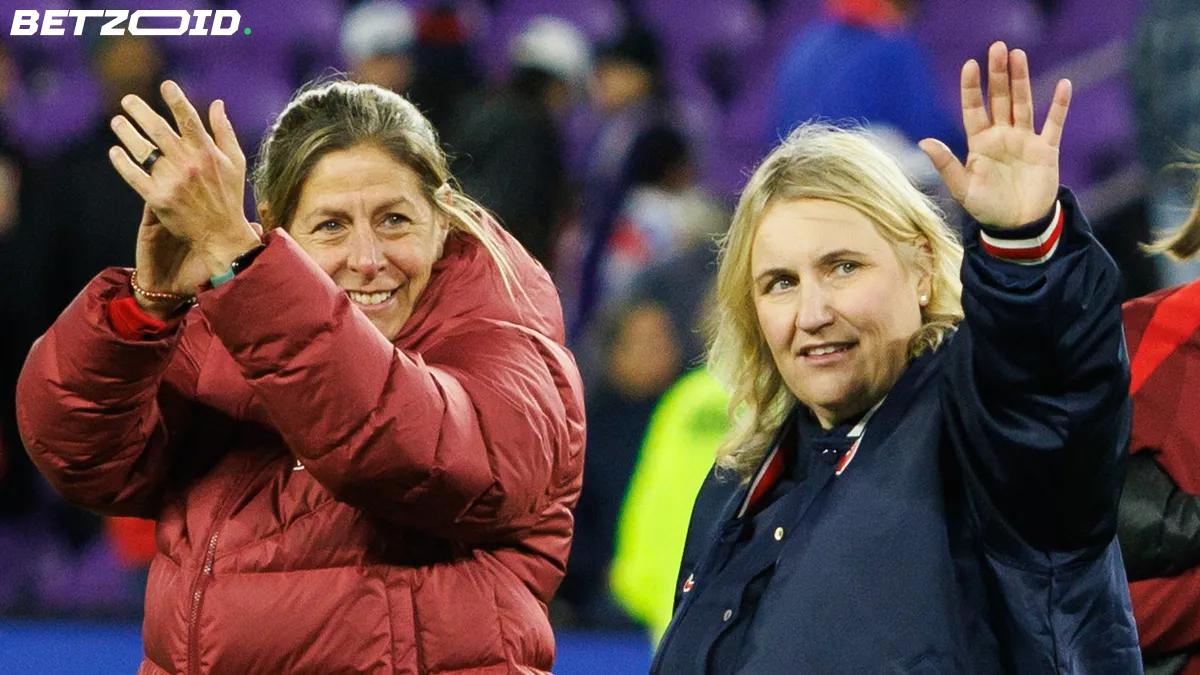
"It's an amazing day for women's football." That's Emma Hayes, USWNT head coach, reacting to a FIFA rule that is genuinely worth celebrating: starting with the Under-20 World Cup this September, every team in a FIFA women's tournament must have at least two women on its bench — and at least one of them must be the head coach or an assistant.
Not a suggestion. A requirement.
The context makes this more significant than it might first appear. At the 2023 Women's World Cup, only 12 of the 32 teams were coached by women. In the NWSL, just four of 16 clubs currently have female head coaches. Even at last year's College Cup, every head coach and every assistant on Florida State's staff — national champions — was male. The pipeline into coaching for women isn't just thin. In most places, it barely exists.
Why the mandate matters
The standard justification for slow progress is always the pipeline — wait for more women to play, and eventually more will coach. FIFA isn't buying that argument anymore, and frankly, neither should anyone else. Since 2021, the governing body has supported 759 female coaches from 73 countries through its education scholarship program. That's real groundwork. This new rule is the pressure that follows it.
Jill Ellis, two-time World Cup-winning coach and now FIFA's chief football officer, put it plainly: "There are simply not enough women in coaching today. We must do more to accelerate change by creating clearer pathways, expanding opportunities and increasing the visibility for women on our sidelines."
Ellis knows what she's talking about. So does Hayes, who inherited a USWNT team that had just suffered its worst-ever early exit at a major tournament and delivered Olympic gold less than three months later. The idea that women lack the skill set to lead — in coaching, in front offices, anywhere — has been disproved repeatedly. The obstacles are structural, not meritocratic.
The gaps FIFA still needs to fill
There are legitimate questions FIFA hasn't answered yet. How will compliance be monitored? What's the penalty for federations that ignore the rule or put women on the bench as decoration rather than genuine contributors? Those aren't minor details — there are still national federations that treat women as an afterthought, and a rule without enforcement is just a press release.
- FIFA has not specified penalties for non-compliance
- No mechanism has been announced to verify that female staff are active coaching participants, not token appointments
- The rule applies to FIFA women's tournaments only — domestic leagues and confederations are unaffected
It was less than three years ago that the then-president of Spain's football federation kissed World Cup winner Jenni Hermoso without consent and faced no immediate consequence from the sport's institutions. Goodwill only goes so far without accountability behind it.
Still. FIFA mandating this — not recommending it, not encouraging it, mandating it — shifts the baseline. "I can think of so many female coaches across the women's game that deserve the opportunity to lead or be a part of a high-level coaching staff," Hayes said. "This will assist in providing more of those opportunities."
The prize money gap remains. The resource gap remains. But forcing female coaches onto the sidelines of the sport's highest-profile women's stages is a structural change, not a symbolic one. The sport will look different because of it.