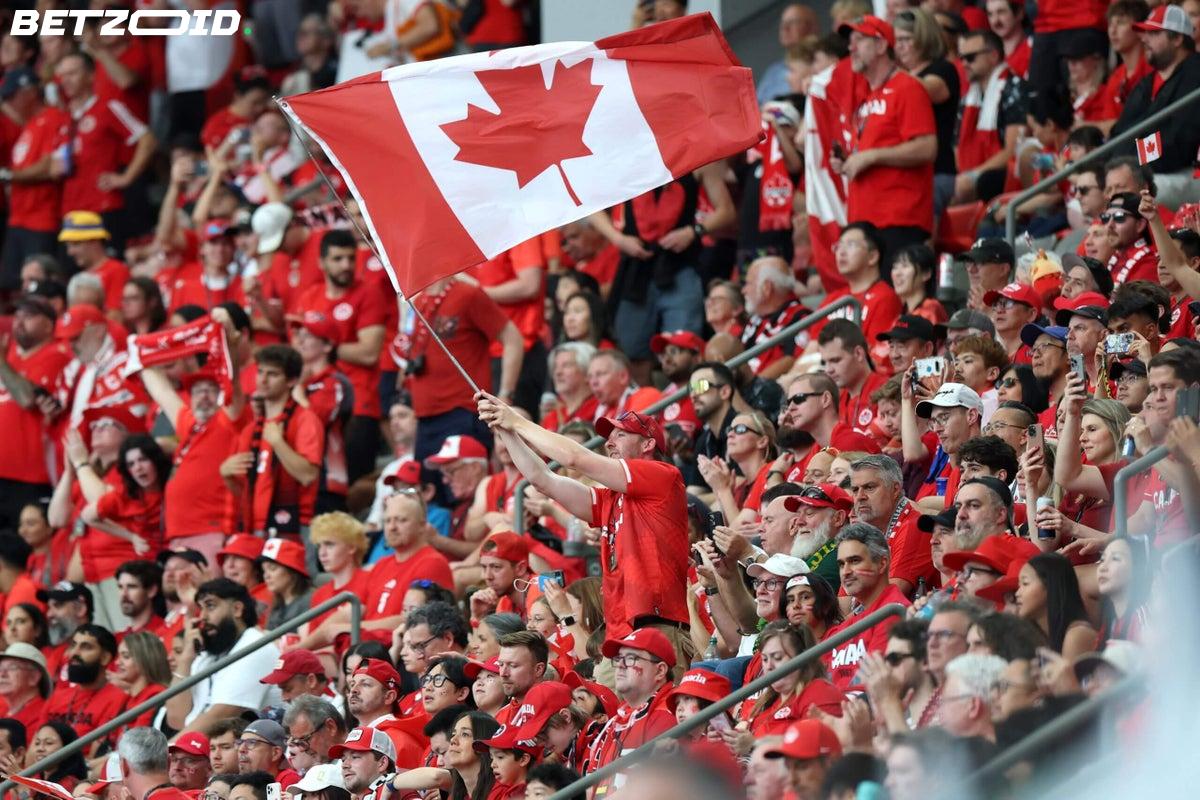
Switzerland's Murat Yakin had just steered his side into the World Cup quarterfinals for the first time since 1954. But ask him about Vancouver, and he lit up more than he did talking about the result. "A wonderful city," he said. "I really want to come back here with my family." That's a World Cup coach, fresh off a historic achievement, waxing lyrical about a co-host nation that many treated as an afterthought when this tournament was announced.
Canada got 13 games. The United States got 78. Mexico hosted the opener. On paper, Canada was the kid grateful for a seat at the table. On the ground, something else entirely happened.
The numbers don't lie
5.4 million Canadians watched their round-of-16 exit against Morocco. In a country of 41 million, that's roughly one in every eight people. For context, a combined 42 million Americans — across a population eight times larger — tuned in to watch the USMNT lose to Belgium. As a share of population, Canada matched or edged the United States. Nobody questions American soccer interest. Nobody should question Canada's anymore either.
The stadiums delivered, too. Kevin De Bruyne, after Belgium beat New Zealand 5-2 at BC Place, said it "feels like a real football stadium" — high praise from a man who has played in the Etihad, the Bernabéu, and the Nou Camp. Roberto Martinez, then coaching Portugal at BMO Field, called it "a shame" there were no more games in Toronto. BMO Field, with its Premier League-style intimacy, may be the best soccer-specific ground in North America north of Mexico City. That matters for Toronto FC's long-term identity and attendance numbers.
Fan culture showed up everywhere. Thousands marching through streets before matches. Packed fan festivals. Colombia and Portugal supporters camped outside team hotels. Public transit ran smoothly to grounds sitting at the downtown core of both cities. Christine Sinclair reading announcements on Vancouver's Skytrain. These are not small details — they're the fabric of a host city done right.
What comes after the party
The 1994 World Cup in the United States took years to bear fruit — MLS didn't kick off until 1996, and the league spent a decade finding its footing. Canada has that same inflection point now. Two MLS clubs in host cities. Canadian Premier League sides nearby. A national team that went deep enough in this tournament to matter to casual fans.
The looming threat is the Vancouver Whitecaps' stadium situation. Losing the club to relocation after everything this summer built would be the kind of own goal that haunts a federation for a generation. The provincial government needs to act.
- BC Place drew rave reviews but is a converted NFL/CFL venue — a permanent soccer-specific stadium in Vancouver remains the missing piece
- BMO Field's temporary 17,000 extra seats still felt insufficient given the demand; a capacity expansion conversation is overdue
- Corporate Canada and broadcasters now have hard viewership data to justify investment in domestic soccer
Canada Soccer CEO Kevin Blue framed this as a gateway moment, pointing to the national team's success and the TV ratings as proof of "the power of this sport." He's right. The data backs it. Whether Canadian soccer institutions are bold enough to capitalise on it is the only question left worth asking.