
If you're hunting for casinos accepting Zimpler from a Canadian address, the decisive question isn't which logo sits on the cashier page — it's whether the provider can link to your bank at all. Zimpler is a Swedish pay-by-bank service that authorises payments through a mobile number and a bank login, and its coverage has grown around European banking rails rather than Canadian ones. So a site can display the brand honestly for its Finnish or German players and still show you nothing when you log in with a Canadian account.
Our team at Betzoid works through this the practical way: open the cashier after registration, compare the live method list with the payment table buried in the terms, and treat marketing strips as unverified until the two match. Below you'll find how to confirm real support, what a deposit actually looks like step by step, where limits and currency conversion quietly cost you money, and which Canadian-friendly methods to line up as a fallback. Treat every Zimpler claim in the shortlist as something to check in the cashier, not a guarantee.
Recommended Casinos Accepting Zimpler (October 2026)






Zimpler at Canadian Casinos: The Short Answer
Zimpler works as an account-to-account payment layer: you confirm a transfer from your own bank rather than typing card numbers into a casino. That model is fast and clean where it's supported — and largely absent for Canadian residents.
- Zimpler's core markets are European, with bank-login coverage built around Nordic and continental banks. Canadian chequing accounts generally sit outside that network, so a deposit attempt can stop at the bank-selection screen.
- A logo on a payment page proves the casino has a Zimpler integration somewhere, not that it's switched on for your country, currency or account status.
- Where the method is live, deposits land instantly and appear in your balance before the bank transfer settles behind the scenes.
- Payouts are a separate question entirely: plenty of operators run pay-by-bank services as deposit-only and push withdrawals to a standard bank transfer.
- CAD is rarely the settlement currency, so a conversion step usually sits between your bank and the casino balance.
So the honest answer for Canadian players: unconfirmed until you see it in your own cashier. If you find online casinos that accept Zimpler in Canada with a working bank link, treat it as a bonus rather than a search criterion, and pick your operator on licensing, payout speed and terms first.
Checking Whether a Site Truly Takes Zimpler
Verification takes about five minutes and saves a wasted registration. The order matters: start with the sources an operator has to keep accurate, and finish with the ones designed for marketing.
| Where to look | What a match confirms | What it still doesn't prove |
|---|---|---|
| Cashier deposit list after registering with a Canadian address | The method is enabled for your country and account currency | That your specific bank appears on the provider's selection screen |
| Payment table inside the terms and conditions | Contractual limits, processing times and any listed charges | Current availability — these tables are often months behind the cashier |
| Footer or banking-page logo strip | The operator has an integration on at least one of its licences | Anything about Canadian access; strips are usually global templates |
| Live chat, asked with your country stated explicitly | A written answer you can screenshot before depositing | Accuracy — agents frequently read from the same outdated strip |
| Withdrawal method list on a funded account | Whether payouts can return the same way or must route elsewhere | The eventual timeline, which depends on verification status |
The pattern we see repeatedly is a mismatch between rows one and three: the logo strip is generous, the live cashier is not. When they disagree, the cashier wins — it reads your geolocation and account currency in real time, while the marketing page is static HTML someone updated two rebrands ago. That gap widens among newly launched brands, so if you're shortlisting recently opened casino sites for Canadian players, ask support in writing before you fund anything. A saved chat transcript also gives you something concrete if a deposit later fails and you need the payment desk to explain why.
Signals That a Payment Page Is Outdated
A few tells are reliable. Logos for wallets that left the Canadian market years ago, still sitting between current options. A currency list that stops at EUR, SEK and GBP while the page promises CAD accounts. "Coming soon" labels with no date. Minimums quoted only in euros on a page addressed to Canadians. And the strongest signal of all: methods named on a promotional banking page that never appear in the terms' payment table. When a Canada-specific option like Interac sits beside Nordic-only services in one undifferentiated row, you're looking at a global template, not a country-specific cashier.
How a Zimpler Casino Deposit Works
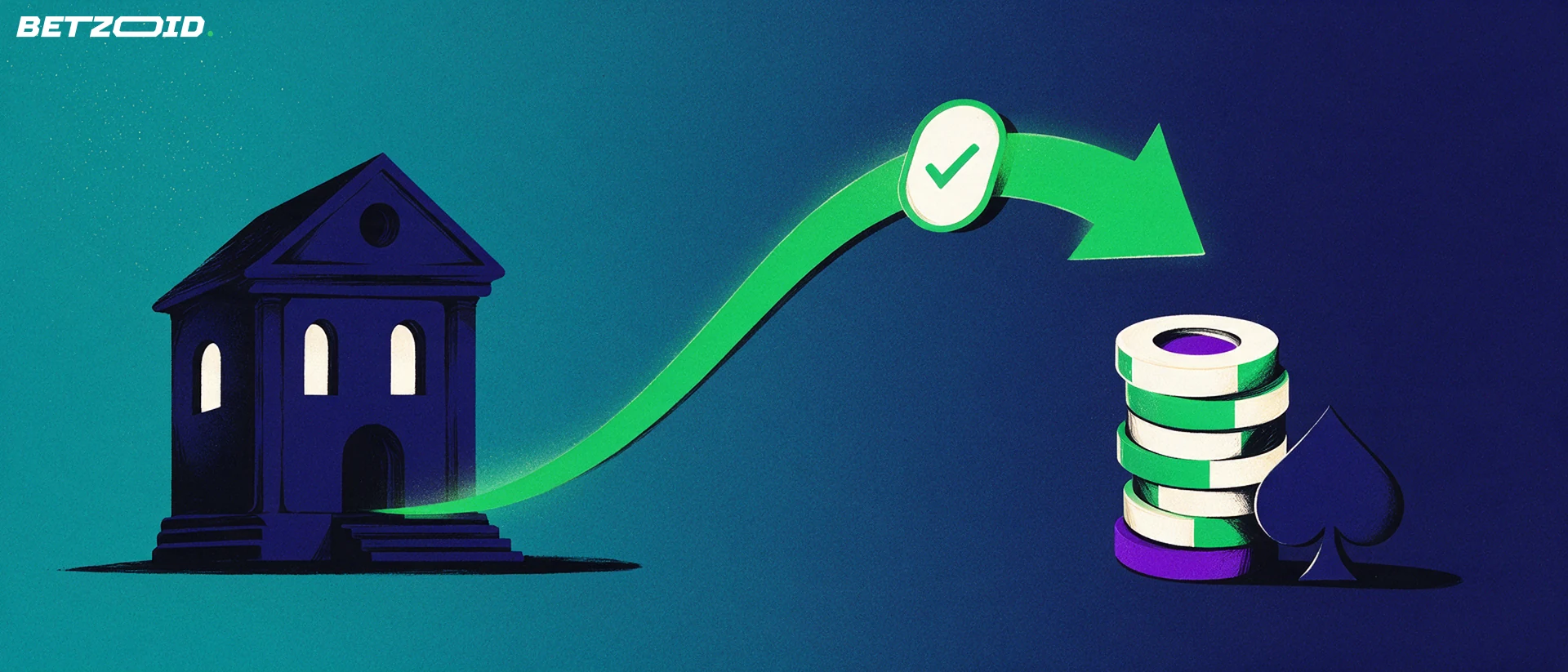
Where the method is genuinely live, the flow is short and runs entirely on your phone. Knowing how to deposit at a casino with Zimpler mostly means knowing which step tends to break.
- Open the cashier, choose Zimpler from the deposit list, and enter the amount in the casino's account currency — not in CAD unless the account itself is CAD-denominated.
- Enter your mobile number. That's the identifier the provider uses to recognise you; there's no separate wallet balance to pre-load.
- Pick your bank from the list the provider returns. This is the usual failure point for Canadian players, because the list draws on supported banks in supported markets.
- Authenticate in your banking app or with the national e-ID method your bank uses, then approve the amount shown.
- Confirm the payment. Funds normally credit the casino balance within seconds, even though the interbank settlement finishes later.
- Check the transaction history in your casino account for the recorded amount and currency — the casino measures bonus qualification against that record.
Notice what's missing: no card number, no long registration, no separate top-up. That's the appeal, and it's why mobile casinos supporting Zimpler in Europe lean on it for one-tap repeat deposits. If step three returns an empty or Europe-only bank list, nothing you do in the casino cashier will fix it; the block sits at the provider layer.
How Bank Linking and Mobile Confirmation Work
The mobile number isn't cosmetic. The provider matches the number's country to a banking network it can reach, so a Canadian +1 number often falls out of scope before a bank list is even generated. If you clear that step, the confirmation arrives either as a push in your banking app or as an in-app approval screen, and it typically expires within a couple of minutes. Two practical habits help: keep the banking app installed and logged in before you start, and avoid switching networks mid-flow, since a dropped session forces a full restart rather than a retry.
Deposit Limits, Fees and CAD Conversion
Direct charges are the smaller part of the story. Pay-by-bank providers usually take their cut from the merchant, and most casinos don't add a surcharge on deposits, so the headline answer on Zimpler casino deposit limits and fees is often "no visible fee" — while the real cost hides in currency conversion.
Work it through. Suppose the casino account is in euros and your bank applies a foreign-currency margin of around 2.5% on the conversion. A deposit worth roughly C$200 costs about C$5 more than the quoted amount. Deposit four times in a month and you've spent C$20 before a single spin. Now add the return trip: if a withdrawal converts back, the same margin applies again, so a C$400 payout can shed another C$10. None of that appears in the casino's fee table, because the casino isn't the one charging it.
Transaction limits come from two directions. Casinos set per-deposit minimums and daily or monthly ceilings tied to your account and verification level. Providers add their own per-transaction caps and rolling-period limits, which can be lower for a freshly linked bank account than for one with payment history. A large first deposit is therefore more likely to be refused than a modest one — so if you're testing a new site, start small, confirm the money lands with the amount you expected, then scale up once you know what the conversion actually cost you.
Who Sets the Minimum: Casino or Provider
Both, and the higher figure wins. If a casino sets a €10 minimum for all methods while the provider technically clears €5 transactions, you still need €10. Go the other way — a casino advertising a €5 floor through a method whose own minimum is higher — and the cashier simply rejects the smaller amount, usually with a generic error rather than a helpful explanation. Check the method-specific row in the terms, not the site-wide minimum in the banner, because promotional pages quote the lowest number available across all payment options.
Withdrawals and Bonus Eligibility
Two things routinely surprise players here. First, deposit support and payout support are separate switches. Many operators run account-to-account services as deposit-only and send withdrawals back by bank transfer instead, which turns a same-day expectation into a multi-day wait. So when you ask whether you can withdraw casino winnings with Zimpler, check the withdrawal tab on a funded account rather than the deposit list — they're frequently different.
Second, closed-loop rules still apply. Most licensed operators return funds to the original source up to the amount deposited, and only route the profit elsewhere. If the deposit route can't accept a payout, you'll verify bank details separately, which means identity documents and a proof of account before the first withdrawal clears. Budget a day or two for that the first time, regardless of how fast the deposit was.
Bonuses deserve the same scrutiny. Casino bonuses for Zimpler deposits are usually the standard welcome offer rather than anything method-specific, but exclusion lists exist, and a qualifying deposit made through an excluded method simply doesn't trigger the promotion. Read the excluded-methods clause before funding, and compare it with the wagering terms on the first deposit bonus offers available to Canadian players. Where the offer is credited in a currency other than CAD, the minimum qualifying deposit also shifts with the exchange rate — a €20 threshold isn't a flat C$20.
Where Zimpler Payments Can Fall Short
Even in markets where the service runs smoothly, there are structural limits worth weighing before you build a bankroll around it.
- Geographic coverage is the hard wall. Without a supported bank in a supported country, the flow ends at bank selection, and no amount of casino-side support can override it.
- Deposit-only implementations are common, leaving you with a fast way in and a slow bank transfer on the way out — the opposite of what most players want.
- Currency conversion applies twice for Canadian accounts funded into euro-denominated casinos, and the margin belongs to your bank, so the casino can't waive it.
- Bank transfers offer no chargeback mechanism comparable to a card dispute. If a payment goes wrong, resolution runs through the casino's payment desk and the provider's support, not a card issuer.
- Fresh bank links can carry tighter caps than established ones, so a first deposit may be refused at an amount that would clear a month later.
- Support agents often can't distinguish integration availability from country availability, which produces confident answers that turn out to be wrong at the cashier.
None of that makes the method risky in the security sense — bank-authenticated payments avoid sharing card data at all. The practical risk is wasted time. If you'd rather sample a site's games before committing to a payment route that may not work, a no-deposit offer at a newly launched casino lets you test the lobby first and sort out banking afterwards.
Backup Payment Options for Canadian Players
Line up a second method before you register, because the fallback is likely to become your primary. Interac e-Transfer is the most widely supported Canadian route at offshore casinos, handles CAD natively and skips conversion entirely. iDebit and Instadebit sit on the same banking rails with an account layer on top. MuchBetter, Jeton and Payz cover the wallet category, with the usual trade-off: quick payouts, occasional bonus exclusions. Cards work until an issuer declines gambling MCCs, which happens often enough to be worth a backup.
Be clear about what these are. They're alternatives to Zimpler at Canadian casinos, not evidence that a site supports it — an operator listing Interac and MuchBetter has told you nothing about pay-by-bank availability. Withdrawal speed usually depends more on the operator's approval queue than on the rail itself, so compare the method list against the operators we track for quick casino payouts in Canada and choose one that pays out through a method you can actually open.
The realistic position for Canadian players is that Zimpler support is the exception, not the standard, and the cashier on a funded account is the only source that settles it. Judge a site on its licence, its withdrawal terms and whether its payout list includes a CAD-friendly route — those decide how fast you get paid far more than the deposit logo does. Run the five-minute verification above, keep an Interac or wallet option ready, and start with a small first deposit so you can see what conversion really costs before scaling up. Set your deposit limit in account settings during that first session, while it's still a calm decision rather than a reaction to a losing run.
FAQ