

Bookmakers with free bet offers in Canada nearly all advertise the same thing — a token worth $25, $50 or $100 — but the detail that decides what you actually collect sits two clicks away in the terms: whether the stake comes back with your winnings. In most Canadian promotions it does not. A $50 free bet at 2.00 odds pays you $50 of profit, not $100, so the headline number really measures potential profit rather than betting capital.
The Betzoid editorial team reads and catalogues these terms pages rather than trusting the banner: token size, the odds floor you must clear, whether the free bet can be split, the expiry clock, and any cap on winnings. Those five fields separate an offer worth claiming from one that quietly expires unused. The comparison below ranks current options for Canadian bettors, and the sections after it explain how to read any free bet offer you come across, including ones we haven't listed.
Top Bookmakers with Free Bet Offers (October 2026)








How a Free Bet Token Actually Pays Out
A free bet is a voucher attached to your account, not cash in your balance. It shows up as a toggle or checkbox on the bet slip, you select it instead of typing a stake, and the slip locks to the token's face value. You can't withdraw it, you can't transfer it, and in most cases you can't cash out a bet placed with it mid-game.
Settlement is where people get surprised. Win a $25 token at 3.50 and the sportsbook credits $62.50 — the $87.50 gross return minus the $25 stake it keeps. Lose, and nothing leaves your own balance. That asymmetry is the whole appeal, and it explains why the odds floor in the terms matters so much: low-priced favourites waste a token that only pays profit.
Divisibility is the second variable worth checking before you claim. Of the 22 Canadian-facing sportsbooks whose free bet terms we've catalogued, 14 allowed the token to be split across several wagers; the rest force the full amount onto a single selection. Splitting a $100 token into four $25 bets spreads the variance across a night of hockey, while a single-use token pushes you into one decision.
Void selections are the third. If your leg is voided or the match is postponed, some books return the token, others treat it as used. Check that line before you put a free bet on a game with any postponement risk.
Stake Returned or Stake Kept by the Book
Two models exist, and the wording is usually "stake not returned" (SNR) or "stake returned" (SR). SNR is the Canadian norm: a $50 token at 2.50 pays $75 profit. Under the rarer SR version, the same bet returns $125, because the $50 stake comes back too — $50 more from an identical headline figure. If an offer advertises a smaller SR token against a larger SNR one, run the arithmetic at your realistic odds before assuming bigger is better.
No Deposit Free Bets vs Deposit-Matched Offers
No deposit free bets in Canada are the rarest category and the smallest: only 4 of those 22 catalogued sportsbooks published one, typically in the $5–$10 range against $25–$100 for deposit-linked tokens. They also tend to carry steeper turnover on winnings — 3x to 5x is common, versus 1x or none on deposit-matched offers. The trade is straightforward: zero risk, smaller ceiling, more hoops.
| Offer type | Typical token size | What unlocks it | Typical odds floor | Typical expiry |
|---|---|---|---|---|
| No deposit free bet | $5–$10 | Registration plus completed ID verification | 1.80 | 7 days |
| Deposit-matched free bet | $25–$100 | Deposit plus a settled qualifying bet | 1.50–2.00 | 7–30 days |
| Bet-and-get token | $10–$50 | One qualifying bet at the stated minimum stake | 1.50 | 7–14 days |
| Losing-bet refund as a free bet | Up to your first stake | First bet settles as a loss | 1.50 and up | 7 days |
The table shows sizes and triggers, but not the part that decides real value: a no-deposit token with 3x turnover on winnings can be harder to convert than a $50 deposit-matched token with none. Win $18 from a $10 no-deposit bet at 2.80 and you still have to turn over $54 before the money is withdrawable. The refund-style offer sits between the two — it costs you a real stake, but only converts into a token if your first bet loses, which makes it a hedge rather than a bonus.
Claiming a Free Bet Step by Step
The sequence is broadly the same everywhere, and the order of operations trips people up more than any single rule. The path from a cold registration to a live token:
- Confirm the offer is open to your province and read the full terms page, not the banner. Ontario accounts and accounts outside the regulated market often see different versions of the same promotion, with different odds floors.
- Register with details that match your government ID exactly. A shortened first name or an old address is the most common cause of a verification hold, and a held account usually can't receive or use a token.
- Upload ID immediately, before you deposit. Verification takes anywhere from minutes to a business day, and several books will not credit a free bet to an unverified account even after the qualifying bet has settled.
- Deposit with a method that qualifies. Interac e-Transfer and cards are near-universally eligible; some books exclude certain prepaid or e-wallet deposits from bonus qualification entirely.
- Enter the promo code if one is listed. Codes usually apply at registration or at deposit, and you can't add them retroactively once the qualifying bet is placed.
- Place the qualifying bet at or above the stated stake and odds, then let it settle. Tokens normally arrive within 24 hours of settlement, occasionally instantly.
- Note the expiry date the moment the token lands, and check whether it can be split before you plan how to use it.
Two of those steps do most of the damage when skipped: verifying late, and placing the qualifying bet before the code is attached. Claiming a free bet in Canada is mostly about sequencing, not paperwork.
Qualifying Bet Rules That Void Offers
The qualifying bet has its own odds floor, usually 1.50 to 2.00, and betting $20 at 1.40 disqualifies you even though the stake was large enough. Cashed-out qualifying bets rarely count, since the book treats them as unsettled. Void or pushed selections don't count either — you'll need to place another. Many offers also require the qualifying wager within 7 days of registration, and some exclude multiples or bets placed with a different promotion attached. Read those four lines before your first wager, not after.
Judging Wagering, Odds Floors and Expiry
Four numbers decide whether a token converts into withdrawable money. Compare them side by side rather than reading each in isolation:
- Turnover on winnings. 1x means betting your winnings once — $60 of profit needs $60 of further bets. A 5x condition on the same $60 means $300 in turnover, and at typical hold that erodes a meaningful slice before you can cash out. Free bet offers with low wagering requirements, or none at all, are worth a smaller headline number.
- Odds floor on the token. A 1.80 minimum removes most short favourites from play. Since the stake isn't returned, you're already pushed toward longer prices, but a high floor combined with a small market list can leave you betting something you'd never back with your own money.
- Expiry window. Seven days is standard on no-deposit and refund tokens; 14 to 30 days shows up on larger deposit-matched offers. A 7-day clock over an international break or between CFL weeks is tighter than it sounds.
- Maximum winnings cap. A cap of $500 on a $50 token means anything above 11.00 odds pays the same as 11.00. That single line kills the longshot strategy the odds floor pushed you toward.
Weigh these together: a $50 token with no turnover, a 1.50 floor and 30 days usually beats a $150 token with 5x, a 1.80 floor and 14 days. If the odds floor is what's limiting you, check where the price on your selection is strongest — the gap between books on the same market is often larger than the difference between two similar tokens, which is why we keep a separate comparison of sportsbooks with the sharpest odds.
Using Free Bets on NHL and CFL Markets
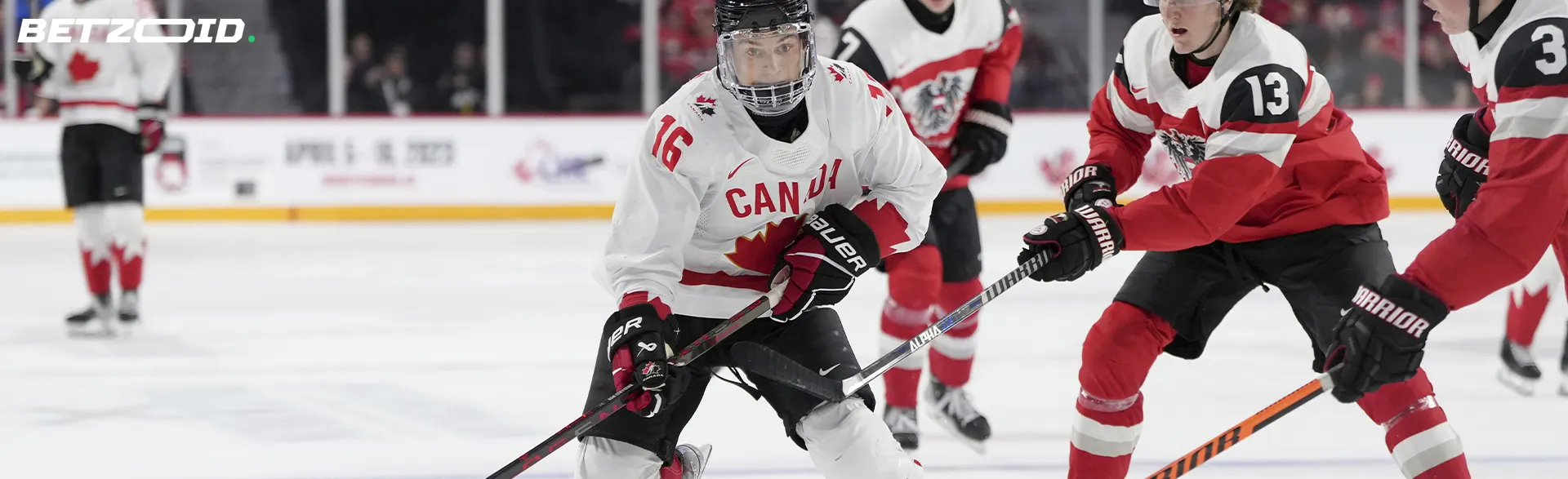
Hockey is where most Canadian tokens get spent, and market eligibility varies more than people expect. Across the 15 current offers in our terms comparison, 11 allowed free bets on NHL player props while 4 restricted tokens to game outcomes — moneyline, puck line and totals only. If your plan was a shots-on-goal or points prop, confirm that line first.
Pre-match versus live is the other common restriction. Several books block token use on in-play markets entirely, which matters if you were waiting to see the first period before committing. Free bets on NHL markets also interact badly with heavy favourites: a 1.45 home side is unusable under a 1.50 floor, and even where it qualifies, a $50 token at 1.45 returns just $22.50.
CFL markets are thinner, and that cuts both ways. Fewer props means fewer eligible selections, but the sides and totals lines move on limited liquidity, so a token placed early in the week on a spread you like can be genuinely good value. With only a handful of games per weekend, a 7-day expiry gives you roughly one slate to work with — plan the token around the schedule rather than the other way around.
Ontario Accounts and the Rest of Canada
Ontario runs its own regulated market under iGaming Ontario and the AGCO, and advertising rules there restrict how bonuses and inducements can be promoted publicly. In practice, Ontario players often see offers only after registering or logging in, rather than on a public landing page, so a promotion visible from another province may not display the same way for an Ontario account. Outside Ontario, provincial lottery platforms and internationally licensed books operate under different conditions again — bettors comparing options in Saskatchewan and the prairie provinces will find a different mix of eligible operators and offer wording.
Where Free Bet Value Quietly Disappears
Most lost value isn't stolen by a hidden clause — it drains out through timing and small mismatches. Expiry is the biggest culprit: a token credited on a Tuesday with a 7-day life needs to be used before the following Tuesday, and "I'll wait for a better spot" is how a $50 offer becomes $0. Put the date in your calendar the day it lands.
Non-divisible tokens are the second leak. Forced to put $100 on one selection, many bettors default to a short favourite to feel safe, which is precisely the wrong shape for a stake-not-returned bet. If the book allows splitting, four $25 bets at 2.50–3.50 give you multiple chances at meaningful profit.
Disabled cash-out is a third. When the feature is greyed out for token wagers, a live lead you'd normally bank has to ride to the final whistle. Price that into your selection rather than discovering it in the third period.
Then there's withdrawal friction after the win. Turnover cleared, funds withdrawable — and the payout method sets the pace. E-wallets and Interac typically clear far faster than a bank transfer, so if you plan to cash out to your account directly, check the processing window at sportsbooks that pay out by bank transfer before you assume the money arrives this week.
Checks to Run Before You Accept an Offer
Open the terms page and look for six things in this order: stake returned or not, odds floor on both the qualifying bet and the token, turnover on winnings, expiry length, maximum payout cap, and whether the token can be split. Those six answers tell you the offer's real value in about two minutes, and they're the same fields we record when updating this comparison.
Then check the practical fit. Does your deposit method qualify? Does the odds floor work for the leagues you actually bet? Is the expiry long enough to cover a weekend of hockey or a CFL slate? An offer that fails on fit is worth less than a smaller one you'll definitely use. Our operator reviews carry the per-operator detail, including what a given book allows on props and in-play — our review of Cbet shows that format. Terms change without notice, so verify the current version on the sportsbook's own promotions page before you deposit.
Free bets are worth claiming, but the value sits in the terms rather than the headline: stake-not-returned pricing, the odds floor and the turnover on winnings decide whether a $50 token is genuinely $50 of upside or a coupon you'll never spend well. Small offers with no wagering and a 30-day window regularly outperform three-figure tokens locked behind 5x and a week's expiry.
Use the comparison above to shortlist two or three operators that match your province and your usual markets, read the terms page before you deposit, then diarize the expiry date the moment the token arrives. Set a deposit limit in your account settings at the same time — it takes a minute and keeps the free bet a bit of extra value rather than the start of a bigger session.
FAQ