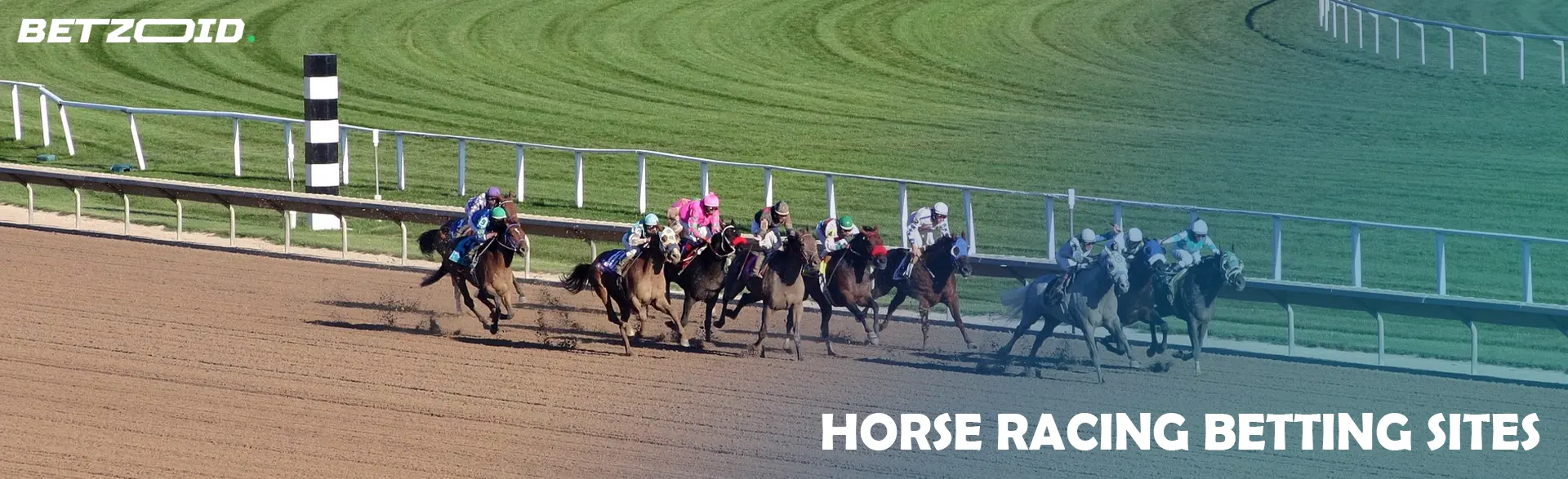

Choosing between horse racing betting sites in Canada starts with one question: are you betting into a pari-mutuel pool, or against a bookmaker's fixed price? Tote pools remove a set cut before anyone gets paid — commonly around 15–18% on win, place and show, and noticeably more on exotics — while a sportsbook builds its margin into the odds and will happily price the Kentucky Derby without ever offering you a Tuesday harness card.
That distinction shapes everything else: which tracks you can actually bet, whether your balance stays in Canadian dollars, whether Interac e-Transfer appears on the cashier page, and what a welcome offer is worth once racing wagers are excluded from the rollover. The Betzoid team worked through operators' published track lists, banking pages, streaming rules and provincial licence status rather than the marketing copy — coverage and promotions change, so confirm any specific offer on the operator's own terms page. The comparison below, and the checks that follow it, show where the meaningful differences sit.
Recommended Horse Racing Betting Sites for Canada (October 2026)








What Makes Choosing a Racing Site Hard
Racing is sold under one label but delivered as two different products, and the label rarely tells you which one you're getting. A tote platform routes your money into the host track's pool, so the price you see before the gates open is only an estimate and the final payout depends on where the money lands. A sportsbook's racing market is a fixed price: what you take is what you're paid, win or lose.
On top of that sits the provincial patchwork. The same brand can be fully regulated in one province, offered through a crown corporation in another, and simply unavailable in a third. Age limits differ too, which catches out anyone who opened an account while living somewhere else.
Then there's coverage depth, where most disappointment happens. Plenty of platforms look complete on a Saturday in May, when every major North American card is live. Pull up a Thursday afternoon in February — a small Canadian thoroughbred card, a harness card, maybe a European meeting — and the track list thins out fast. Judging a site on its biggest day tells you very little about the other 300.
What to Prioritize on Horse Racing Betting Sites
Start with the cards you actually bet, then work outward to money and extras. The best racing platforms for Canadian players tend to win on unglamorous details rather than headline promotions.
- Track list depth, not headline names: check that the mid-week Canadian thoroughbred and harness cards you follow are listed, not just Churchill Downs, Santa Anita and Ascot on stakes weekends.
- Available pools and bet types: straight win-place-show is universal, but exactas, trifectas, superfectas, Pick 4s and jackpot pools vary by platform and by track signal, and that decides which strategies are even possible.
- Form tools built into the card: integrated past performances, jockey and trainer records, track conditions and scratch updates save you juggling three browser tabs before a five-minute post.
- CAD accounts and Canadian banking: a balance held in Canadian dollars avoids repeated conversion costs on deposits, payouts and refunded scratches.
- Rebate or loyalty structure on handle: in pari-mutuel betting, a rebate is one of the few levers that changes your effective cost, since the pool takeout itself is fixed.
- Withdrawal terms in writing: daily and monthly caps, verification requirements and which methods pay back matter far more than advertised processing speeds.
Depth of coverage and honest banking terms outrank bonus size for anyone betting more than a few cards a month. Promotions are easy to copy; a complete harness signal and an Interac payout route are not.
Odds, Takeout and Track Coverage
Pari-mutuel prices aren't set by the betting site — they come from the pool and the host track's published takeout. That's the part newcomers misread when they go hunting for horse racing betting sites with the best odds on Canadian tracks.
| Wager type | Typical published takeout | Returned to winning tickets per $100 in the pool | Who sets the rate |
|---|---|---|---|
| Win, place, show | About 15–18% | Roughly $82–$85 | Host track, within regulated limits |
| Exacta, daily double, quinella | About 19–24% | Roughly $76–$81 | Host track |
| Trifecta, superfecta, multi-race pools | About 22–28% | Roughly $72–$78 | Host track |
| Fixed-odds racing market | Margin built into the price | Set at bet placement | The bookmaker |
The table explains why two tote platforms showing the same race pay the same dividend: your edge there comes from rebates, pool selection and avoiding high-takeout exotics, not from shopping prices. Fixed-odds markets are the opposite — the price is the product, so comparing two sportsbooks on the same Derby runner is worth the minute it takes.
CAD Balances and Interac e-Transfer
Currency handling quietly changes your return. If an account is denominated in US dollars, every deposit, payout and refunded scratch passes through a conversion spread that commonly runs a few percent — a real cost on a bankroll you recycle weekly. A platform that holds and pays out in CAD removes that friction entirely.
On the banking side, horse racing betting sites that accept Interac e-Transfer are the practical default here, often alongside iDebit or an e-wallet. Check two things on the cashier page rather than the promo page: the stated minimum deposit, and whether Interac is available for withdrawals or only for funding. Plenty of operators take money one way and return it another.

Where You Live Changes Your Betting Options
Pari-mutuel wagering on horse racing has a long-standing federal carve-out in Canada and is overseen by the Canadian Pari-Mutuel Agency, which is why racing pools existed online well before single-event sports betting was legalized in 2021. What varies is who may offer it to you, and at what age.
| Province | Regulated route | Minimum age | Practical note |
|---|---|---|---|
| Ontario | Provincially licensed private operators plus the provincial platform | 19 | Widest choice of regulated brands since the market opened in 2022 |
| British Columbia | Provincial lottery corporation platform | 19 | Racing is offered through a dedicated racing product rather than the sportsbook |
| Alberta | Provincial platform, with racing handled separately | 18 | Racing coverage on the provincial site has historically been limited |
| Quebec | Provincial lottery corporation platform | 18 | French-language interface and provincial banking options |
| Atlantic provinces | Regional lottery corporation platform | 19 | Smaller regulated menu; racing depth depends on the signal carried |
The table shows availability, not quality. Legal horse racing betting sites in Ontario sit inside a licensed private market, so residents can compare several regulated brands on track depth and banking; elsewhere the regulated route is usually a single provincial platform, and racing may be a side product rather than a priority. Bettors in the east can see how that regional structure works in our overview of sports betting options in Nova Scotia. Wherever you are, confirm your own eligibility at sign-up — using a VPN to get around a geographic block breaches operator terms everywhere and puts your balance at risk.
Woodbine Cards Versus Kentucky Derby Coverage
These two needs pull in opposite directions, and one account rarely serves both perfectly. Sites that cover Woodbine properly are usually tote-first platforms: they carry the full thoroughbred meet, the harness cards, the complete exotic menu, program data and replays, because their business is regular handle from regular players.
Derby-focused offers come from the other direction. A sportsbook may post fixed-odds prices weeks in advance, which lets you lock 12/1 rather than watch a tote price drift to 7/1 by post time — attractive if you bet racing twice a year. What you typically won't find there is the full Derby-day undercard, jackpot pools, or a Thursday card from a smaller track.
So match the account to your habit. If your season is Queen's Plate weekend plus weekly local cards, depth wins. If it's one big race, a fixed price and a familiar interface may serve you better — and fixed-odds racing markets are also where in-play controls appear, since a tote ticket can never be sold back. That flexibility is worth understanding before you rely on it, as our guide to cash out betting sites explains.
Live Race Streaming and Replay Access
Streaming is usually conditional rather than open. Sites with live race streaming commonly require a funded account, and some restrict the feed to players who have a live wager on that card; individual track signals can also be geo-restricted regardless of your balance.
Replays matter more than most bettors expect. Watching how a horse was placed through the turn beats reading a two-word comment line, and replay libraries are where serious form study happens. If you watch on the go, check data use and whether the stream works inside the app — our roundup of horse racing betting apps looks at that mobile side specifically.

Mistakes That Quietly Drain a Racing Bankroll
Most racing losses aren't dramatic. They come from small structural leaks repeated across a card, and takeout makes each one more expensive than the equivalent mistake in fixed-odds betting.
- Betting every race on the card: ten races at roughly 17% pool takeout is ten separate deductions from the same bankroll. Skipping the races you have no opinion on is the cheapest edge available.
- Living in the deep exotics: superfectas and jackpot pools carry the highest takeout, so a strategy built on them needs a much larger genuine edge than a win-bet strategy to break even.
- Trusting the price you clicked: tote odds keep moving until betting closes, and late money can cut a 9/2 to 5/2 after you've committed. Fixed-odds markets don't behave this way, which is exactly why they feel different.
- Betting into thin pools: on small cards, a modest wager can move the dividend against you. Check pool size before firing a bet that's large relative to the money already in.
- Ignoring rebates and breakage: payouts round down to the nearest increment, and a rebate on handle offsets part of that. Over a season both are measured in real dollars.
- No record of what you bet: without a log of bet type, track and result, you can't tell whether your exactas are funding your win bets or the other way around.
Fix the first two and the arithmetic improves before your handicapping does. Fewer races, cheaper pools and a written log turn racing from a churn habit into something you can actually assess.
Welcome Bonus Terms Worth Checking
Racing is the exclusion most people miss. Horse racing betting sites with a welcome bonus frequently build the offer around sportsbook or casino play, and pari-mutuel wagers may contribute nothing or only part of their value toward the rollover — which can double the real playthrough on a deposit match.
Read four lines before you claim anything: whether racing wagers qualify at all, the rollover multiple and expiry window, whether a free-bet stake is returned with winnings, and any minimum-price rule, since minimum odds requirements sit awkwardly with tote pricing. Operator-level reviews such as our Rabona write-up break down that kind of fine print. Terms change often, so confirm the current version on the operator's own page.
Testing a Site Before You Bet Bigger Stakes
Treat the first week as a trial run on the plumbing, not a chance to win money. Six steps expose almost every problem before your stake size makes it painful.
- Confirm eligibility and age for your province during registration, and use the exact name and address on your ID — mismatched details are the single most common cause of held withdrawals.
- Pull up a weekday card before you deposit. Look for the smaller thoroughbred and harness tracks you follow, and check which pools are open on them, not just on Saturday's feature.
- Fund a small amount in Canadian dollars and note the actual minimum, any fee, and whether the balance is held in CAD or converted.
- Place one straight win bet and compare your dividend against the official result. It confirms you're reading the right pool and the right track.
- Open a live stream and a replay for a race you bet, so you learn the access conditions while nothing is at stake.
- Withdraw part of the balance and complete verification early. A platform that pays back $40 cleanly will usually pay back $400.
Step six is where sites separate themselves, and it's the step most people postpone until they have money they need. Doing it first means the only surprise left is the racing itself.
The decision usually resolves along two lines: whether you want tote pools or fixed prices, and whether the platform carries the cards you bet on ordinary weekdays rather than on stakes Saturdays. Add a Canadian-dollar balance with an Interac route that works both ways, and you've covered the factors that genuinely affect what you keep. Use the comparison above to shortlist two options, run the small-deposit and small-withdrawal check on each, then commit to the one that handled it cleanly. Set your deposit and loss limits in the account settings while you're there — a two-minute job that keeps a long racing season in proportion.