

The online casinos with the best payouts are the ones that show their arithmetic: a library averaging roughly 96-98% return to player rather than 92-94%, an RTP report you can open without emailing support, and withdrawal terms that don't take the difference back in fees. That last part is where a lot of Canadian accounts quietly leak money — a 97% slot library means little if a cashout costs you $25 by wire or 2.5% in currency conversion because the site never offered a CAD wallet.
The Betzoid editorial team builds this comparison from the documents operators actually publish: licence records, monthly payout reports, game info screens and the withdrawal clauses in the terms. Our filters are deliberately narrow — native CAD balances, Interac e-Transfer support, stated pending periods, and fee-free cashouts at a sensible minimum. Below you'll find our current shortlist, and after it the numbers and checks we used to separate genuine high-RTP sites from ones that simply advertise a single 99% game.
Our Top Picks: Online Casinos with the Best Payouts (October 2026)






What the Best Payout Percentages Mean in CAD
Payout percentage is the share of total wagers a game returns to players across a very long run of results, and the gap between tiers costs real dollars. Say you play $2 a spin for 2,000 spins: that's $4,000 in total action. At a 96% average RTP, the expected cost of that session block is $160. At 92%, it's $320. Same play, double the theoretical loss.
Currency adds a second layer for Canadian players. If your balance sits in USD, a 1.5-2.5% conversion charge on deposits and again on withdrawals behaves like extra house edge stacked on top of the game maths. A 96% library paid in CAD can therefore leave you better off than a 96.5% library that converts twice per cycle.
So we treat the payout question as one number plus three conditions: the weighted library RTP, whether the account is truly CAD, whether withdrawals are fee-free, and how long the money takes to arrive. Real money online casinos with the best payout percentages get all four right; plenty of sites nail the first and fail the rest.
RTP and House Edge Side by Side
They're the same figure read from opposite ends. A slot at 97% RTP carries a 3% house edge — the operator's theoretical margin is $3 per $100 wagered. Blackjack played with a correct basic-strategy chart lands near 99.5% RTP, or about 0.50% edge, which is why a table bankroll lasts longer per dollar staked than a slots bankroll.
Both figures describe millions of rounds, not your Tuesday night. Fifty spins can return 20% or 300%. Higher RTP doesn't remove variance; it changes the slope you're playing against over months of sessions.
How to Judge a High RTP Casino Library
Start with the library average, not the headline game. "Up to 99% RTP" usually refers to one video poker variant buried behind 2,000 slots configured far lower, so the useful question is what the catalogue returns on the titles people actually open. Five things we check when reading a game list:
- Weighted, not cherry-picked, RTP — a few 98% titles mean nothing beside hundreds of 93-94% filler slots. Check the RTP on the site's most-played and featured games, since that's where most wagers land.
- Studio mix — NetEnt, Play'n GO and Pragmatic Play generally ship mainstream slots in the 96-96.5% band, while some low-cost providers treat 93-94% as standard. A lobby dominated by unfamiliar studios deserves a closer look.
- Configurable RTP versions — many popular slots exist in several builds, such as 96.2%, 94% and 92% of the same title. The number in the game's info panel, not the provider's marketing page, is the one you're playing.
- Progressive jackpot weighting — jackpot slots can run in the high-80s because the missing slice feeds the pool. A library heavy on progressives drags the average down even when individual non-jackpot games look fine.
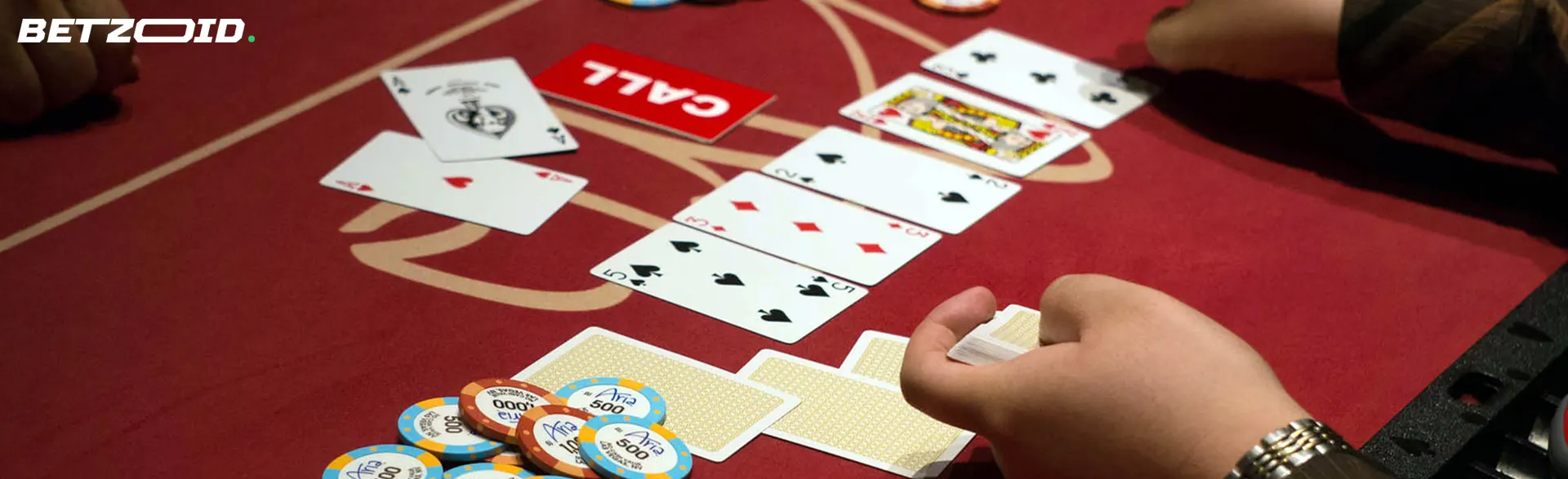
- Table and live coverage — sites with deep blackjack, baccarat and video poker sections give you access to the lowest house edges available online, which raises your effective return regardless of slot quality.
Put together, those five checks explain why two sites advertising "97% payouts" can differ by two full percentage points in practice. If you mainly play slots, weight the studio mix and RTP versions heaviest; if you split between reels and felt, table depth matters more than the raw slot count.
Sites That Publish Monthly RTP Reports
Operators that publish payout data normally file it in the footer under headings such as "Payout Rates," "Fairness" or "Game Fairness," broken out by month and sometimes by category. Malta Gaming Authority and Ontario-licensed sites are the most consistent about it; some offshore licensees publish nothing at all.
Two supporting documents are worth opening: an independent audit certificate from eCOGRA or iTech Labs with a current date, and the in-game info panel reached through the "i" icon. If the footer report, the audit seal and the game screen agree, the published figure is credible. When only marketing copy quotes a number, treat it as a claim.
Payout Rates by Game: Slots vs Blackjack
Game choice moves your expected return further than site choice does. The categories below sit in well-documented ranges, and the difference between the top and bottom rows is larger than the gap between the best and worst casino libraries:
| Game category | Typical RTP range | House edge | Best variants to look for |
|---|---|---|---|
| Blackjack | 99.0-99.7% | 0.3-1.0% | Few decks, 3:2 blackjack, surrender allowed |
| Video poker | 98.5-99.5% | 0.5-1.5% | Full-pay Jacks or Better |
| Baccarat | 98.5-98.9% | 1.1-1.5% | Banker bet, no side bets |
| Roulette | 94.7-97.3% | 2.7-5.3% | European single zero |
| Slots | 92.0-98.0% | 2.0-8.0% | Highest published build of the title |
| Live game shows | 91.0-96.5% | 3.5-9.0% | Standard bets over multiplier side bets |
What the table can't show is speed, and speed is what turns a small edge into a real cost. A $1 slot spin at 94% RTP has an expected cost of 6 cents, but autoplay can push through 500 spins an hour — about $30 gone. A $20 blackjack hand at 99.5% costs 10 cents in theory, and a live table deals perhaps 60 hands an hour, roughly $6. Bigger stakes, smaller bleed.
So the practical split is this: if you want the best payouts on slots, chase the specific RTP build and avoid progressives; if you want the lowest edge available, blackjack and full-pay video poker beat anything in the reels section.
Live Dealer Rules Change the Maths
Two tables with the same name can pay differently. Blackjack that pays 6:5 instead of 3:2 on a natural adds roughly 1.4% to the house edge, which wipes out the advantage the game is supposed to give you. Restricted doubling, no surrender and extra decks each shave a little more.
Multiplier formats trade RTP for excitement: the fun bets usually carry the weakest return in the room. At the best payout online casinos for blackjack and live dealer tables, the rules sit in the table's info tab before you buy in — read it, then pick your seat.
Getting Paid Fast by Interac e-Transfer
For Canadian accounts, Interac e-Transfer is usually the shortest route between a cleared withdrawal and money in your chequing account, because it settles outside banking hours and keeps everything in CAD. The ranges below reflect the terms operators publish for Canadian players rather than any guarantee on a given night:
| Method | Stated payout window | Weekend processing | Typical CAD range |
|---|---|---|---|
| Interac e-Transfer | Same day to 24 hours | Yes | $10-$10,000 |
| Crypto wallets | Minutes to a few hours | Yes | $20-$50,000 |
| E-wallets | A few hours to 24 hours | Yes | $20-$25,000 |
| Debit card payout | 1-3 business days | Limited | $20-$5,000 |
| Bank wire | 3-5 business days | No | $100-$100,000 |
The pattern worth acting on: the fast rails are also the cheap ones. A wire that takes four business days often carries a fixed fee, while Interac and e-wallet payouts are commonly free below a stated threshold. Note the low minimum too — a $10 Interac floor lets you clear a small win, whereas a $100 wire minimum locks it in the account.
Deposits and withdrawals don't always share a rail. Card deposits in Canada often run through domestic acquirers — the kind behind casino payments handled by Moneris — yet the money comes back by Interac. The same applies if you fund with a Koho prepaid card, which can take deposits but rarely receives payouts. Confirm the return route before your first cashout, not after.
Pending Periods vs Processing Times
These are two separate clocks and only one appears in the cashier. A pending or reversal period — often 0 to 72 hours — is the window before the operator releases the funds, and some sites let you cancel and re-spend during it. Processing time starts afterwards. Fast payout online casinos in Canada that pay within 24 hours tend to be the ones that verify identity at signup and run a zero pending period, so Interac is the only delay left.
Fees, Minimums and CAD Withdrawal Caps
Fees are house edge in a different costume, and unlike RTP they hit your winnings directly. Five clauses in the banking terms decide how much of a high payout you actually keep:
- Per-withdrawal charges — bank wires commonly carry $25-$50, and a few sites apply 2-3% to e-wallet cashouts. On a $300 win, 3% is $9 — more than the theoretical edge on many table sessions.
- Conversion spread — non-CAD wallets cost roughly 1.5-3% each way. Choosing online casinos with the best payouts and no withdrawal fees in CAD removes that charge entirely rather than negotiating it.
- Minimum withdrawal — thresholds run from about $10 to $100. A $50 floor strands a $40 balance until you top it up, which usually means playing it back.
- Weekly and monthly caps — a $5,000 weekly limit turns a $20,000 jackpot into a month of instalments; operators offering withdrawals without hard caps matter mainly to jackpot and high-stakes players.
- Free-withdrawal allowances — some cashiers give one free payout per week and charge for the rest, so batching one larger cashout beats three small ones.
Read those five lines together and the ranking often changes: a 96.8% library with a $50 minimum and a 2% e-wallet charge can cost a casual player more than a 96.2% library with free $10 Interac payouts. Frequent small cashouts favour low fees; rare large ones favour high caps.
Checks to Run Before Your First Deposit
Five minutes of reading beats a month of complaint emails. Run these in order before funding an account:
- Verify the licence at the source. Click the footer seal and confirm the company name on the regulator's own register — iGaming Ontario, the MGA or Kahnawà:ke. A seal that links nowhere is decoration.
- Open the payout report. Find the monthly RTP page and a dated audit certificate. If neither exists, you have no way to check the advertised percentage against anything.
- Check the game build. Open the info panel on two or three slots you plan to play and compare the RTP with the provider's standard figure. A 92% version of a 96% title tells you how the lobby is configured.
- Read the banking clause. Note the pending period, Interac minimum, any per-transaction fee and the weekly cap. Confirm the balance is held in CAD.
- Price the bonus before claiming it. High wagering on a high-RTP account can cost more than the offer returns, so compare the terms with bonuses carrying low wagering and check which games count fully toward the requirement.
Steps two and three are where most sites fall out of contention, because a lobby can be stocked with reduced-RTP builds while the marketing page still quotes provider defaults. Step four is where money is won or lost after you've already played well.
Payout quality comes down to three things you can verify yourself: a library that averages in the high 96s rather than the low 94s, published RTP you can cross-check against the game info screen, and a CAD cashout by Interac e-Transfer with no fee and no artificial pending period. Game selection does the rest — blackjack and full-pay video poker will always beat an average slot on house edge, whichever site you choose.
Use the comparison above to shortlist two or three operators, then run the five pre-deposit checks on each before you move money. Set your deposit and loss limits in the account settings while you're in there; the cashier is the easiest place to decide what a session is worth before the reels start.