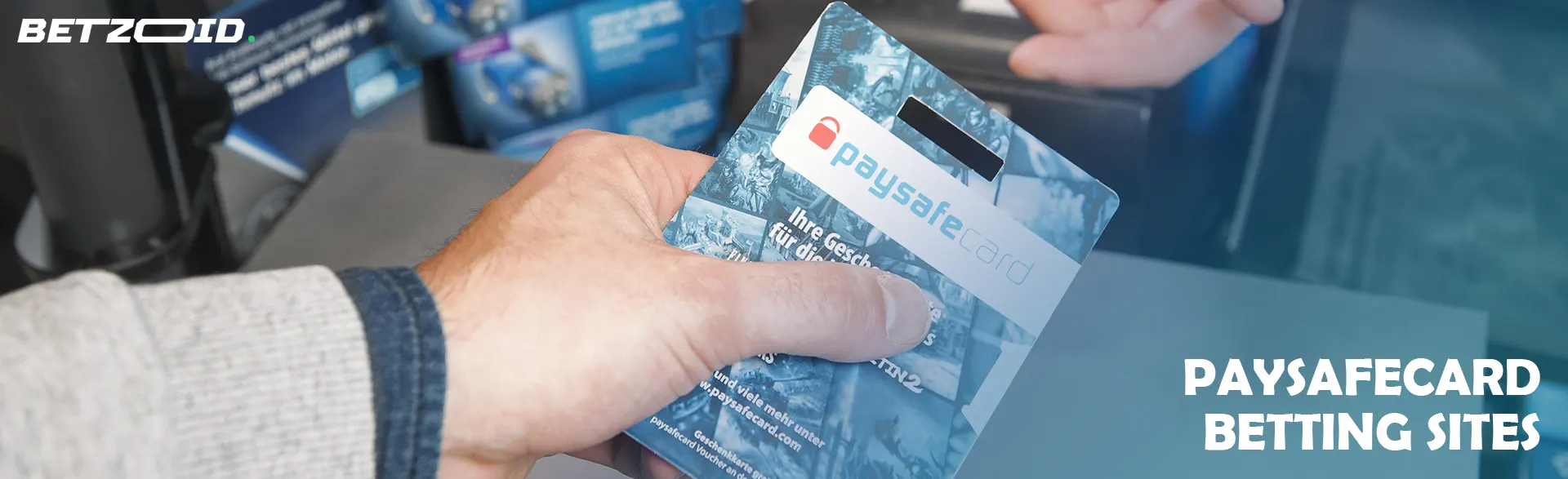

Paysafecard betting sites work on one simple trade-off: you fund your account with a prepaid 16-digit PIN instead of card or bank details, and in return you accept that no winnings can ever travel back down that route. Most bookmakers in Ireland that list the voucher set a €10 minimum deposit, which lines up neatly with the smallest denomination sold in shops, and the credit usually appears in your balance within a minute of the PIN clearing.
That one-way design shapes this comparison. The Betzoid editorial team looks at the parts of a bookmaker's banking page that actually decide whether a voucher deposit is worth the trip to the shop: the published minimum and maximum, which withdrawal methods sit beside it, whether prepaid deposits qualify for the welcome offer, and how the account currency is set. Below you'll find the operators we rate for voucher play, followed by the deposit mechanics, payout routes and fee traps in detail.
Recommended Paysafecard Betting Sites (October 2026)









Paysafecard Betting Deposits: The Fast Facts
Before you buy anything, five points cover almost every question a voucher user runs into:
- Deposits only. The voucher is a one-way instrument at bookmakers, so every account you open with it still needs a second, verified method for withdrawals.
- Fixed denominations. Irish retail vouchers are sold in set values — commonly €10, €25, €50 and €100 — so you cannot buy exactly €35 worth in one card.
- A €10 floor is the norm. Most voucher-friendly bookmakers set their minimum at €10, which makes the smallest card usable on its own rather than forcing a top-up.
- No banking data changes hands. The bookmaker sees a PIN and an amount, not your IBAN or card number, and the purchase itself shows on a bank statement as ordinary retail spend if you paid by card.
- Availability is not universal. Plenty of Irish-licensed operators support cards, bank transfer and e-wallets but never added prepaid vouchers, so the cashier page is the only reliable check.
Those points explain why the method suits budget-capped, privacy-minded punters and frustrates anyone who wants a single method for money in and money out. Treat the voucher as your funding tool and choose the account for its payout options.
How to Deposit with Paysafecard at a Bookmaker
Depositing a voucher at a bookmaker takes about two minutes once the account exists, and the sequence barely changes between operators:
- Buy the voucher first, in a value that matches or exceeds the deposit you plan to make, and keep the printed slip or the PIN from the online purchase confirmation.
- Log in and open the cashier, banking or deposit section — it usually sits under your account menu or a wallet icon on mobile.
- Select Paysafecard from the method list. Some sites file it under a "Prepaid", "Voucher" or "Cash" tab rather than beside the card logos.
- Enter the amount. It must sit at or above the site minimum and at or below the balance on the PIN you are about to use.
- Type the 16-digit PIN exactly as printed, confirm, and check your balance. Repeated wrong entries can temporarily block further attempts.
The usual failure point is step five, and it is rarely technical. Thermal receipts smudge, scratch panels tear, and a 0 that looks like an 8 kills the transaction. Photograph the code as soon as you buy it. The second common snag is a mismatch between amount and voucher: if you hold €25 and type €30, nothing goes through, because sports betting with Paysafecard vouchers never draws the shortfall from another source. Combine PINs through a my paysafecard account if you need a larger single deposit.
Minimum Deposits and Fixed Denominations
Because denominations are fixed and site minimums are not, some combinations leave a stranded balance. The table shows how the four common voucher values behave against a typical €10 floor:
| Voucher value | Clears a €10 minimum? | Left over after a €10 deposit | Practical use |
|---|---|---|---|
| €10 | Yes, exactly | €0 | Clean single deposit, nothing stranded |
| €25 | Yes | €15 | Two staged deposits across a weekend |
| €50 | Yes | €40 | A month's capped bankroll in one purchase |
| €100 | Yes | €90 | Higher stakes, but more balance to keep track of |
The real lesson is about leftovers rather than minimums: a part-used PIN is only worth anything at a merchant that accepts it, so a €10 voucher on a €10 site wastes nothing. If your stake plan is smaller than the shop's smallest card, compare bookmakers with low minimum deposits on other methods instead of buying more voucher than you need.
Why Winnings Cannot Return to a Voucher
So can you withdraw winnings to Paysafecard? No — and it is structural, not a quirk of one operator's rules. A retail voucher is a bearer PIN bought with cash or a card in a shop; once its value is spent, there is no personal account sitting behind it for a bookmaker to credit. Payment flows in one direction by design.
Licensing adds a second layer. Operators are expected to return funds to a verified method in the account holder's name, which is why your payout page asks for bank details or an e-wallet login rather than a fresh PIN. A voucher proves nothing about who owns it, so it fails that test.
In practice an €80 win leaves by another road. Euro bank transfer is the default for most Irish-facing books and typically takes a couple of working days, with many routing euro payouts through standard SEPA bank transfers. E-wallets are usually quicker once verified. Some sites list Skrill, which shares the Paysafe family, and punters often treat it as the nearest thing to a voucher payout — but availability differs by operator and country, so read the cashier page rather than assuming it is there.
Set Your Payout Route Before Depositing
Sort the exit before the entrance. Add your bank account or e-wallet and complete identity verification during signup, while nothing is riding on it, rather than after a winning multiple lands. Document checks commonly take a day or two, and a payout request submitted before verification simply sits in a queue. It also tells you something useful early: if the only withdrawal option on offer is slow or unavailable to you, that account is the wrong home for your voucher money.
Paysafecard vs Skrill for Betting Deposits
The honest way to frame Paysafecard against Skrill is that one is a spending cap and the other is a wallet. Both deposit in seconds; only one closes the loop.
| Feature | Paysafecard | Skrill |
|---|---|---|
| Deposits | PIN entry, credited almost immediately | Wallet login, credited almost immediately |
| Withdrawals | Not supported — needs a second method | Usually supported where deposits are |
| Setup needed | None; buy in a shop and go | Registration plus identity verification |
| Spending control | Hard cap at the voucher's value | Top-ups from card or bank on demand |
| Bonus eligibility | Sometimes excluded by promo terms | Frequently excluded by promo terms |
Neither column is simply better. If your aim is to spend €50 and not a euro more, the voucher enforces that in a way no wallet can. If you want one method handling both directions, an e-wallet is the sensible pick, and the same logic extends to comparable options such as Neteller-friendly bookmakers. A workable compromise many punters land on: deposit with vouchers, withdraw to a verified wallet or bank account.
Judging a Bookmaker That Takes Paysafecard
Voucher support tells you almost nothing about a bookmaker on its own. When our team assesses licensed voucher-friendly books for Irish punters, these are the checks that change a verdict:
- Licence and jurisdiction. Look for an active licence — Irish Revenue registration for domestic books, or MGA or UK Gambling Commission credentials — and confirm the number on the regulator's own public register rather than trusting a footer logo.
- A specific cashier page. Published minimum and maximum voucher amounts, in euro, beat a vague payments-icon strip. Missing figures usually mean the terms will surprise you later.
- The withdrawal column beside it. Since payouts must leave by another method, check what that method is, its stated processing time and its own minimum before you deposit anything.
- Promotional fine print. Payment-method exclusions are buried in bonus terms, not on the offer banner, so read them before a deposit you expect to be matched.
- Working responsible gambling tools. Deposit limits, loss limits, time-out and self-exclusion should all be reachable from account settings, not by emailing support.
Run those five checks and you will drop a surprising number of otherwise attractive sites. The licence and the payout route matter most; a generous welcome offer on an account you cannot cash out of is worth nothing.
Bonus Terms That Exclude Prepaid Deposits
Prepaid exclusions are common enough that they deserve a separate look. Welcome bonuses that allow Paysafecard deposits do exist, but plenty of terms list vouchers alongside e-wallets as non-qualifying methods, so your €25 deposit funds bets and triggers nothing. The fix is mechanical: open the bonus terms, search for the payment section, and confirm the method by name before you enter a PIN. If vouchers are excluded and the offer matters to you, deposit by an accepted method for the qualifying amount and use vouchers afterwards.
Fees, Expiry and Conversion Costs
The deposit itself is normally free at the bookmaker's end — most operators absorb prepaid deposit costs the same way they do card payments. The charges that bite sit on the voucher side, and two are worth planning around.
First, inactivity. A voucher does not expire at the till, but an unused balance left sitting attracts a monthly maintenance fee — commonly €3 after twelve months without use — which quietly eats a small leftover balance. Buy what you intend to stake in the near term instead of stockpiling PINs.
Second, currency conversion. If your betting account is denominated in sterling or dollars while your voucher is in euro, a conversion charge applies; the published rate is in the region of 3.95%, so turning €100 into a GBP balance costs you close to €4 before you place a single bet. Set the account currency to euro at registration, because many international books default Irish sign-ups to GBP and the setting is often locked afterwards.
Unused balances are spent, not refunded to cash. Combined with fixed denominations, that is another argument for matching voucher size to the deposit you actually plan to make.
Buying Vouchers and Capping Your Spend
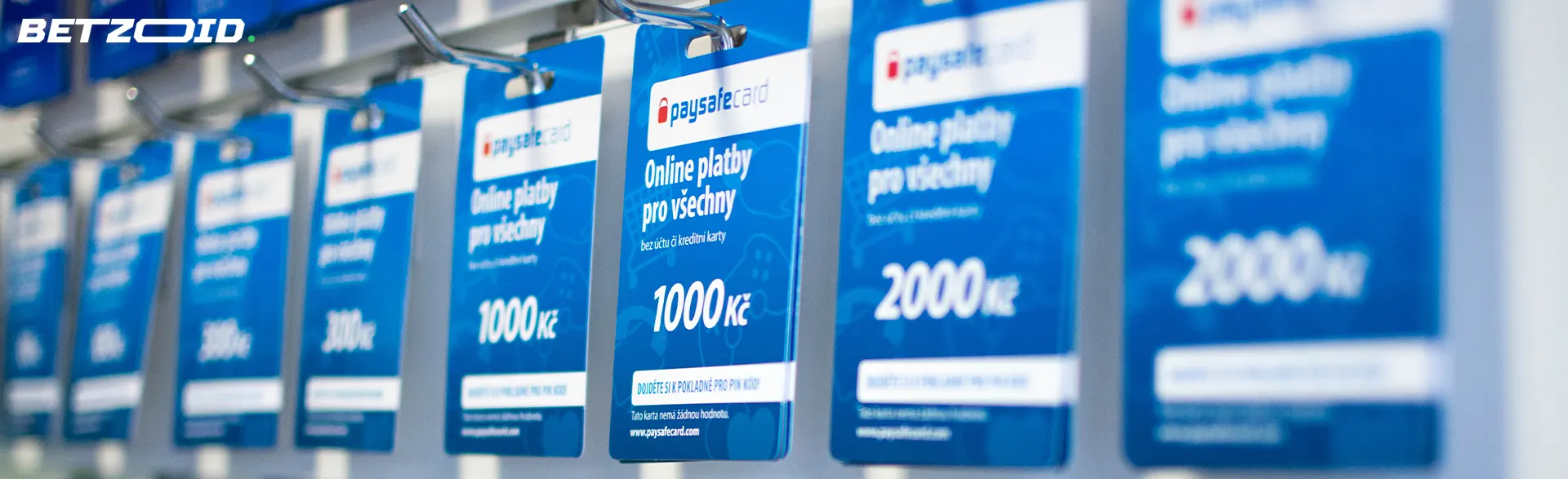
Finding a voucher in Ireland is rarely the hard part: convenience shops, newsagents and petrol forecourts under the Centra, Spar and Circle K banners are the usual stockists, and vouchers can also be bought online through Paysafecard's own channels where available. Ask for the denomination you want, keep the receipt, and photograph the PIN before it smudges.
The buying trip is also your budget decision, and that is the method's strongest feature. Choosing a €25 voucher on a Saturday morning sets a ceiling that no in-play impulse can raise, because there is nothing left to draw on once the balance is gone. A debit card gives you no such friction. If you want more discipline again, register a my paysafecard account to track what you have loaded and spent over time rather than guessing from a pocketful of slips.
With funding capped, the variable that decides your returns is price, so it is worth comparing bookmakers offering the best odds on the markets you actually bet before you commit that voucher to one account.
Voucher funding earns its place for two reasons: a hard spending cap and near-instant credit from a €10 purchase, with no bank details handed over. The cost is a second method for payouts, plus bonus terms that may not count prepaid money at all — which is why the payout route and the promo fine print should decide your shortlist, not the size of the welcome offer.
Pick an operator from the comparison above, confirm its licence and voucher limits on the cashier page, verify your withdrawal method during signup, then buy only the denomination you plan to stake. Set a deposit limit in account settings while you are there; it takes a minute and reinforces the ceiling the voucher already gives you.