
Crypto betting sites earn their place in Ireland for one blunt reason: a Bitcoin or USDT transfer never asks your bank for permission. If your card keeps getting declined at an offshore sportsbook, or a gambling block is switched on at your bank, a wallet transfer usually clears in minutes for a network fee measured in cents.
That convenience comes with conditions worth knowing before you move any money. Licences range from Malta to Curaçao, welcome offers are sometimes fiat-only, withdrawal minimums commonly start around €10–€20, and the coin you pick changes both the fee you pay and the chance that your balance is worth less by Saturday afternoon. The Betzoid team weighs licence detail, cashier terms and market coverage — GAA, Irish racing and League of Ireland included — ahead of the size of the headline bonus. Our current picks are ranked below, and the sections after them show you how to check any operator the same way.
Recommended Crypto Betting Sites (October 2026)









Bank Blocks and the Case for Crypto Betting
The real argument for crypto is a payments argument, not a technology one. Irish card deposits pass through your issuer, and Irish banks increasingly offer gambling blocks that you — or a previous, more disciplined version of you — may have switched on. Some cards also decline gambling merchant codes from offshore operators outright. A wallet transfer never reaches that checkpoint: the sportsbook simply sees a blockchain payment land at an address it generated for your account.
Two smaller savings follow. If an operator settles in dollars, a card deposit can pick up a currency conversion charge on top of the exchange rate, while sending a coin you already hold sidesteps part of that. And because crypto costs operators less to process than cards, some publish a separate crypto welcome bonus with its own minimum deposit and wagering terms. Read the two offers side by side rather than assuming the fiat conditions carry over.
What you give up is recourse. There is no chargeback, no disputed-transaction form, no bank that can reverse a mistake for you. That single trade-off shapes everything else on this page: if the money cannot be pulled back, the licence, the cashier terms and the withdrawal rules have to do the protecting instead.
What Marks Out a Safe Crypto Betting Site
Safety here is mostly documentary. You are not judging blockchain security — that part works — you are judging whether the operator holding your balance is identifiable, accountable and clear about how withdrawals happen. These are the details our editors look for first when screening an operator for this comparison:
- A named operating company and a licence number in the footer, ideally one you can look up on the regulator's public register. A generic "licensed and regulated" badge with no issuing authority is not a licence.
- Two-factor authentication available on login and, better still, required for withdrawals or wallet-address changes, so a stolen password alone cannot route your balance to an unfamiliar address.
- A cashier that quotes both the coin amount and the euro equivalent, and states in writing who absorbs the blockchain network fee when you cash out.
- Bonus terms that say explicitly whether crypto deposits qualify, with wagering multiples, market contribution and maximum bet per spin or bet spelled out rather than buried in general T&Cs.
- Responsible gambling tools behind the login — deposit caps, loss limits, time-outs and self-exclusion — that work on your converted euro balance, not only on a coin figure.
Treat the licence and the withdrawal wording as pass-or-fail; treat 2FA and clear bonus terms as the tiebreaker between two otherwise similar books. If the cashier is vague about fees and limits before you deposit, it rarely becomes clearer once your money is inside.
Licensing and Irish Punter Protection
Irish-licensed crypto bookmakers are the exception rather than the rule. Most brands that lead with digital currency operate under Malta, Gibraltar or Curaçao authorisations, so licensed crypto sportsbooks serving Ireland are usually EU-regulated rather than domestically registered. The distinction matters when something goes wrong: Malta and Gibraltar impose player-fund segregation, identity checks and access to an alternative dispute resolution route, so an unpaid withdrawal has somewhere to go. A Curaçao licence is legitimate paperwork but offers thinner complaint machinery, which leaves the operator's own support desk as your only leverage. Check which one you are dealing with before your balance grows.
Choosing Between Bitcoin, Ethereum and USDT
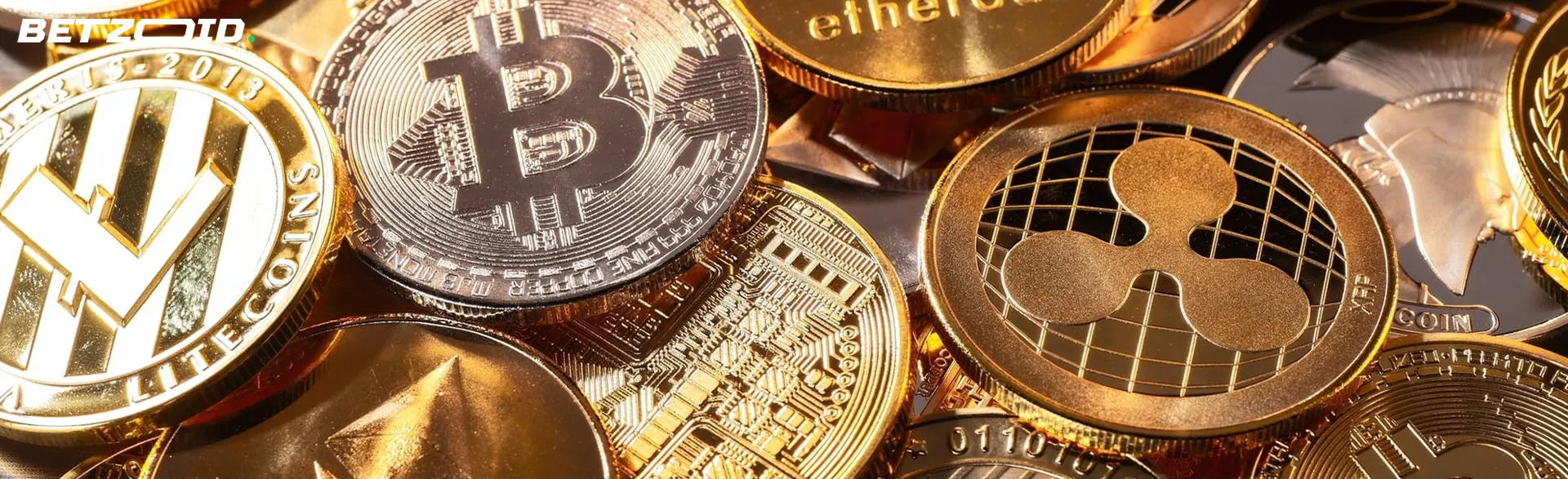
The coin you deposit decides three things: how long you wait, what the transfer costs, and whether your stake is still worth the same in euro when you come to withdraw. Bitcoin is the most widely accepted and the slowest to confirm; Litecoin is cheap and quick but supported by fewer books; Ethereum sits in between; USDT removes almost all price movement. The general pattern across crypto sportsbooks looks like this.
| Coin | Typical confirmation wait | Network fee character | Price risk on your balance | Suits |
|---|---|---|---|---|
| Bitcoin (BTC) | Roughly 10–30 minutes, 1–3 confirmations | Highest, climbs sharply when the network is busy | Full market exposure | Fewer, larger transfers |
| Ethereum (ETH) | Minutes | Gas fee varies with demand, usually below BTC | Full market exposure | Weekly punters wanting speed |
| Litecoin (LTC) | A few minutes | Consistently low | Exposed, but cheap to move often | Small, frequent withdrawals |
| Tether (USDT) | Minutes, depending on the network chosen | Very low on TRON, higher on Ethereum | Pegged near the US dollar | Holding a balance between weekends |
What the columns cannot show is the network mismatch. USDT exists on several chains, and sending TRON-based tokens to an Ethereum-based deposit address loses them permanently — the cashier's dropdown choice matters as much as the coin. Support for Ethereum and Litecoin is also narrower than for Bitcoin, so if you hold one of them, confirm it appears in the cashier before you register rather than trusting a logo strip on the homepage.
Stablecoins Against Price Swings
Stablecoins solve the problem of a winning week being erased by the market rather than by the results. A USDT balance holds its value while your accumulator settles, which suits punters who leave funds on site. One detail rarely mentioned: the peg is to the dollar, not the euro, so EUR/USD movement still nudges what your balance is worth at home. Operators listed among sportsbooks taking Tether deposits typically quote balances in euro anyway, which makes that drift easy to monitor.
How to Deposit Bitcoin Step by Step
Depositing Bitcoin at a betting site takes one careful run-through, then becomes routine. The sequence below applies at almost every operator, including the bookmakers built around Bitcoin deposits, and the failure points are all in the middle steps.
- Open the account and confirm your email. Crypto registration is often light on detail, but note the identity-verification threshold in the terms — that paperwork usually arrives at your first sizeable withdrawal, not your first deposit.
- Go to the cashier, select Bitcoin, and let the site generate your unique deposit address and QR code. Most addresses are valid only for a stated window, commonly 15 to 60 minutes, so do not save one for next week.
- Copy the address into your wallet or exchange and verify the opening and closing characters character by character. Never retype it manually, and never accept an address sent to you by chat or email.
- Enter an amount that clears the cashier minimum, which typically sits around €10–€20 in Bitcoin. Remember your exchange adds its own withdrawal fee, separate from the blockchain fee.
- Pick a fee level rather than accepting the default blindly. Choosing the cheapest option while the network is congested is the single most common reason a deposit sits unconfirmed for hours.
- Confirm and wait for the required confirmations. Keep the transaction ID: it is the only evidence support can act on if the funds do not appear.
One quirk to plan around: the site credits your balance at the conversion rate applied when the deposit confirms, not when you hit send. On a volatile morning that can shift the euro figure slightly, which is another argument for stablecoins if you deposit in larger chunks.
Withdrawal Speeds, Limits and Fees
Payout terms are where crypto books differ most, and "instant" in marketing copy usually means instant once approved. Read the banking or terms page and you will find most operators cluster into a handful of tiers, each pairing a payout window with its own minimum, cap and fee policy.
| Stated payout window | Typical minimum | Typical cap | Who pays the fee |
|---|---|---|---|
| Under an hour, auto-approved | €20 | €10,000 per day | Operator absorbs the network fee |
| One to four hours | €10 | €5,000 per day | Small flat charge, around €1.50 |
| Same working day, manual review | €25 | €15,000 per day | Network fee deducted from the payout |
| 24–72 hours, first cash-out or checks pending | €50 | €50,000 per week | Network fee plus possible processing charge |
Two things the tiers hide. First, your slowest withdrawal is almost always the first one, because that is when identity documents get reviewed — so start that process early rather than the night you need the money. Second, a flat €1.50 charge is trivial on €400 and brutal on €20, where it takes 7.5% of your cash-out. If you like taking regular small payouts, favour a book with no site fee and a low-cost coin over one advertising a faster headline time.
Red Flags and Costly Crypto Mistakes
Because transfers are irreversible, the mistakes here are permanent rather than annoying. Some warning signs belong to the operator, others to your own handling of the transfer:
- Withdrawals advertised as instant with no minimum, cap or verification detail anywhere in the terms. Missing numbers are not generosity; they leave the operator free to decide later.
- Live chat that cannot explain confirmations, network choice or who pays the payout fee. If the support desk does not understand the payment method, escalation over a stuck transfer will go nowhere.
- Bonus conditions that quietly exclude crypto deposits, or convert your balance into a house token with its own exchange rate back out.
- Any request for your wallet seed phrase, or an address supplied by email or chat instead of generated in the cashier. Legitimate operators need neither.
- Sending from an exchange account whose terms prohibit gambling-related transfers, which risks a frozen exchange balance on top of a delayed deposit.
Add one housekeeping habit: keep the transaction IDs and dates for deposits and withdrawals. It costs nothing, settles disputes quickly, and makes your own record-keeping straightforward if a crypto disposal ever needs explaining.
Trialling a Site With a Small Stake
Test the cash-out before you trust the sportsbook. Deposit close to the cashier minimum — €20 is plenty — place one or two modest bets in the markets you actually use, then withdraw most of what is left. That short loop tells you the three things no review can guarantee: whether the deposit credits at the rate you expected, how long a payout really takes, and what documents get requested along the way.
Spend the same session checking market depth. Plenty of crypto-first books treat Irish sport as an afterthought, so look for hurling and football championship pricing, midweek Irish racing cards with each-way terms, and League of Ireland lines rather than just Premier League and NBA. Price two or three of those selections against your usual bookmaker; a fast payout is poor compensation for consistently short odds, which is why we weigh operators with the strongest odds alongside payment speed. If €20 is more than you want to risk on an unfamiliar brand, the same trial works at sites with a low minimum deposit. Only scale up once one full deposit-and-withdrawal cycle has gone through without a surprise.
The decision comes down to three things in order: a licence you can verify, withdrawal terms that state minimums, caps and fees in writing, and a coin that matches how often you move money — stablecoins if a balance sits between weekends, Litecoin or Ethereum if you cash out in small amounts. Pick an operator from the comparison above, run one small deposit and payout through it, and check the GAA and racing prices while you are there. Set a deposit limit in your account settings on that first visit, because a wallet transfer has no bank behind it to slow you down.
FAQ