

The line at 2.5 goals divides a football match into two clear outcomes: no more than two goals, or at least three. Finding useful over 2.5 goals tips requires more than noticing attacking names on the team sheet. This Betzoid guide gives the under equal attention, examines how chances might develop and explains why the date of an overseas fixture needs an extra check when you are reading from New Zealand.
Over/Under 2.5 picks
Selections use match-result and goals markets. 90 minutes plus stoppage time. Check the market and current price at your bookmaker.
 Bodo/Glimt
 Valerenga
 Falkirk
 Kilmarnock
 Rangers
 ST Johnstone
 ST Mirren
 Dundee
 Livingston
 Arbroath
 Raith Rovers
 Inverness CT
 Antwerp
 Charleroi
 Carrick Rangers
 Limavady United
 Crusaders FC
 Coleraine FC
 Dungannon Swifts
 Cliftonville FC
No suitable upcoming picks right now. Please check back later.
Two goals or three: understand the dividing line
For the standard match total, add the goals scored by both teams during the stated period. Scores of 0–0, 1–0 and 1–1 finish under 2.5. Scores of 2–1, 3–0 and 2–2 finish over 2.5. There cannot be exactly 2.5 actual goals, so a completed match cannot land on this line and produce a push for that reason.
Special rules for abandoned, postponed or shortened fixtures are separate. Read them on the actual market rather than assuming every unusual match receives the same treatment. Likewise, standard full-time football totals usually cover normal time plus stoppage time, not extra time or a penalty shoot-out. A first-half total or a team total has a different scope.
That distinction comes before the analysis. The match total concerns the combined score; a home-team total concerns only home goals. A 2–1 result contains three match goals but two home goals. An argument that works for one market may fail completely when attached to the other.
Build an over argument from the chances available
Start with how each team can create openings against this opponent. Quick ball movement, runners into the penalty area and repeated turnovers in dangerous positions may generate opportunities. Possession alone is less informative if it happens far from goal. The question is whether the match can produce enough credible chances for three or more goals, not whether it will look lively.
One team can supply all three. A dominant attack against a vulnerable defence may support an over even if the weaker side contributes little. Yet “likely to win” is not enough: the stronger team could lead 1–0, control the ball and reduce the pace. Explain why additional chances should remain available after it goes ahead.
Where both attacks appear threatening, consider their interaction. Two sides pressing aggressively might create transitions, or one may retreat and remove the space the other normally exploits. Tactical labels need an opponent attached to them. Recent high totals against very different styles can be a poor guide to the next match.
Chance-quality data can add context if it is available from a consistent source. It does not remove the need to watch how those chances arose. A large estimate dominated by one unusual incident tells a different story from sustained pressure. Avoid presenting expected goals as the number of goals a future match must contain.
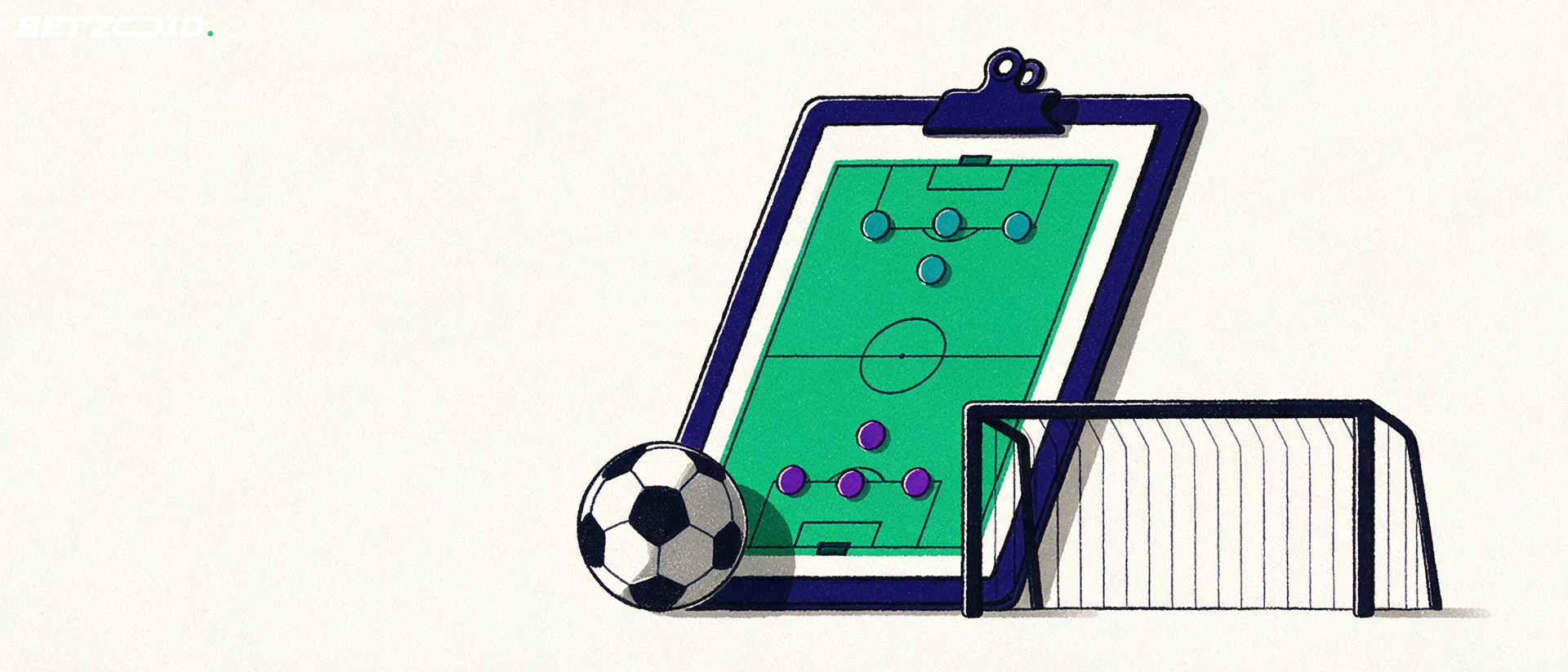
Give the under a positive case of its own
An under selection deserves more than the absence of an exciting over argument. Look for ways the teams might limit good opportunities: protecting central space, slowing transitions, defending set pieces and retaining possession without exposing the back line. Then ask whether those features are likely to survive the particular opponent and expected line-ups.
A fictional pair of sides might prefer compact shapes and struggle to progress the ball through midfield. That can support a lower-chance scenario. It still needs stress-testing. A defender’s absence, an aggressive tactical change or a tie in which one side must chase goals could weaken it. The label “defensive team” cannot answer every new situation.
Be equally careful with recent low scores. A sequence of 0–0 and 1–0 results could reflect limited chances, or it could include repeated missed opportunities. The former offers a more direct argument for restricted scoring than the latter. Goalkeeping and finishing matter, but exceptional performances should not silently become the baseline assumption.
There is also a difference between two goals being the most plausible total and an under being near-certain. Several other totals may remain realistic. A useful preview explains both the central scenario and the ways it could fail, especially how an early goal might change each team’s approach.
Totals, BTTS and nearby lines ask different questions
Both teams to score concerns distribution. Over 2.5 concerns the combined amount. A 1–1 result satisfies BTTS yes and under 2.5; a 3–0 result satisfies BTTS no and over 2.5. If your strongest observation is that both sides can score once, you still need an argument for the third goal before preferring the over.
Changing the line also changes the condition. Exactly two goals confirm over 1.5 but not over 2.5. Exactly three confirm over 2.5 but not over 3.5. A higher return on the 3.5 line is attached to a more demanding outcome. It is not the same selection offered at a better price.
Do not substitute a simple average for the proportion of matches crossing the line. A 0–0 and a 4–0 average two total goals, yet one of those matches goes over 2.5. The distribution is essential, and a two-match sample is plainly limited. Opponent strength, venue and changes in personnel further affect how useful any historical rate is.
Bring the evidence, price and fixture date together
Suppose an imaginary over price is 2.10. Its simple break-even threshold is 1 divided by 2.10, approximately 47.6%, before additional costs. This arithmetic tells you what the quoted price requires. It does not tell you the true chance of three goals. Your assessment must come from the match evidence and leave room for error.
Recheck the assumptions when confirmed team news arrives. A changed midfield may affect the pace and quality of chances more than a famous forward’s availability. Avoid treating every absence as an automatic reason for an under: weakened defensive organisation can point the other way. Describe the football consequence, not just the missing name.
For overseas matches, verify the displayed time zone and the corresponding New Zealand calendar date. A Saturday fixture abroad may be a Sunday fixture locally. Daylight-saving differences and site settings mean a fixed remembered offset can mislead. Match the competition and confirmed kick-off before using an older preview or team update.
You can use our football betting tips guide for wider context, then return to the exact total and period offered. If the evidence does not distinguish the two sides of the line clearly enough at the available price, there is no obligation to choose. Keep any stake within a predetermined limit and assess each fixture on its own merits.
Related football markets: Correct score predictions · BTTS tips
Frequently asked questions