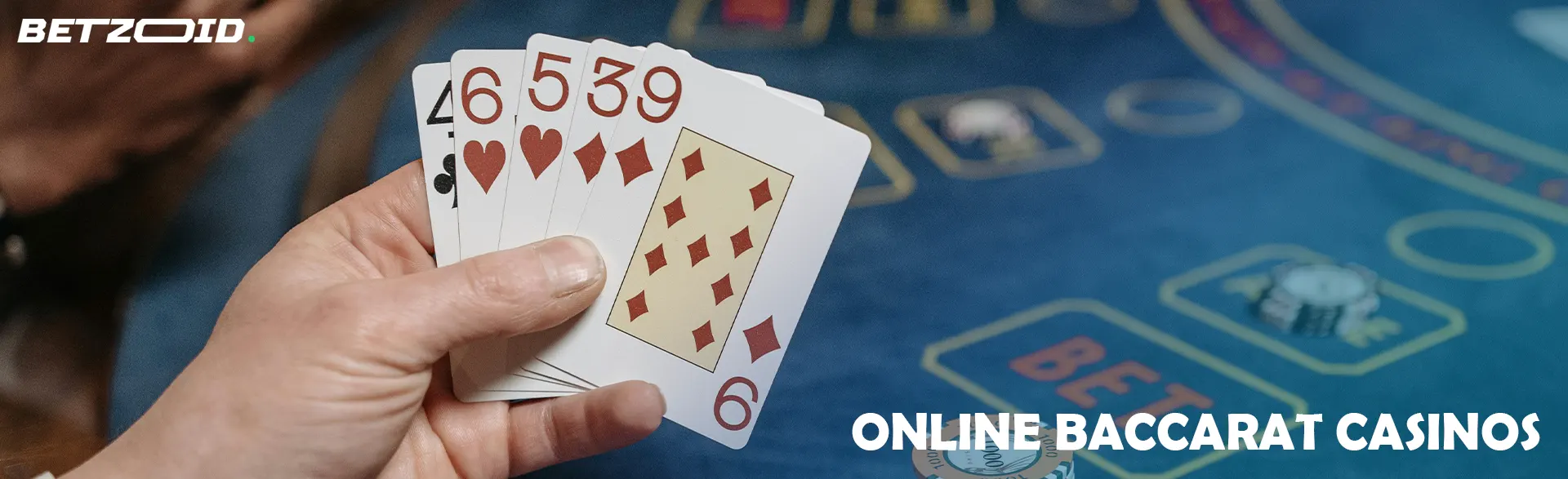

Online baccarat casinos look interchangeable from a lobby screenshot, and the differences show up exactly where they cost you money: the minimum bet on the table you actually want, whether the cashier holds New Zealand dollars, and how a withdrawal request is treated on a Sunday night. Baccarat carries one of the lowest house edges in any casino — 1.06% on Banker — so an operator that shaves value through currency conversion or a slow payout queue quietly undoes the game's biggest advantage.
The Betzoid editorial team compares what you can verify before any money moves: licence numbers against public registers, published table limits and betting ranges, NZD support, listed deposit and withdrawal options including POLi, and the wagering terms that decide whether baccarat counts toward a bonus at all. Promotions and payment methods change without notice, so we treat those details as conditional rather than permanent facts. What follows is the practical comparison behind the shortlist on this page — table types, banking, payout terms and the maths that should shape every bet you place.
Top Online Baccarat Casinos in New Zealand (October 2026)









What Separates Real Baccarat Tables From the Rest
A genuine baccarat offering comes down to four published details: how many tables run at your stake level, which studios or software supply them, whether commission on Banker wins is the standard 5%, and how many side bets sit on the felt. Plenty of sites list "baccarat" and deliver two RNG tables with a $5 minimum, no variants and no high-limit option.
Read the game menu, not the marketing copy. Deep lobbies carry classic Punto Banco alongside Speed Baccarat, No Commission and Squeeze formats, and those variants change the maths. No Commission tables pay Banker wins at even money but settle a Banker win with a total of 6 at half stake, which lifts the Banker edge to roughly 1.46% instead of 1.06%. That is a small number with a real cost over a few hundred hands, and no table tile flags it.
Also check what the lobby counts as baccarat. Dragon Tiger, for instance, is a two-card cousin with a different edge and often sits in the same category filter. When you compare real money casino lobbies, count only the tables you would actually sit at: your currency, your stake, your preferred format. A site with 30 baccarat tables where 28 start at $25 is narrower, for most players, than one with eight tables starting at $1.
Live Dealer or RNG Baccarat: Which Suits You
RNG baccarat is software-dealt, certified by independent testing labs, and paced entirely by you — useful for learning third-card rules or playing a few hands in a lunch break. Live tables stream a real dealer and real cards, typically running 40 to 60 hands an hour against a much faster RNG clip, with chat, roadmaps and a more social feel. The trade-offs are minimums and data: streamed video on mobile data is heavier, and live minimums usually start higher. If atmosphere matters more than pace, compare the studios behind live dealer baccarat tables before you judge a lobby.
Table Limits From $1 to High Roller Rooms
Online is where the stake range genuinely widens. RNG tables commonly start around $1 — sometimes below — while live classic tables tend to open between $1 and $5, and Speed variants a little higher. At the other end, high-limit rooms advertise per-hand ceilings in the thousands, though access to the deepest tables often runs through loyalty tiers rather than the standard lobby. If that end interests you, the structure of VIP casino programmes matters as much as the posted maximum, because it determines which rooms you can actually enter.
What to Prioritise When Comparing Baccarat Sites
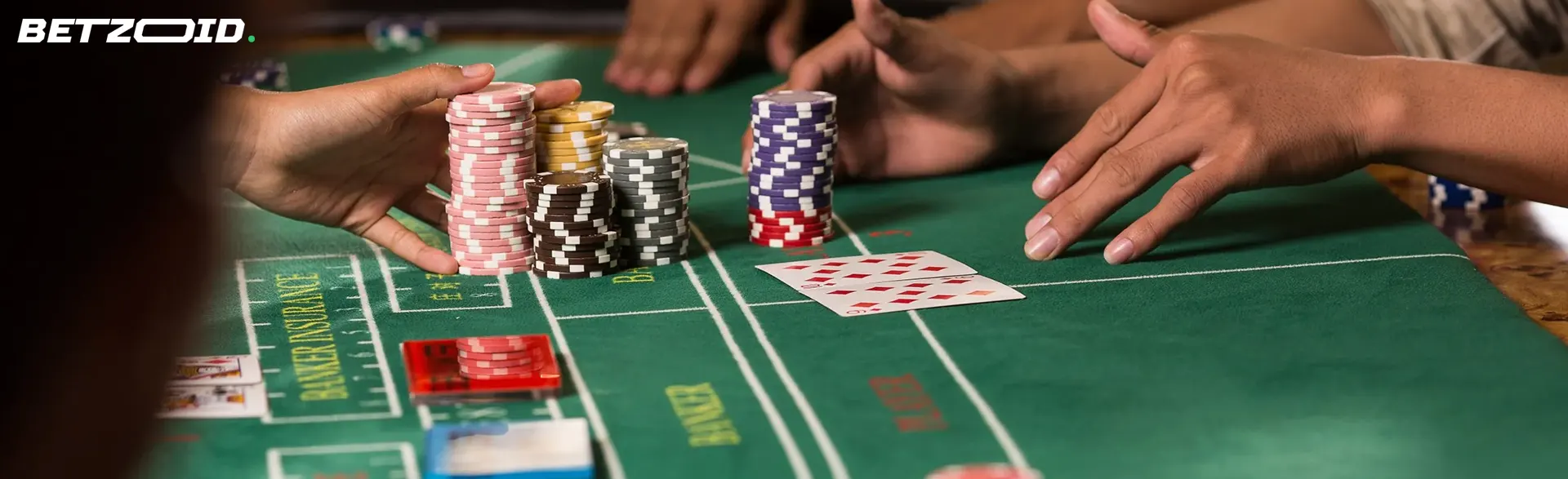
Ranking factors for baccarat differ from slots. Game count barely matters; banking terms, bonus contribution and table minimums decide your session. These are the criteria we weigh, in the order they tend to affect a Kiwi player's bankroll:
- A licence number you can look up — not a "licensed and regulated" line in the footer, but an alphanumeric reference you can search on the regulator's public register, with the operating company name matching the site.
- NZD as an account currency — a conversion margin applies to deposits, payouts and sometimes bets; a 3% spread on a $500 bankroll costs $15 before your first hand is dealt.
- Baccarat's bonus contribution — table games are frequently cut to 10% or excluded outright, so that one clause outweighs the headline size of any welcome offer.
- Withdrawal limits, fees and processing windows in writing — a weekly cap decides how long a $5,000 win takes to reach your bank, and some cashiers still list a percentage fee on card payouts.
- A stake range that includes yours — tables from $1 up to high-limit rooms mean you neither get priced out on a quiet night nor outgrow the lobby later.
- Mobile behaviour under real conditions — on a phone, live video drops quality first; good apps keep the bet slider, roadmap and balance readable rather than shrinking the whole desktop layout.
Licensing and banking are the non-negotiables; contribution rules and table range separate two otherwise similar sites. In practice, a well-licensed operator with NZD accounts, $1 tables and 10% baccarat contribution is a better home than a flashier site offering a large bonus that baccarat cannot touch.
NZD Accounts and POLi Deposits Compared
Your deposit choice shapes payout speed more than the operator's marketing does, because most cashiers return funds to the method you used. POLi is the awkward one: it pushes a direct payment from your ANZ, ASB, BNZ, Kiwibank or Westpac account in dollars, arrives effectively instantly, and cannot pay you back. Availability also moves — bank-transfer services get added and dropped, so confirm the method is live in the cashier on the day rather than trusting a review page. The ranges below reflect what operators typically publish for New Zealand accounts.
| Method | Deposit timing | Withdrawal timing | Typical fees and NZD notes |
|---|---|---|---|
| Visa / Mastercard | Instant | 2-5 business days | Deposits usually free; some sites list a payout fee. Check the issuer's gambling block |
| POLi bank payment | Instant | Not supported | Free, paid in NZD from your bank; you must nominate a second payout method |
| Direct bank transfer | 1-3 business days | 3-5 business days | Bank fees vary; slowest option either way but widely accepted |
| E-wallets (Skrill, Neteller, MiFinity) | Instant | Hours to 24 hours after approval | NZD support varies by wallet; watch wallet-side conversion, not just the casino's |
| Prepaid vouchers (Paysafecard) | Instant | Not supported | Useful for capping spend; requires an alternative for payouts |
| Crypto | Minutes, after network confirmations | Often same day once approved | Network fees only, but balances are rarely held in dollars |
The pattern the table cannot show is the pairing problem. Deposit-only methods like POLi and prepaid vouchers force a decision at signup: pick your payout route first, confirm the cashier accepts it for withdrawals, then choose the deposit method that suits you. Otherwise your first cashout defaults to a bank transfer you never intended. Smaller top-ups follow the same logic — phone billing deposits are convenient for a $20 session but leave the payout question open.
Getting Winnings Out Without the Wait
The advertised "within 24 hours" refers to processing, not the whole journey. Three things stretch it: a pending review period before funds are released, a weekly or monthly withdrawal cap, and unfinished identity verification. A $5,000 win at a site with a $2,000 weekly limit takes three payments to clear, regardless of how quick the e-wallet leg is. Sites with fast payouts tend to share two habits — they verify identity at registration rather than at the first cashout, and they staff support across Asia-Pacific hours, so a Wednesday morning request in New Zealand isn't queued until a European shift begins.

House Edge Maths Behind Banker, Player and Tie
Baccarat's bet selection is the only real strategy decision, and the numbers are fixed and public. Banker is the best bet on the table even after the 5% commission; Tie and the pair side bets are where bankrolls disappear. The final column translates each edge into an expected cost per $1,000 wagered, which is a more useful figure than a percentage when you are deciding how to stake.
| Bet | House edge | Payout | Expected cost per $1,000 wagered |
|---|---|---|---|
| Banker (5% commission) | 1.06% | 0.95:1 | $10.60 |
| Player | 1.24% | 1:1 | $12.40 |
| Banker, No Commission table | 1.46% | 1:1, half on a winning 6 | $14.60 |
| Player or Banker Pair | 10.36% | 11:1 | $103.60 |
| Tie | 14.36% | 8:1 | $143.60 |
Put that into a session. One hundred hands at $10 is $1,000 through the table: about $10.60 of expected loss on Banker, or roughly $143 if you chase Ties at the same stake. Same bankroll, same time at the table, more than thirteen times the cost. It also explains the limit structure you will notice in most lobbies — Tie and pair bets carry far lower maximums than the main bets, because the house doesn't need volume on them.
The other consequence is pacing. Banker's edge is charged per hand, so a Speed table at 25 seconds a round bills you far more often than a classic table at 45 seconds. Slowing down is the cheapest adjustment available, and it costs nothing but patience.
Why Welcome Bonuses Rarely Favour Baccarat
A low house edge makes baccarat unattractive to bonus departments, so terms push back in two ways: table games contribute a reduced share of wagering — often 10%, sometimes zero — and a maximum bet per hand applies while a bonus is active. Clear $2,000 of turnover at 10% contribution and you are actually betting $20,000 to unlock it. Breaching a $5 or $10 per-hand cap can void the balance entirely. If you want a low-risk look at a site's baccarat tables instead, a no deposit sign-up offer is usually the cleaner starting point, terms permitting.
Red Flags Kiwi Baccarat Players Should Spot
The warning signs that matter for baccarat are mostly written down, which makes them easy to find if you know where to look. Start with the licence claim. A footer that says "licensed in Curaçao" with no number, or a registry link that lands on a dead page, is the single most common problem we see on sites targeting New Zealand players.
Next, the payout clauses. Vague language such as identity checks "at our discretion" invites a review only after you win, and a bonus section with a maximum win cap turns a good Banker run into a partial payment. Watch for cashiers that accept dollars at deposit but settle your balance in euros; the conversion happens twice and neither leg is in your favour.
On the game side, avoid live tables with no named provider anywhere in the interface, since the studio is what guarantees the dealing procedure and the commission rules. Unbranded RNG baccarat with no testing-lab reference sits in the same category. A site that refuses to show a table's limits until you have deposited is telling you something too.
Finally, check the operational basics: support hours that overlap the New Zealand evening, a visible responsible-gambling page with deposit limits and self-exclusion, and terms with a recent revision date. Safe and licensed operators publish all four without being asked.
Checks to Run Before Your First Deposit
This sequence takes about fifteen minutes and filters out most of what goes wrong later. The order matters: verify the operator first, then the money, then the game rules.
- Look up the licence. Copy the number from the footer and search the regulator's own register — confirm the operating company matches the site and that the licence covers online casino games, not only sports betting.
- Open the cashier before registering, if the site allows it. Check that NZD appears as a selectable account currency and that your chosen method is listed for withdrawals, not just deposits.
- Read the table-games clause in the bonus terms. Note baccarat's contribution percentage and any maximum bet per hand while wagering; those two lines decide whether an offer is usable at all.
- Write down the withdrawal minimum, the weekly or monthly cap and any fee. Compare the cap against the payout you would realistically request from your bankroll.
- Verify your identity straight after signup. Uploading ID and a proof of address early removes the most common reason a first withdrawal stalls for days.
- Set a deposit or loss limit, then open the tables in demo mode. Confirm minimums at your stake, check the commission rule on the variant you like, and see how the stream behaves on your phone.
Steps one and two catch the serious problems; steps three and four catch the expensive surprises. The online baccarat casinos in New Zealand that survive all six checks are the ones worth funding, and the shortlist above is built from operators whose published terms hold up to exactly this run-through.
Banker at 1.06% is the same bet everywhere, so the operator's job is simply to not take that advantage back — which is why NZD accounts, a payout method you can actually use, and honest table minimums decide this comparison more than game counts or bonus size. If you deposit with POLi, nominate your withdrawal route before you sit down, and keep Tie bets out of your staking plan. Match a payment method to your timing expectations using the banking table above, then set a deposit limit in account settings before your first hand rather than after a long session.