
Live casinos in Kenya all sell the same picture — a real dealer, a real wheel, streamed to your phone — but the details that decide your session sit in the fine print: whether the table floor is KSh 50 or KSh 500, whether M-Pesa works for withdrawals as well as deposits, and how little of a welcome bonus a live table actually clears. That last point catches most players, because live games commonly count at only 10–20% toward wagering requirements while slots count at 100%.
The Betzoid editorial team compares platforms open to Kenyan players on conditions you can check before spending anything: published table limits, mobile money support at both ends of the cashier, withdrawal minimums and daily caps, licence details, and which studios supply the video. Where terms shift often — bonus contribution rates especially — we tell you what to re-read in the operator's own terms rather than assume last month's version still applies. The ranked selection below is your starting point, and the sections after it explain how to read a live lobby, a cashier page and a bonus condition without guessing.
Recommended Live Casinos in Kenya (October 2026)





Why Live Casinos Differ From Standard Slot Play
The first difference is that you no longer control the clock. A slot waits indefinitely between spins; a live table runs on the dealer's schedule, with a blackjack round landing roughly every 45 seconds, a roulette spin about every minute, and a betting window that closes whether or not you've made up your mind.
That reshapes the arithmetic of an hour's play. At KSh 200 per spin on a single-zero roulette table you put around KSh 12,000 through the game in an hour, and at a 2.7% house edge the expected cost of that hour is roughly KSh 325 before variance pulls you either way. Raise the stake to KSh 500 and the same hour stakes KSh 30,000 — identical percentage, very different exposure for a mid-sized bankroll.
A few further differences are worth planning around. There is no demo mode: every hand at a real dealer table is real money, so "trying" a platform means depositing at it. Bonus funds usually contribute far less at live tables than on slots, which we unpack further down. Because the game is a continuous video feed, your session burns mobile data and depends on a stable connection, which matters more than it does on a slot that only loads once. And since the odds come from physical cards and wheels, what you should check is table rules — deck count, dealer standing on soft 17, side bet payouts — rather than a volatility rating.
What Happens at a Real Dealer Table?
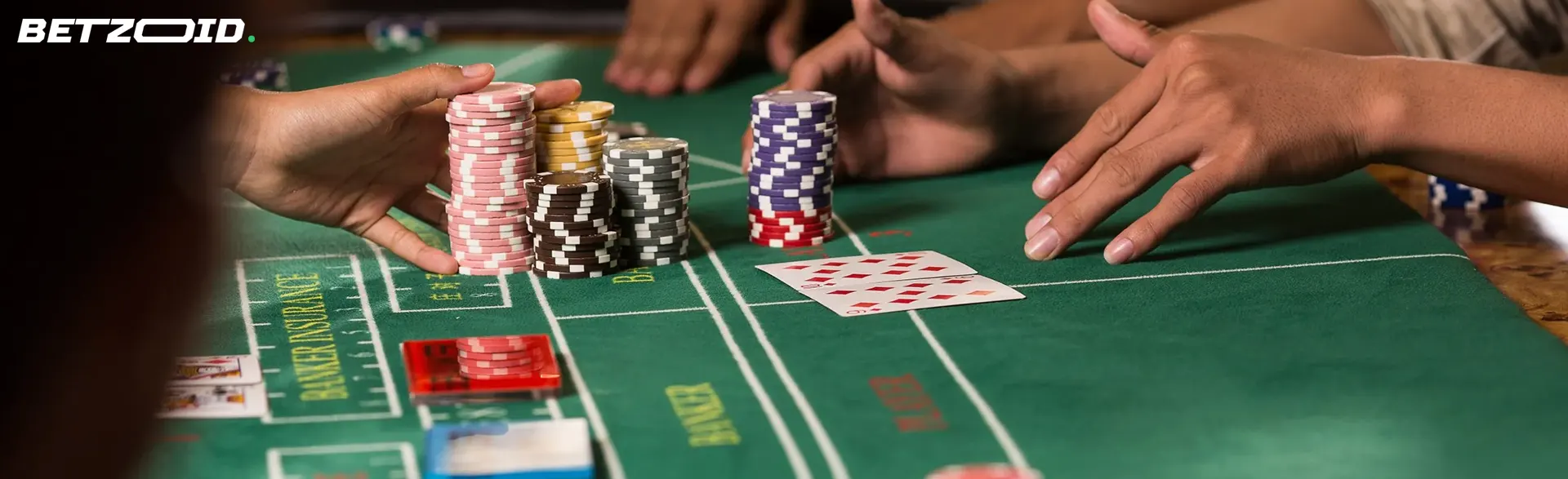
You join a lobby, pick a table by its stake range, and the stream opens with a dealer, a physical wheel or shoe, and a betting grid overlaid on your screen. You take chips from a tray, place them on the layout, and they lock when the countdown hits zero; anything you haven't confirmed simply isn't in play for that round.
Seating works two ways, and it decides whether you can play at 9pm on a Saturday. Seat-based blackjack has a fixed number of positions and fills up during Kenyan evening hours, while unlimited-seat formats let everyone receive the same first two cards and make individual decisions from there. Roulette and game show formats never run out of space.
The interface also does the record-keeping for you. A results history shows recent outcomes, a statistics panel tracks hot and cold numbers, and a chat box connects you to the dealer and other players. On phones, most live tables rotate to portrait and shrink the video, which is how mobile live casinos stay playable on a mid-range handset — though small text makes low-limit blackjack side bets easy to mis-tap.
One habit worth adopting: before your first real bet at a new table, watch two full rounds. You'll see the actual round length, whether the dealer announces results clearly, and whether the stream holds steady on your connection.
Stake Ranges for Roulette and Blackjack
Table floors vary more by provider than by operator, so the same casino can host a KSh 50 wheel and a KSh 50,000 blackjack room in one lobby.
- Roulette from KSh 50: the most common entry point for low minimum bets, usually on standard European wheels rather than the branded lightning-style variants.
- Blackjack from KSh 100: the practical floor at reputable operators, since each hand involves a dealer, a shoe and a fixed seat or decision window.
- Game shows from KSh 50–100: wheel-based formats accept small bets spread across several segments, which drains a bankroll faster than it looks.
- VIP rooms from KSh 10,000: dedicated dealers and higher caps, which operators normally unlock only after full identity verification.
Minimums are not fixed all day — busy evening slots push players toward mid-limit tables, while morning sessions tend to offer the widest choice of base-stake seats. If small stakes are the priority, the dedicated live roulette tables we compare separately are usually the cheapest way into real dealer play.
Stream Quality and Studio Providers
The studio behind a table tells you most of what you need to know about the stream. Evolution, Pragmatic Play Live and Ezugi supply the bulk of tables reachable from Kenya, typically at around 720p with an adaptive setting that drops resolution before it drops the feed.
That fallback is the detail worth knowing. On a congested 4G cell, a good table degrades to a softer picture but keeps the round running; a weaker feed pixelates to the point where you can't read card values, which is exactly when mistakes happen at blackjack. Most lobbies let you force a lower video quality manually — do that on mobile data and keep the stream stable rather than pretty.

How M-Pesa Deposits and Payouts Work
Mobile money is the default here: live casinos that accept M-Pesa are the norm rather than the exception, and the flow is usually an STK push — you enter the amount in the cashier, confirm the prompt on your handset, and the balance appears in well under two minutes. Some operators still route through a paybill number, so you copy an account reference and wait for reconciliation instead of getting an instant pop-up.
| Method | Deposit speed | Typical payout window | Minimum withdrawal | Availability |
|---|---|---|---|---|
| M-Pesa | 30 seconds – 2 minutes | 2–8 hours | KSh 200 | Near-universal |
| Airtel Money | 1–3 minutes | 4–12 hours | KSh 500 | Patchy |
| Bank transfer | 1–2 hours | 2–5 business days | KSh 1,000 | Widely listed |
| Visa / Mastercard | Instant | 3–5 business days | KSh 1,000 | Common |
The column that actually decides your platform is the payout window, not the deposit speed — every method above funds an account quickly enough to catch the next spin. The gap between mobile money and a card refund is the difference between cashing out after a Friday session and waiting until midweek, which is why live casinos with fast payouts almost always mean mobile money payouts.
Two conditions sit underneath those figures. First, the M-Pesa number and the account name should match your registration details; a mismatch is the most common reason a withdrawal sits "pending" while support asks for documents. Second, first withdrawals trigger identity checks, so upload your ID before you have winnings waiting. Players who would rather avoid mobile money limits entirely sometimes fund accounts at casinos that take cryptocurrency deposits, though that trades familiar rails for exchange-rate exposure.
Withdrawal Limits and Waiting Times
Minimums cluster between KSh 200 and KSh 1,000, and the ceilings matter more for winning sessions: mobile money withdrawals are commonly capped around KSh 150,000 per day, while bank transfers accommodate KSh 500,000 and above. Clear a KSh 300,000 blackjack win and a mobile-money-only cashier means two separate payout days.
Timing also depends on staffing. Requests you submit late on a Saturday can sit until the next business day at operators that review manually, so a quoted "2–8 hours" is a weekday figure. Check the terms for weekend processing before you plan around it.
Do Welcome Bonuses Count Toward Live Games?
Often only partially, and sometimes not at all — which is why a headline match offer can be worth less to a live player than to someone spinning slots. Before claiming anything, work through these five conditions in the terms; our wider guide to casino bonus offers covers the general mechanics, but live contribution is where the value is won or lost.
- Contribution rate. Live tables typically count 10–20% toward wagering. A KSh 5,000 bonus at 30x needs KSh 150,000 of qualifying bets, but at 10% contribution that means roughly KSh 1,500,000 staked at the table.
- Outright exclusions. Some welcome offers bar live dealer games completely. If the terms list "live casino" under excluded games, the bonus is a slots promotion regardless of how the landing page is illustrated.
- Dedicated live promotions. Separate live casino bonuses exist and usually count live play at 50–100%. A smaller headline figure with full contribution beats a large slots-oriented match nearly every time.
- Expiry window. Bonus periods run from 7 to 30 days. Because live rounds are slower than slot spins, a 7-day window is rarely realistic if you only play at real dealer tables.
- Cashout cap. Operators commonly cap withdrawals from bonus winnings at 5–10x the bonus. Turn a KSh 10,000 bonus into KSh 200,000 and a 10x cap releases KSh 100,000.
Run the numbers before the deposit, not after: multiply the bonus by the wagering multiple, then divide by the contribution rate to get the real turnover figure. If that number exceeds what you'd normally stake in a month, the offer is decoration. A live-specific promotion at 15–20x with meaningful contribution is the version worth claiming.
What Could Go Wrong Mid-Hand?
Live play introduces failure points that slots simply don't have, and most of them are governed by clauses you'll only find in the terms and conditions. These are the ones that cost real money.
- Connection drop with chips down: policies differ — some operators void the round and refund your stake, others play the hand out using basic strategy and settle it without you.
- Missed betting window: if your stream lags by a few seconds, you can tap confirm after the dealer has closed betting and sit out a round you thought you were in.
- Table limit rejection: a bet above the table maximum, or a total exceeding the outside-bet cap at roulette, is refused rather than trimmed, so the spin runs without your wager.
- Dealer error or equipment fault: a misdeal or wheel malfunction normally voids the round under provider rules; stakes return, but any side bet sequence you were building resets.
- Verification hold at cashout: many operators let you deposit without completing identity checks, and the request then lands when you try to withdraw winnings.
Two of these you can control. Complete verification on day one so a payout never waits on paperwork, and find the disconnection clause before a high-stakes session rather than during a dispute — vague wording on that single point is a reasonable reason to pick a different platform.
Verifying a Licence Before You Deposit
A footer logo proves nothing on its own. Licensed operators publish a permit number, and that number should return a matching company name when you search the regulator's public register — the Malta Gaming Authority and Curaçao maintain searchable listings, and locally the Betting Control and Licensing Board authorises Kenyan-facing operations.
Check the name on the licence against the name on the site and in the payment prompt when you deposit. Expired dates, a company you've never seen mentioned anywhere on the site, or a badge that isn't in the regulator's database are all reasons to stop before funding an account for real money play.
Which Live Casino Fits Your Bankroll?
Match the platform to how you actually play rather than to the largest promotion on the homepage. The table below maps four common profiles to the condition that should drive the decision.
| Profile | Typical session stake | What matters most | Check before depositing |
|---|---|---|---|
| Casual, KSh 1,000–3,000 bankroll | KSh 50–100 per round | Low table floors, KSh 200 withdrawal minimum | How many KSh 50 tables are open in the evening |
| Blackjack regular | KSh 100–500 per hand | Table rules and seat availability | Deck count, soft 17 rule, unlimited-seat options |
| Mobile-first player | Varies by session | M-Pesa at both ends, stable stream | STK push deposits, video quality toggle |
| Higher-stakes player | KSh 5,000+ per round | Daily payout caps, VIP access | Mobile money ceiling versus bank alternative |
The rows overlap in one place the table can't show: a player who fits the first profile today may hit the fourth profile's problem after a single good night, so the daily withdrawal cap is worth knowing even on a KSh 1,000 bankroll. Bonus-driven players face the opposite trap — the profile that benefits least from a big slots-weighted match, and most from a low wagering offer with real live contribution.
Whichever profile fits, test with a small deposit first. One session tells you how quickly the cashier confirms, how the stream behaves on your connection at peak hours, and whether support answers before your next round.
Three conditions separate a platform worth returning to from one you'll abandon after a week: a table floor that suits your bankroll, mobile money working for payouts and not just deposits, and a bonus whose live contribution rate makes the wagering achievable. Everything else — studio names, table counts, promotional wording — is secondary to those three.
Use the ranked comparison above as a shortlist, verify the licence number and the disconnection clause on the operator's own pages, then start with stakes you'd accept losing in a single sitting. Setting a daily deposit limit in your account settings before your first hand takes about a minute and keeps a fast-moving live table from outrunning your budget.