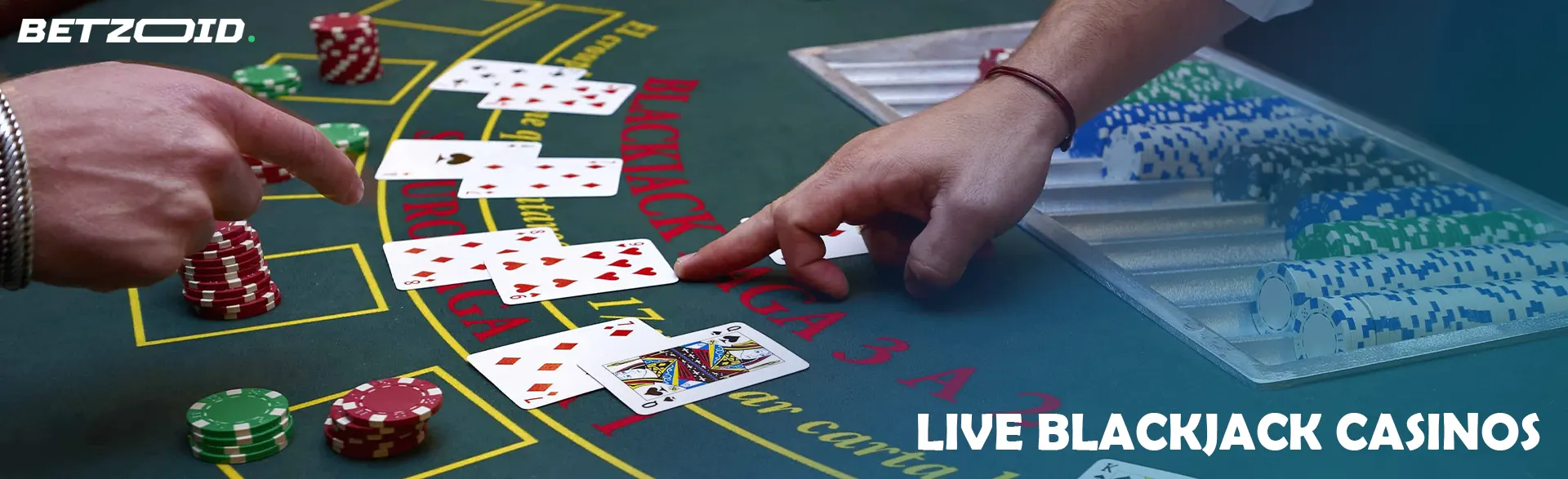

Live blackjack casinos in South Africa are easy to find and surprisingly hard to compare, because a lobby screenshot never shows the three things that decide your session: whether the site holds your balance in rand, what the cheapest seat actually costs at 20:00 on a Friday, and whether a welcome bonus counts live tables at all. Software blackjack starts at a couple of rand per hand; a streamed table with a real dealer usually starts nearer R20 to R25, and that seat price — not the advertised minimum deposit — sets the bankroll you need.
The Betzoid team builds this comparison from the material operators publish but rarely advertise: banking pages for ZAR support and instant EFT, licence numbers that can be checked against a regulator's public register, lobby filters that reveal which studio supplies the tables, and bonus terms hiding game-contribution and max-bet clauses. The list below is ordered around rand-friendly payments, the spread of table limits from low minimums up to high-limit rooms, and how clearly each operator documents its live-dealer rules.
Recommended Live Blackjack Casinos (October 2026)





How Live Blackjack Tables Work Online
A live blackjack table is a real table in a broadcast studio, filmed by several cameras, with your bets placed through a software layer on top of the video. Optical recognition reads each card as the dealer pulls it from the shoe, so your hand total, payout and insurance prompt appear automatically. You get a fixed betting window — commonly in the region of 12 to 20 seconds — then a shorter decision timer for hit, stand, double or split.
Most studios deal from a six or eight-deck shoe and reshuffle at the cut card, with the standard rules printed in the game's info panel: dealer stands on all 17, blackjack pays 3:2, and double-after-split availability varies by table. Seated tables hold five to seven players, while unlimited-seat formats let everyone act on the same dealer hand. The timer is what trips people up. On a laggy connection the countdown keeps running while the video buffers, so decide your play before the cards finish landing.
Live Dealer Tables vs RNG Blackjack
The maths is close, the economics are not. Both formats run roughly 99.5% RTP when you play basic strategy, but software blackjack deals instantly at 200-plus hands an hour from stakes as low as a few rand, while a streamed table manages about 40 to 60 hands an hour with minimums usually starting around R20. Fewer hands means slower bankroll burn and more thinking time. If R20 a hand is above your comfort level, the software tables listed among South Africa's online blackjack casinos let you drill strategy at a fraction of the stake.
Rand Banking and Instant EFT Deposits
Currency is the first filter, because a site that quotes your balance in dollars charges you twice — once on the way in, once on the way out. Conversion spreads of two to three percent are normal, so a R5,000 deposit can lose R100 to R150 before the dealer shuffles, and the same haircut applies to a withdrawal. Live blackjack casinos that accept ZAR deposits and keep the wallet in rand remove that cost entirely, and the chip denominations then match the table minimums you see quoted in the lobby.
For payments, instant EFT is the workhorse in this market: you authorise a payment straight from your bank profile through a local gateway, funds usually land in minutes, and there is no card to decline. Card deposits are typically instant too; withdrawals almost always return by EFT to the same account and take longer to clear than they take to approve. Check three details on the banking page before you register anywhere: that ZAR appears as an account currency rather than a vague promise of local support, that the minimum deposit and the minimum withdrawal are not wildly different, and whether a payment fee applies to small amounts. One mismatch trips up plenty of players — a R50 minimum deposit is useless if the cheapest live seat costs R100 a hand, because a single deposit buys you half a hand.
Live Blackjack Table Minimums and Limits
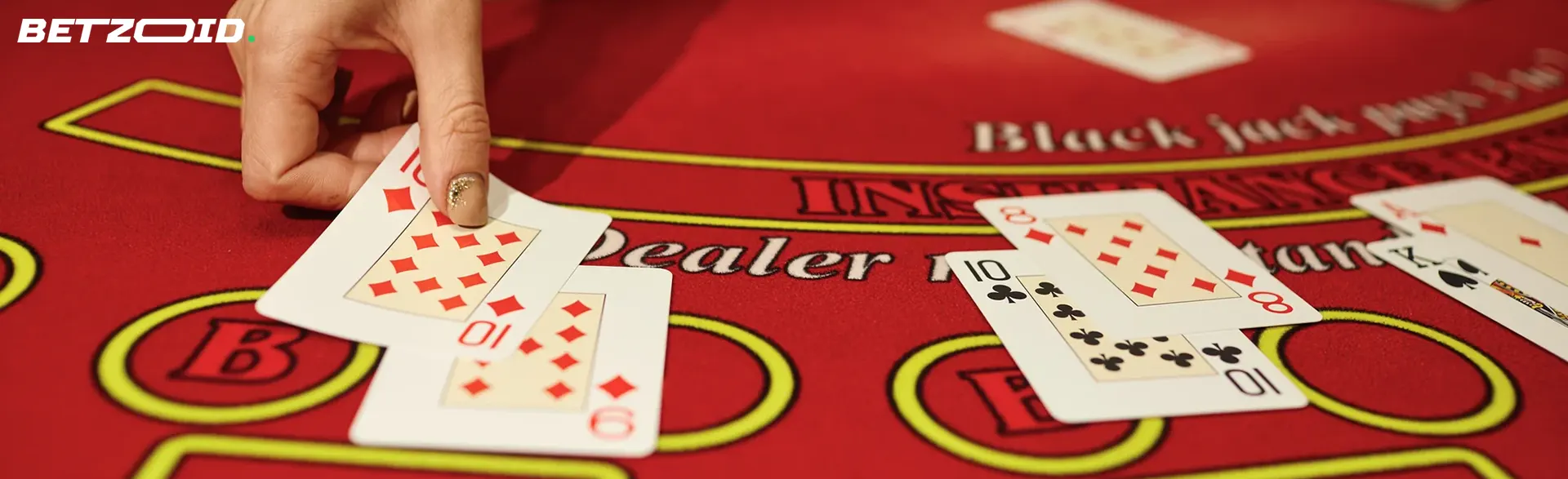
Table limits, not lobby counts, decide whether a site suits you. The spread below reflects the stake bands you will typically see across SA-facing live studios; individual operators set their own numbers, so treat the lobby figure as the binding one.
| Table format | Typical minimum per hand | Typical maximum per hand | Who it suits |
|---|---|---|---|
| Unlimited-seat blackjack | R10 - R25 | Around R5,000 - R15,000 | Small bankrolls and peak evening hours, since no seat can be taken |
| Classic seated table (5-7 seats) | R25 - R100 | Around R25,000 | Mid-stakes players who want a slower, sociable table |
| Speed or one-second-deal variants | R20 - R50 | Around R10,000+ | Short sessions where hands per hour matter more than chat |
| VIP or private room | R500 - R2,500 | R100,000 and up | High-limit play, usually after full verification or on invitation |
| Bet behind another seat | Matches the host table | Often capped below the seated maximum | Getting into a full table without waiting for a seat |
That spread exposes a trade-off a limits list alone hides: the cheapest seats sit at unlimited-seat tables, which are also the ones pushing side bets hardest, while the sociable seated tables cost two to four times more per hand. High stakes live blackjack casinos for South Africans usually gate their private rooms behind identity verification, so submit documents early if R2,500 minimums are your target rather than discovering the requirement mid-session.
Bankroll Maths for Short Sessions
Work backwards from the seat, not from the deposit. A rough rule that holds up well for an hour of live play is 40 times the table minimum: a R25 table needs about R1,000, a R100 table about R4,000. At 50 hands an hour and R25 a hand you turn over R1,250, and a 0.5% house edge on that turnover is an expected cost of roughly R6 — trivial next to the swings, which is exactly the point. Variance, not the edge, empties a thin bankroll. If R1,000 is your ceiling for the evening, a R100 table gives you ten hands and one bad shoe.
Bonus Terms That Exclude Live Tables
Assume a casino welcome match does not help you at the blackjack table until the terms say otherwise. Two clauses do the damage. The first is game contribution: live blackjack commonly counts 10% or less toward wagering, and plenty of offers exclude live dealer games outright. Take a R1,000 bonus at 35x wagering — that is R35,000 of qualifying turnover, which at 10% contribution means R350,000 wagered at the tables. At 50 hands an hour and R50 a hand, you would need thousands of hours.
The second clause is the max bet while a bonus is active, often R25 to R50 a spin or hand. That can be lower than the minimum on the table you actually want, and breaching it is the standard reason a bonus win gets voided. Headline multipliers make this sharper rather than softer: the terms behind a 300% casino match offer are where contribution and max-bet limits bite hardest, because the wagering base is so much larger.
Live blackjack casino bonuses in South Africa that are genuinely usable tend to look different — a live-casino cashback percentage on weekly losses, a rebate credited without wagering, or a small free-bet chip tied to a specific table. Compare the redemption condition first; a 5% cashback with no playthrough beats a 100% match you can never clear.

Checking Licences, Streams and Providers
Three checks take about two minutes and remove most of the risk. Start with the licence: scroll to the footer, find the regulator and licence number, and confirm it on that regulator's own register rather than trusting the badge image. Malta Gaming Authority, Curaçao and Kahnawake permits are the ones you will usually meet. South Africa's National Gambling Act licenses sports betting through provincial boards but not online casino games, so safe and licensed live blackjack casinos serving this market are almost always offshore-regulated. A clickable licence entry that names the operating company is the signal; an unlinked logo is not.
Second, check who supplies the tables. Live studios are specialist businesses, and the recognisable names — Evolution, Playtech, Pragmatic Play Live, Ezugi — appear in the lobby's provider filter or the game info panel. Their tables come with published rules, RTP figures and dealer training standards you can compare across sites; an unnamed in-house stream gives you none of that. The same logic applies across the wider range of live dealer casino lobbies open to SA players, so a site with a strong studio line-up for blackjack usually runs credible tables everywhere else.
Third, open a table before funding anything. Most lobbies let you watch a stream in view mode: check the resolution toggle, whether a second camera angle exists, how long the betting window lasts and whether the video holds steady while the timer runs. A stream that stalls in view mode will stall when your money is on the felt. Note the house rules in the info panel too — dealer standing rules and double-after-split change the edge more than any promotion does.
Mobile Play on South African Networks
A live table streams continuous video, so an hour on mobile data costs far more than an hour on slots. Drop the stream to standard definition when you are off Wi-Fi; the cards stay readable and the decision timer keeps working even when the picture softens. Mobile live blackjack casinos in South Africa that support portrait play are easier to use one-handed, and the chip tray stops covering the dealer's hand. Before you sit down, read the disconnection clause: knowing whether the system stands your hand or voids it matters most on an unstable LTE connection.
Friction Points to Expect at Live Tables
Nothing here should stop you playing, but each one costs money the first time it surprises you.
- Disconnection rules: drop signal mid-hand and the house rule decides — some tables auto-stand your total, others play basic strategy on your behalf, a few void the hand and return the stake. It is in the game info panel.
- Peak-hour seating: low-minimum seated tables fill up during weekday evenings, leaving you a queue, a bet-behind wager or a higher-stakes table. Unlimited-seat formats are the workaround.
- Verification before the first payout: operators ask for ID, proof of address and proof of payment method at withdrawal, not at deposit. Upload your documents on day one and you avoid a wait when you actually want the money.
- Slower pace than you expect: 40 to 60 hands an hour is gentle on a bankroll but frustrating if you came to clear a wagering requirement or squeeze a session into a lunch break.
- Side bet pricing: Perfect Pairs and 21+3 pay eye-catching multiples, but their house edge runs several percent against roughly half a percent on the main hand. They are entertainment, not value.
The disconnection clause and the verification timing are the two worth reading before your first deposit, because both hit you at the worst possible moment. When seats are scarce, many players switch to the unlimited-capacity formats instead of waiting — the same reason live roulette tables aimed at South Africans never turn anyone away at peak time.
Matching a Site to How You Play
Work through these in order and the shortlist narrows itself, whatever your stake level.
- Price your seat first. Decide what you will bet per hand, multiply by 40, and only consider sites whose live lobby actually offers that minimum. A R25 player and a R1,000 player need different operators.
- Confirm rand and instant EFT before registering. Check the banking page for ZAR as an account currency plus a local EFT gateway, then compare the minimum withdrawal against the amount you realistically cash out.
- Read the live-game contribution line. If bonuses influence your deposit, find the contribution percentage and max-bet cap in the terms. Zero contribution is not a dealbreaker, but discovering it after depositing is.
- Check the studio line-up and variant count. A lobby with classic, unlimited-seat, speed and high-limit tables from a named provider gives you somewhere to move when your usual table is full or your stake changes. Blackjack rarely travels alone either, so a well-stocked room usually adds live baccarat tables beside it.
- Watch a stream on your own device and connection. View mode costs nothing and tells you whether the video, timers and portrait layout hold up on the network you actually use.
That sequence answers the real question behind where to play live blackjack for real money in SA: not which site looks best, but which one prices a seat you can afford, pays you back in rand, and states its rules plainly. Operators revise limits and promotions regularly through 2026, so recheck the two numbers that matter — table minimum and contribution percentage — each time you return.
Sort the shortlist above by the stake you intend to bet per hand, because the price of the cheapest seat, rand banking and the live-game contribution rule shape your session far more than lobby size or a headline percentage. Favour operators running unlimited-seat formats alongside their seated rooms if you want a table available every evening without queuing. And set a deposit limit in your account settings before your first hand — live tables are slower than software blackjack, which makes it easy to lose track of an hour.