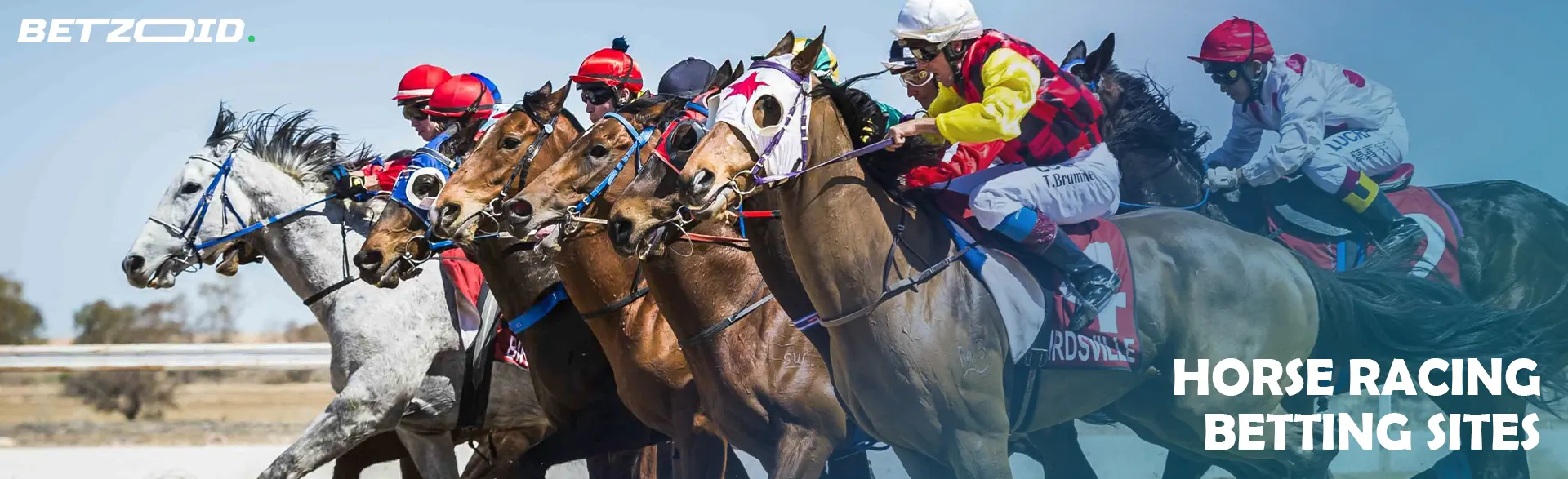

Picking between horse racing betting sites in South Africa usually comes down to three checks you can make in ten minutes: does the platform carry both fixed odds and tote pools, does it bank in rands through Instant EFT, and what do its terms say about maximum payouts? Everything else — the welcome offer, the interface design, the promo emails — matters far less once you're backing runners most Saturdays.
The Betzoid team compares what operators publish rather than what they advertise: provincial licence details, race-card depth across Turffontein, Kenilworth, Greyville and Fairview, the ZAR deposit and withdrawal methods on offer, and the small print that decides how fast a winning ticket becomes money in your bank account. Below are our ranked picks, followed by the practical detail behind each ranking factor — starting with the odds format that shapes your long-run return.
Recommended Horse Racing Betting Sites (October 2026)





Fixed Odds vs Tote Pools
Fixed odds lock your price the second you confirm the bet. Tote dividends are only known once the pool closes, because every rand wagered changes what the winners share. That single difference decides which format suits a given race.
| What you're comparing | Fixed odds | Tote (totalisator pools) |
|---|---|---|
| Price certainty | Locked at placement, printed on the slip | Dividend declared after the race |
| Effect of late money | None once your bet is struck | A drifting price can shorten sharply at the off |
| Typical markets | Win, place, each-way, some exotics | Exacta, Trifecta, Quartet, Place Accumulator, Pick 6, Jackpot |
| Main limitation | Bookmaker stake and payout caps apply | Thin pools make dividends volatile |
| Where it usually suits you | Taking an early price you expect to shorten | Exotics, carryovers and big-field handicaps |
The table shows the mechanics, but the decision is about timing. If you take 6/1 on a well-backed runner two days out and it starts at 7/2, the fixed price paid you; if you take 6/1 on a horse the market abandons, the tote would almost certainly have returned more. Sites that carry fixed odds and tote betting side by side let you make that call race by race instead of being stuck with one pricing model all afternoon.
What Separates Strong Racing Platforms
Racing is not a sportsbook add-on. The platforms worth keeping an account with build the race card into the betting interface, so you aren't switching tabs between form, pool sizes and your slip. When we compare operators, these are the features that change how you actually bet:
- Early fixed-odds markets: ante-post prices for feature meetings let you take value days ahead. Sites that only open markets on race morning remove that option entirely.
- Tote pool visibility: a good card shows the current pool size and approximate dividends, which is the only way to judge whether a Trifecta pool is deep enough to be worth entering.
- Form and stats on the card: jockey and trainer records, recent runs, going and distance data displayed next to the runner rather than buried in a PDF download.
- Cash-out and bet editing: not universal on racing, and often restricted to single win bets. Check whether it applies before the jump only, or not at all.
- Published limits: minimum stake, maximum stake per race and maximum payout per ticket, all stated in the terms instead of discovered when a big exotic lands.
Early prices and pool data matter most for punters who plan their bets; cash-out and stake limits matter most if you bet larger or later. If you like recovering something from a rough card, operators that pair racing markets with cashback promotions can soften a losing run, though the turnover terms deserve the same scrutiny as the odds.
Race Coverage From Turffontein to the July
Domestic coverage should be complete, not selective. Look for every South African meeting on the calendar — Turffontein and the Vaal in Gauteng, Kenilworth and Durbanville in the Cape, Greyville and Scottsville in KwaZulu-Natal, Fairview in Gqeberha — plus overseas cards from the UK, Australia and Hong Kong to fill quiet weekdays. Feature days concentrate the money: the Sun Met in Cape Town and the Durban July at Hollywoodbets Greyville attract markets, multiples and bigger pools that ordinary Wednesday cards never see. Before a feature meeting, confirm the operator prices the whole card and not just the headline race.
Live Streaming and Its Access Conditions
Streaming is common but conditional. Most bookmakers restrict racing video to verified accounts, and several require a funded balance or a bet on the meeting before the player unlocks. Check that before the gates open rather than during the parade. Quality varies between SD and HD, and mobile data use adds up across a full card, so Wi-Fi is worth having for a long Saturday. Remember the picture runs behind live odds by a few seconds — place the bet off the market, not off the screen. Operator pages such as our Playa Bets breakdown and ScoreBet write-up set out where racing sits alongside the wider sportsbook.
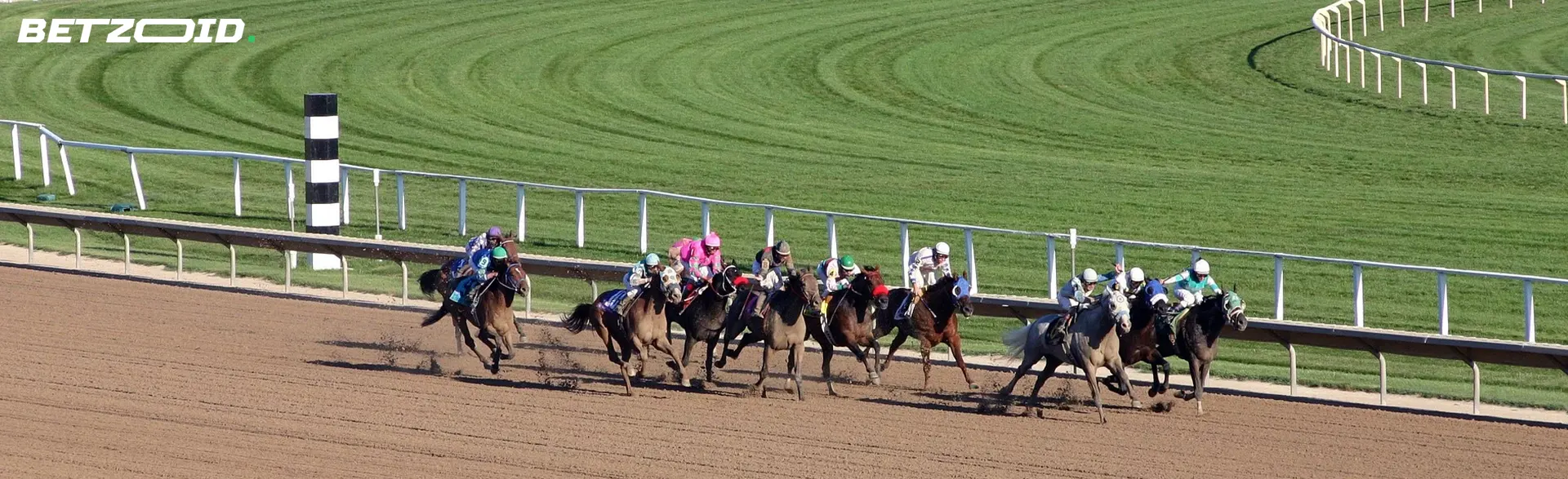
Bet Types and How Returns Are Built
Your return depends as much on ticket structure as on picking winners. Exotics multiply combinations, and each combination costs a separate unit stake — that is where beginners overspend without realising it.
- Win and place: the simplest bets. Place terms depend on field size, so a short field may pay only two places while a full handicap pays three.
- Each-way: two bets in one, so a R20 each-way ticket costs R40. The place portion pays a fraction of the win odds.
- Exacta and Quinella: first two home in exact order, or in any order. Boxing four runners in an Exacta creates 12 combinations — at R2 a line, that's R24.
- Trifecta and Quartet: first three or four in order. Boxing four horses in a Trifecta gives 4 x 3 x 2 = 24 combinations, R48 at R2 per line.
- Pick 6, Jackpot and Place Accumulator: pool bets across several races. Costs multiply per leg, and unclaimed pools carry over to the next meeting.
Work backwards from your budget: decide the ticket cost first, then choose how many runners you can afford to include. A tidy R50 Trifecta with three bankers usually beats a scattergun R200 ticket built on hope, and the discipline keeps exotic betting sustainable across a season.
ZAR Banking and Instant EFT Deposits
Betting in rands removes a cost you never see itemised: currency conversion. Accounts that settle in ZAR mean the odds you calculate are the odds you're paid, with no exchange spread applied at deposit or withdrawal. That alone is reason enough to prefer locally licensed operators over offshore ones.
Instant EFT services such as Ozow and PayFast dominate because they work with the major South African banks — FNB, Capitec, Standard Bank, Absa, Nedbank — and push funds through in a couple of minutes without a card. You authenticate through your normal internet banking login, and the balance appears while you're still on the race card. Cards are equally quick to deposit but slower to return money, since refunds route back through the issuing bank. Manual EFT is the slowest path in both directions and usually needs a proof-of-payment upload. Voucher systems like OTT and 1Voucher remain useful for punters who prefer cash, though vouchers deposit only — withdrawals still need a bank account.
Two practical points before you pick a method. First, most operators return winnings to the source of the deposit where they can, so the method you fund with largely determines how you'll be paid. Second, check the minimum withdrawal and whether a fee applies below a certain amount; a small threshold matters if you cash out modest wins weekly rather than letting a balance build.
Why Payouts Stall After a Winning Bet
Almost every delayed withdrawal traces back to paperwork, not to the bookmaker sitting on your money. FICA verification is a legal requirement, so an ID document and proof of address must be on file — and the bank account name has to match the account holder exactly. Requests submitted late on a Friday can wait for the next banking cycle. Unsettled bonus turnover will also freeze a payout until the requirement clears. Complete verification on the day you register, before you have winnings to chase. If lighter onboarding appeals to you, our look at sites with minimal ID checks explains the trade-offs involved.
Licensing Checks and Payout Ceilings
Bookmakers taking racing bets from South African residents must hold a provincial licence. The Western Cape Gambling and Racing Board, the Gauteng Gambling Board, the KwaZulu-Natal Gaming and Betting Board and the Eastern Cape board each license operators separately, and a legitimate site publishes its licence number and licensing province in the footer. Match that number against the board's register rather than trusting a logo — logos are easy to copy, register entries are not. A provincial licence is what gives you a complaints route if a settlement dispute goes nowhere with support.
The clause punters skip is the maximum payout. Bookmakers cap what a single ticket can return, and the cap often differs between win bets and multiples or exotics. It rarely affects a R50 win bet, but it can absolutely affect a Pick 6 or a long-priced Quartet, where the theoretical return climbs into six or seven figures. If you routinely build big-combination tickets, read the limits section of the terms before you fund the account, and compare it against the pool you're targeting.
One more detail worth confirming: licensed operators are required to keep customer funds separate from operating money. That separation is the reason your balance should survive a bad quarter at the bookmaker, and it's a fair question to put to support if the terms are vague.
From Sign-Up to Your First Racing Bet
The gap between registering and having a live ticket on a race is usually well under an hour, provided your documents are ready. The order below removes the two most common hold-ups — verification and a deposit method that doesn't return money quickly.
- Confirm the licence first. Find the licence number in the site footer and check it against the relevant provincial gambling board's register before you type in any personal details.
- Register with your real details. Name, ID number and address must match your official documents, because a mismatch is the single biggest cause of delayed first withdrawals.
- Upload FICA documents immediately. A clear ID or passport scan plus a recent proof of address, dated within the period the operator specifies. Do this before depositing, not after winning.
- Deposit via Instant EFT. Choose your bank, authenticate through internet banking, and the balance should be available within minutes — and it keeps your withdrawal route simple.
- Read the welcome offer terms before opting in. Free-bet credits on racing are generally easier to clear than deposit matches with heavy turnover requirements, and an unfinished bonus can lock a withdrawal.
- Open today's card and compare formats. Toggle between the fixed price and the tote pool on the same runner to see which suits the race, then check the stream requirements if you intend to watch.
- Start with a small win bet. A modest first stake shows you how settlement, results feeds and the cash-out button behave on that platform before you commit to exotics.
Once the first bet settles cleanly, request a small withdrawal early on. Seeing how long the money actually takes to reach your account tells you more about an operator than any promotional page will.
Choosing well comes down to the same three things every time: access to both pricing formats so you can back early value or take a pool dividend, ZAR banking with Instant EFT so deposits and payouts avoid conversion costs and delays, and a verifiable provincial licence with payout limits you've actually read. Use the ranked list above as your starting point, then check those three against the operator's own terms before you fund an account. Set a deposit limit while you're in the account settings — it takes a minute and it's far easier to do before a losing Saturday than during one.