

Anonymous betting sites let you fund a sportsbook with crypto and place a wager without uploading a passport, a selfie or a municipal bill, and for a lot of punters in South Africa that single difference is the reason they leave regulated books alone. Worth knowing before you deposit: "anonymous" almost always means no documents at signup, while the real test is whether the same site still pays out without documents when you request a withdrawal.
The Betzoid team compares these platforms the way we'd read a contract rather than an advert: what the terms actually say about verification triggers, which coins are supported, how withdrawal caps are worded, and whether bonuses are open to unverified accounts at all. Most of the disappointment in this niche comes from clauses buried under "we reserve the right to request documentation", not from outright scams. The comparison below ranks the operators worth shortlisting, and the sections after it explain what to check yourself before any rand leaves your exchange account.
Recommended Anonymous Betting Sites (October 2026)





The Verification Hurdle Anonymous Betting Solves
The problem isn't the concept of ID checks, it's the paperwork chain they set off. A licensed South African bookmaker typically wants an ID document, proof of residential address dated within three months, and often a bank statement or card image before the first withdrawal clears. Gather that on a Saturday morning and you've missed the early kick-offs; submit a blurry municipal bill and you're back in the queue on Monday.
There's a banking layer on top of it. Rand deposits to gambling accounts appear on your statement by merchant name, and some card issuers decline or flag gambling merchants without warning, which turns a two-minute top-up into a support ticket. Crypto sidesteps the merchant category entirely: the transfer leaves your wallet and arrives at an address, with no local bank in the middle deciding whether to approve it.
What replaces the paperwork is minimal. Most no-KYC sportsbooks ask for an email address and generate a deposit address, and that's the account. Be clear-eyed about what this buys you, though. You're anonymous to the bookmaker's file, not invisible on a public blockchain, and not exempt from your own tax obligations. If you'd rather keep rand funding and simply avoid upfront document requests, our rundown of bookmakers that skip ID verification covers that fiat-side alternative.
What Separates Genuine No-KYC Sportsbooks
A genuine no-KYC sportsbook keeps the whole cycle document-free: deposit, bet, withdraw. The weak imitations only skip verification at registration, then request an ID the first time a payout crosses an internal threshold — precisely the moment your money is already on the platform. When we read terms pages, that withdrawal clause is the first thing we look for, not the signup form.
Honest operators write the trigger down: a stated daily or monthly payout ceiling for unverified accounts, and the circumstances (suspected multi-accounting, bonus abuse, source-of-funds queries under their licence) that override it. Vague wording is the warning sign. A site promising anonymity in its marketing while reserving unlimited discretion in clause 14 is not offering anonymity, it's offering a delay. Broader crypto-funded books that do verify can still be worth a look for odds and markets, and we compare that wider field in our guide to sportsbooks that accept cryptocurrency.
Security Checks Before You Deposit
Anonymity removes the account-recovery safety net, so the platform's own security has to carry more weight:
- App-based two-factor authentication through Google Authenticator or similar — SMS codes tie a phone number to the account and undo part of the privacy you came for.
- Provably fair verification on casino games, letting you check individual results cryptographically instead of trusting a results log you can't audit.
- A published cold-storage policy for player balances, plus no history of frozen withdrawals during high-traffic weekends.
- Clear terms listing supported coins, confirmation requirements and payout ceilings on one page rather than scattered across help articles.
Miss the 2FA step and a leaked password is the end of the account, because there's no ID on file to prove it was yours.
Licensing Reality in a Grey Area
Most no-document sportsbooks operate under Curaçao, Costa Rica or Anjouan permissions, which allow crypto wagering without the strict identity mandates attached to European or South African licences. None of them hold a provincial licence here, so the National Gambling Board is not a complaint channel if a payout stalls. That changes what "safe" means: you're relying on the operator's commercial reputation and community track record rather than a regulator with enforcement teeth. Read player reports about withdrawal behaviour over months, not marketing copy about encryption.
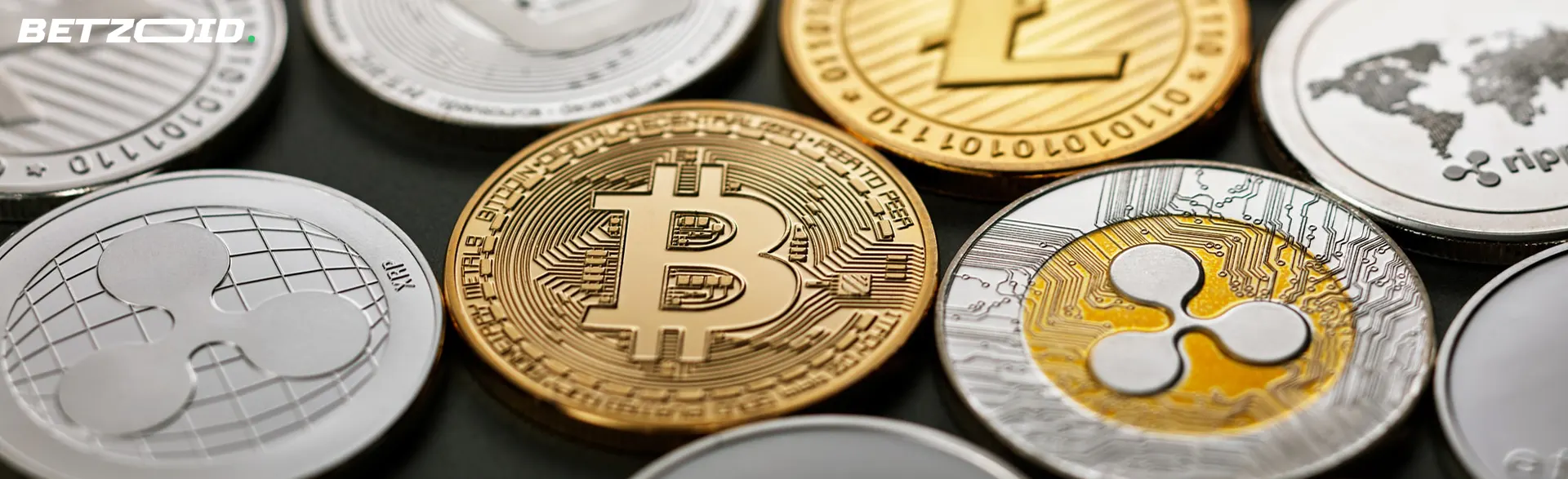
Bitcoin, Monero and Other Coin Trade-Offs
Coin choice decides two things you'll feel immediately: how long a deposit takes to credit, and how much of your transfer the network eats. Bitcoin is accepted almost everywhere but confirms slowest and costs most when the mempool is busy; the alternatives trade universal acceptance for speed, cheaper transfers or stronger privacy.
| Coin | Typical wait to credit | Network fee behaviour | On-chain privacy |
|---|---|---|---|
| Bitcoin (BTC) | 10-40 min (1-3 confirmations) | Rises sharply with congestion | Fully transparent ledger |
| Litecoin (LTC) | 5-15 min | Consistently low | Fully transparent ledger |
| Ethereum (ETH) | 2-10 min | Gas-dependent, can spike | Fully transparent ledger |
| Monero (XMR) | 20-40 min (10 confirmations) | Low and stable | Private by default |
| Tether (USDT) | 2-20 min, network-dependent | Cheap on Tron, dearer on ERC-20 | Transparent, plus freezable by issuer |
The row the table can't fully explain is Tether. It's the only asset here whose issuer can blacklist an address, which makes it the weakest choice for privacy despite being the easiest for holding value between bets. If you're betting on rugby or PSL fixtures over a weekend and want to avoid rand-to-crypto exchange swings mid-session, stablecoin funding is convenient; if privacy is the whole point, it defeats the exercise.
Why Monero Beats Bitcoin on Privacy
Bitcoin's ledger is public. Anyone with chain-analysis tooling can see that an address funded from a South African exchange sent 0.004 BTC to a wallet clustered with a known sportsbook, and exchanges here operate under FIC registration, so that first hop is already tied to your name. Monero hides sender, receiver and amount by default using ring signatures, stealth addresses and confidential transactions, so there's no equivalent trail to follow.
The trade-off is availability. Fewer sportsbooks list XMR, and it has been delisted from several large exchanges, so South Africans often have to buy Bitcoin locally and swap it. That extra hop costs a fee and a few minutes, which is the price of the privacy upgrade.

Limits You Accept When You Skip ID Checks
Unverified accounts carry more fraud risk for the operator, and the terms price that in. Expect the following pattern across no-document books:
- Lower payout ceilings on unverified accounts, usually expressed as a rolling 24-hour or monthly cap rather than a per-transaction limit.
- Welcome bonuses restricted or withheld entirely, because a bonus abuser can spin up a new wallet and email in under a minute.
- Reduced maximum stakes on headline markets, which matters far more for a big Currie Cup or Champions League ticket than for R100 multiples.
- Email-only support with no phone line and no ombudsman or ADR scheme behind it if a dispute drags on.
- Crypto-only banking, so there's no EFT or card fallback when you want funds back in rand quickly.
None of these are dealbreakers for recreational stakes, but they define who this niche suits. If your priority is placing large bets at the sharpest available price, a fully verified account at a high-limit operator such as Pinnacle is the more sensible trade, and you accept the paperwork once in exchange for headroom. A big mainstream book like 1xBet also takes crypto deposits, though it still runs full verification before it releases a payout.
Withdrawal Caps and Bonus Exclusions
A cap doesn't block a big win, it slices it. Land R120,000 on an accumulator at a site with a R50,000 daily unverified ceiling and you're withdrawing across three days, with your balance exposed to both crypto price movement and any policy change in between. Check the cap before you stake, not after the final whistle.
Bonus terms follow the same logic: offers are commonly reserved for verified players, or handed to anonymous accounts at a smaller size with the same wagering requirement, which quietly makes them worse value. If you care more about stretching a modest bankroll than about promotions, comparing bookmakers with small minimum deposits is usually the better route.
Staying in Control Without a Safety Net
Every protection built into the regulated market assumes the operator knows who you are. Self-exclusion registers, enforced cooling-off periods and cross-operator deposit limits all run on identity. Strip out the ID and those tools either disappear or become voluntary, and a voluntary block you can defeat by generating a new wallet and email isn't much of a block.
So the controls have to sit on your side. The practical version: keep a dedicated betting wallet funded with a fixed monthly amount, and treat an empty wallet as the end of the session rather than a prompt to move more crypto across. Because the transfer from your main holdings takes a deliberate extra step, that friction does real work — use it instead of removing it. Where a site does offer deposit caps or session timers, switch them on even though enforcement is honour-based.
If betting has started feeling like recovery rather than entertainment, the National Responsible Gambling Programme offers free counselling in South Africa, and its support doesn't depend on which bookmaker you used. Anonymity is a privacy tool; it should never be a way to hide a problem from yourself.
Placing Your First Anonymous Crypto Bet
Learning how to bet anonymously with Bitcoin in South Africa is less about technical skill than about sequencing. Work through it in this order:
- Buy crypto on an exchange you already use — VALR, Luno and similar SA platforms all require FICA verification, so accept that this first step is identified and that your privacy applies to the bookmaker, not the purchase.
- Move the coin to a personal wallet you control, such as Exodus, Electrum or a hardware device, rather than sending straight from the exchange to the sportsbook.
- Shortlist a sportsbook from the comparison above and read its withdrawal clause specifically, confirming whether the no-document policy survives a payout request and at what amount it stops.
- Register with a fresh email address created solely for betting, and enable app-based 2FA immediately — save the recovery codes offline, because there's no ID-based account recovery here.
- Deposit a modest first amount, something in the R500 to R1,000 range, and check that the credited balance matches the amount sent minus the network fee.
- Place a small bet on a market you follow, rugby or soccer is fine, then request a withdrawal back to your wallet whether it wins or loses.
- Only scale up once that full round trip has completed at the speed the terms promised.
Step six is the one people skip, and it's the only one that proves anything. A site that credits deposits in minutes but goes quiet on payouts has told you everything you need to know for the price of one small bet. If a document request appears at that stage, you've learned it with R500 on the platform instead of R50,000.
Privacy here comes down to three things: whether the no-document policy holds at withdrawal, which coin you fund with, and how big your payouts are likely to be. Monero gives the strongest on-chain privacy, Bitcoin the widest acceptance, and unverified withdrawal caps decide whether either choice actually suits your stakes. Use the comparison above to shortlist two operators, test each with a small deposit and a real withdrawal, and keep the one that pays without asking. Set your own monthly funding limit before the first transfer, because no regulator is going to set it for you.
FAQ